No pods added to your quote request yet. Add some now for a free quote!
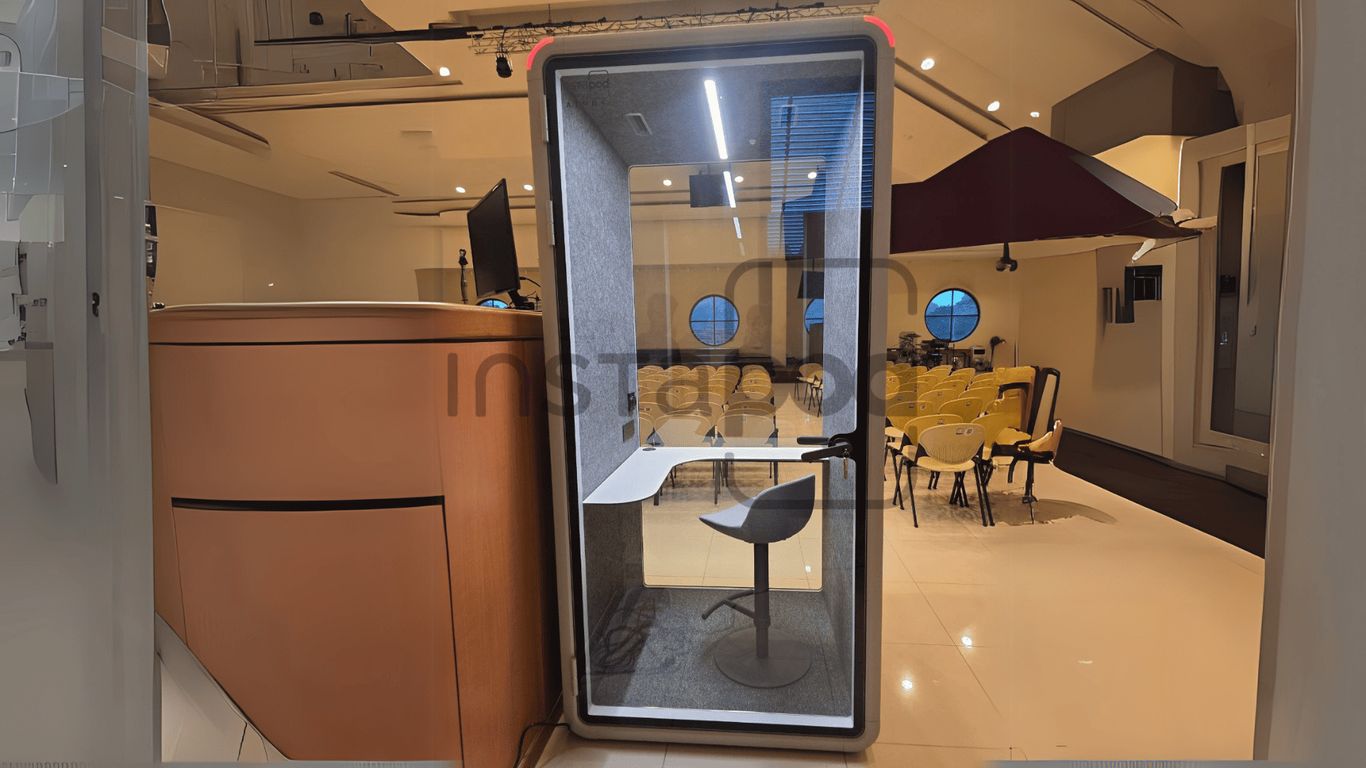
Here are the main points to remember about how office phone booths can help your company stay compliant and productive in 2026:
Key Takeaways
- Office phone booths offer a private space for sensitive HR discussions, client calls, and confidential work, which is vital for compliance.
- These booths help reduce workplace noise, improving employee focus, reducing stress, and boosting overall job satisfaction.
- They are considered workplace infrastructure, not just furniture, providing measurable returns through increased productivity.
- Using booking systems and clear guidelines optimizes phone booth use and provides data for better office space planning.
- Phone booths can qualify for tax benefits like Section 179 depreciation, making them a financially smart investment for businesses.
Enhancing Workplace Privacy with Office Phone Booths
Open-plan offices, while great for collaboration, have a big downside: noise. It’s like trying to concentrate in a coffee shop all day, every day. This constant hum makes it tough for anyone to focus, especially when they need to have a private chat or get some serious work done. That’s where office phone booths come in. They’re not just fancy furniture; they’re a practical solution to a real problem.
Addressing Acoustic Challenges in Open-Plan Offices
Think about it. You’re on a call with a client, discussing sensitive project details, or maybe you’re having a confidential HR discussion. In an open space, those conversations are practically public. This isn’t just awkward; it can lead to serious issues with privacy and data security. Phone booths are designed to create a quiet bubble. They use materials and construction techniques specifically to block out the surrounding office noise. This means you can have those important conversations without worrying about who might be overhearing.
- Sound Reduction: Quality booths can reduce ambient noise by 30 to 40 decibels (dB).
- Focus Recovery: Studies suggest that avoiding interruptions can recover about 23 minutes of productive time per interruption.
- Versatile Use: They’re good for private calls, video conferences, or just a few minutes of quiet focus.
The Strategic Value of Acoustic Privacy for HR
For Human Resources, acoustic privacy is non-negotiable. Think about salary negotiations, performance reviews, or discussions about employee benefits. These conversations require a high level of confidentiality. If employees don’t have a private space, they might delay these important discussions or, worse, have them in less-than-ideal settings, risking breaches of privacy. Providing dedicated, soundproof booths shows employees that the company respects their privacy and takes confidentiality seriously. This builds trust and can positively impact employee morale and retention.
The ability to have private conversations without fear of being overheard is a basic workplace need. When this need isn’t met, it creates stress and can lead to employees feeling less secure in their roles.
Employee Wellbeing and Psychological Safety
Beyond just privacy for specific conversations, phone booths contribute to overall employee wellbeing. Constant noise is a stressor. It can lead to fatigue, headaches, and a general feeling of being overwhelmed. Having a quiet space available, even if an employee doesn’t use it daily, provides a sense of relief and control. It’s a psychological safety net. Knowing you can step away for a few minutes of quiet can make a big difference in how you feel about your workday. This improved environment can lead to better job satisfaction and a more positive workplace culture overall.
Office Phone Booths as Essential Workplace Infrastructure
From Furniture to Functional Infrastructure
Let’s be real, the open office trend really messed with our ability to concentrate. Suddenly, everyone’s talking, typing, and taking calls, and finding a quiet spot feels impossible. That’s where office phone booths come in. They’re not just fancy furniture you put in a corner; they’re becoming a necessary part of how we work today. Think of them less like a decorative item and more like a utility, like a printer or a reliable internet connection. These pods offer a dedicated, soundproof space for focused work, private calls, or sensitive discussions, something that’s become a rarity in modern, open-plan environments. They solve a real problem: noise and lack of privacy.
Measuring the Return on Investment of Phone Booths
So, how do you know if buying these booths is worth it? It’s not just about how many people use them. We’re talking about productivity gains. When employees can actually focus without constant interruptions, they get more done. Plus, think about the conference rooms that are often booked for just one or two people. If a booth can handle those quick, private calls, it frees up larger meeting rooms for actual group sessions. Most companies find that the cost of a booth pays for itself in about six to seven months, mostly through recovered productivity and better use of other spaces.
Here’s a quick look at potential costs and payback:
| Item | Estimated Cost Range | Typical ROI Breakeven | Notes |
|---|---|---|---|
| Single-person Booth | $4,000 – $11,500+ | 6-7 months | Qualifies for Section 179 depreciation |
| Multi-person Pod | $8,000 – $20,000+ | 6-7 months | For small team discussions or interviews |
Integrating Booths into Broader Space Strategies
Putting booths in your office is just the first step. To really get the most out of them, you need to think about how they fit into the bigger picture of your workspace. It’s about more than just acoustics; it’s about how your company supports different work styles.
- Placement is Key: Don’t hide them away. Put them in areas where people naturally work and might need a quiet moment. Near open desk areas or collaboration zones often works best.
- Quantity Matters: A good starting point is one single-person booth for every 6 to 12 employees. But this isn’t set in stone. You’ll need to watch how often they’re used and adjust.
- Booking Systems: Make it easy for people to find and reserve a booth. Integrating this with your existing desk or room booking software helps a lot.
Treating phone booths as core workplace infrastructure means they become a strategic asset, not just an expense. Their data can inform future real estate decisions and office layouts, making your space work harder for your employees.
Navigating HR Compliance in the Modern Office
Keeping up with HR rules feels like a full-time job on its own, right? Especially as we move into 2026, things aren’t getting any simpler. With new laws popping up and employees expecting more, HR teams have their hands full. It’s not just about following the rules; it’s about creating a workplace where everyone feels secure and respected.
Sensitive Conversations and Confidentiality Requirements
Think about all the private discussions that happen in an office every day. Performance reviews, salary negotiations, disciplinary meetings, or even just an employee sharing personal issues with HR. These conversations need a safe space. Without one, sensitive information can easily be overheard, leading to privacy breaches and a breakdown of trust. This is where acoustic privacy becomes a non-negotiable part of HR compliance. When confidential matters are discussed in the open, it creates a direct risk for the company, potentially leading to legal issues or employee dissatisfaction.
Ensuring Compliance in Regulated Industries
Some industries have even stricter rules about data privacy and confidentiality. Healthcare, finance, and legal sectors, for example, deal with highly sensitive personal information daily. Mishandling this data isn’t just bad practice; it can result in hefty fines and serious legal trouble. Having dedicated, soundproof spaces is vital for these organizations to meet regulatory demands and protect client information.
The Role of Office Phone Booths in Data Security
Office phone booths offer a practical solution to these compliance challenges. They provide a private, acoustically controlled environment for sensitive calls and meetings. This helps HR professionals conduct necessary conversations without fear of eavesdropping, thereby upholding confidentiality requirements. It’s a simple step that can significantly reduce the risk of data leaks and privacy violations.
Here’s a quick look at how booths help:
- Confidentiality: Blocks sound from entering or leaving the booth.
- Data Protection: Prevents accidental disclosure of sensitive employee or client information.
- Employee Trust: Shows employees their privacy is taken seriously.
- Regulatory Adherence: Supports compliance with data privacy laws like GDPR or HIPAA.
In today’s work environment, especially with hybrid models, maintaining a secure and private space for sensitive discussions is more important than ever. It’s not just about comfort; it’s about legal responsibility and building a foundation of trust with your workforce.
Optimizing Office Phone Booth Utilization
So you’ve got these phone booths, which is great. They’re not just fancy furniture, right? They’re actually part of your office’s core setup now. But just having them isn’t enough. You need to make sure people are actually using them, and using them the right way. It’s about getting the most out of your investment and making sure everyone benefits.
Implementing Effective Booking Systems
This is where a lot of places trip up. If there’s no system, it’s a free-for-all. Someone might grab a booth first thing in the morning and just stay there all day, even if they’re just doing quiet reading. That’s not what they’re for, and it blocks others.
- Integrate with existing tools: Connect your booth booking system with your desk and conference room schedulers. People should be able to see all available quiet spaces in one place.
- Keep it simple: Use short booking slots, maybe 30 or 45 minutes. This encourages turnover and makes it easier for people to find a spot when they need one.
- Visibility is key: Make sure the booking system is easy to find and use, whether it’s an app, a web portal, or a simple calendar integration.
A well-managed booking system turns a simple booth into a predictable resource, reducing frustration and making sure these quiet spaces are available when needed most.
Establishing Clear Usage Guidelines and Etiquette
People need to know the rules of the road, so to speak. What’s okay, and what’s not? Without clear guidelines, things can get awkward or even unpleasant.
- Time limits: Set a maximum session length. 45-60 minutes is usually plenty for a call or focused work.
- Cleanliness: Remind people to tidy up after themselves. Wipe down surfaces, throw away any trash. It’s a shared space.
- Noise levels: While they’re soundproof, people should still be mindful of their voice volume, especially if multiple booths are close together.
- No food: Generally, eating in a phone booth isn’t a great idea. It can be messy and leave odors.
Leveraging Utilization Data for Space Planning
This is the really smart part. Don’t just guess how many booths you need or where they should go. Look at the data.
| Day | Peak Utilization (%) | Average Session Length (min) | Bookings per Day |
|---|---|---|---|
| Monday | 65 | 35 | 25 |
| Tuesday | 88 | 40 | 40 |
| Wednesday | 92 | 45 | 45 |
| Thursday | 75 | 38 | 32 |
| Friday | 50 | 30 | 18 |
This kind of information tells you a lot. Maybe Tuesdays and Wednesdays are super busy, so you need more booths or need to encourage people to use them on other days. Or perhaps the average session length is much shorter than you expected, meaning people are using them for quick calls rather than deep work. Tracking this data helps you make informed decisions about where to place more booths, when to schedule maintenance, and how to adjust your office layout over time. It moves you from just having furniture to having a smart, adaptable workspace.
The Financial Case for Office Phone Booths
Okay, so we’ve talked about why these phone booths are a good idea for privacy and focus. But let’s get real for a second: what about the money? Investing in office phone booths might seem like just another expense, but when you look closer, they can actually save you money and boost productivity in ways you might not expect.
Understanding Booth Costs and ROI Breakeven
First off, the price tag. Single-person booths can run anywhere from about $4,000 for a basic model to over $11,500 for the fancier ones with all the bells and whistles. If you need something bigger, like a two-person pod, you’re looking at $8,000 to $20,000. It sounds like a lot, right? But here’s where the return on investment (ROI) comes in. Most companies find that the money spent on booths pays for itself in about six to seven months. How? Mostly by getting back lost productivity. Think about how much time people waste trying to find a quiet spot or how many calls get cut short because of background noise. Those minutes add up.
| Booth Type | Estimated Cost Range | Breakeven Period (Approx.) |
|---|---|---|
| Single-Person | $4,000 – $11,500+ | 6-7 Months |
| Multi-Person | $8,000 – $20,000 | 6-7 Months |
Section 179 Depreciation for Movable Assets
Here’s a little financial perk: office phone booths are generally considered movable assets. This is good news because it means they can often qualify for Section 179 tax deductions. Basically, this allows businesses to deduct the full purchase price of qualifying equipment and software purchased or financed during the tax year. It’s not a direct saving, but it can significantly reduce your company’s taxable income, making the initial investment a bit easier to swallow. It’s definitely worth chatting with your accountant about this one.
Reducing Conference Room Misuse Through Booths
Have you ever noticed how conference rooms, especially the smaller ones, get used for quick, one-on-one calls or private conversations? It’s a common sight in open-plan offices. People just grab the nearest available room, even if it’s meant for a team meeting. This leads to a lot of frustration when a group actually needs that room and it’s occupied by someone taking a personal call. By providing dedicated phone booths, you give employees a proper place for these shorter, private interactions. This frees up your actual meeting rooms for their intended purpose, making the whole office space work more smoothly and efficiently. It’s about directing the right kind of conversation to the right kind of space.
Providing dedicated quiet spaces like phone booths isn’t just about employee comfort; it’s a smart move for operational efficiency. It prevents the overbooking of larger meeting rooms and ensures that sensitive discussions can happen without disruption, which ultimately supports better workflow and compliance.
Here are a few ways booths help cut down on conference room misuse:
- Dedicated Private Space: Booths offer a private, soundproof environment specifically for calls and focused work.
- **Reduced
Selecting the Right Office Phone Booth
Key Acoustic Performance Metrics
When you’re looking at office phone booths, the first thing to really check is how well they block sound. This isn’t just about muffling noise; it’s about creating a truly private space. You’ll see numbers like dB ratings, which tell you how much sound is reduced. For a good phone booth, you want a rating that means conversations inside are completely inaudible from the outside, and vice versa. This is super important for sensitive HR discussions or client calls. Don’t just take the manufacturer’s word for it; look for independent testing if possible. A booth that doesn’t perform acoustically is just a fancy box.
Considering Size, Footprint, and Design
Think about who will use these phone booths and what they’ll do in them. Most are designed for one person, perfect for quick calls or focused work. But if your team needs to have short, private meetings or wants a bit more space to spread out, you might need a slightly larger booth. The footprint is also key – how much floor space will it take up? You don’t want to cram them in, but you also don’t want them taking over valuable office real estate. Design-wise, pick something that fits your office vibe. Some booths have sleek, modern looks, while others offer more customization to match your brand. It’s a balance between function and how it looks in your space.
Evaluating Lead Times and Warranties
Once you’ve picked a booth, you need to know when you can get it. Lead times can vary a lot, and if you need a bunch of them quickly, this is something to sort out early. Some suppliers might have stock ready to go, while others might have longer manufacturing periods. Also, check the warranty. What does it cover? How long is it for? A good warranty shows the manufacturer stands behind their product. This is especially true for office phone booths in places like Singapore, where shipping and installation logistics can add complexity. You want to be sure you’re covered if something goes wrong down the line.
Choosing the right office phone booth isn’t just about picking a piece of furniture. It’s about investing in a tool that supports privacy, productivity, and employee wellbeing. Consider the acoustic ratings, the physical dimensions, and the support you’ll get after purchase to make sure your investment pays off.
Conclusion
In today’s workplace, especially with hybrid models, maintaining privacy and compliance is more important than ever. An office phone booth isn’t just a piece of furniture; it’s a strategic tool. It helps protect sensitive conversations, supports employee wellbeing by reducing noise stress, and provides valuable data for space planning. By viewing phone booths as essential infrastructure and integrating them thoughtfully into your office strategy, you can create a more secure, productive, and compliant work environment for 2026 and beyond. Investing in these quiet spaces is an investment in your people and your company’s future.
Frequently Asked Questions
What exactly is an office phone booth?
An office phone booth is like a small, private room or booth that you put inside your office. It’s designed to be soundproof so you can make phone calls or have private conversations without others overhearing you. Think of it as your own little quiet space in a busy open office.
Why do we need an office phone booth for HR compliance?
HR often needs to discuss private things like salaries, personal issues, or job performance. In an open office, this is really hard to do without people listening in. A phone booth gives HR a safe, private spot to have these important talks without breaking privacy rules or making employees uncomfortable.
How much does an office phone booth usually cost?
The price can change a lot. A basic single-person booth might cost around $4,000, while fancier ones with more features could go up to $11,500 or more. Bigger booths for a few people cost even more. But, they often pay for themselves pretty quickly because people get more work done.
Do I need special permission or permits to put a phone booth in my office?
Usually, no. Most phone booths are seen as movable furniture, not permanent buildings. So, you typically don’t need permits for things like electricity or construction. Still, it’s a good idea to check with your building manager just in case they have specific rules.
How many phone booths should a company get?
A good starting point is one small booth for every 6 to 12 employees. But, if your office is super noisy or lots of people work from home part-time, you might need more. It’s best to start with a few, see how often they’re used, and then decide if you need to add more.
Can phone booths really help with employee happiness?
Yes, they can! Constant noise in an office makes people stressed and less happy. Having a place to escape the noise, even for a short call or a moment of quiet, can make a big difference. It shows employees that the company cares about their comfort and ability to focus.