No pods added to your quote request yet. Add some now for a free quote!
Office spaces have really changed a lot over the years. We’ve gone from big open rooms to those classic cubicle setups, and now, things like office pods are popping up everywhere. It can be a bit confusing trying to figure out what actually works best for your team. This article breaks down whether office pods or cubicles are a better fit for your work style, especially when it comes to staying focused.
Key Takeaways
- Office pods offer a private, quiet spot for focused work or calls, acting like mini private rooms within a larger office.
- Cubicles provide some separation but often lack the noise reduction and privacy that pods offer for deep concentration.
- Pods are great for individual tasks and sensitive conversations, while cubicles might suit more open, collaborative environments.
- The best choice depends on your company’s culture – does it value teamwork more, or individual efficiency?
- Consider long-term needs, like flexibility for growth and employee well-being, when deciding between pods and cubicles.
Understanding The Core Differences
When we talk about office setups, it’s easy to get caught up in the latest trends. But before we jump into what works best for productivity or collaboration, let’s just get a handle on what these things actually are and how they differ. It’s not just about walls versus no walls, you know?
Privacy And Focus: A Key Distinction
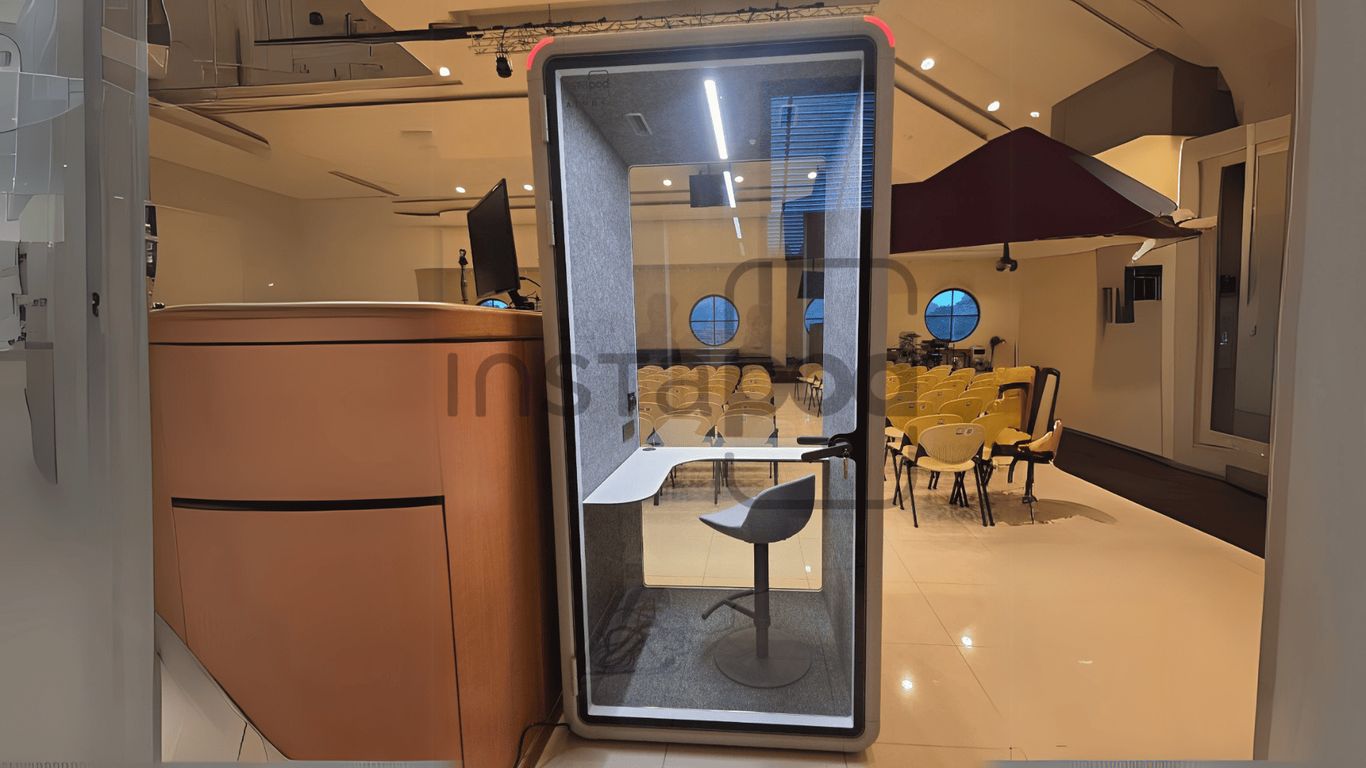
This is probably the biggest difference. Cubicles, even the taller ones, are still pretty open. You can see people, you can hear them, and they can see you. It’s like a low-walled fort. Office pods, on the other hand, are designed to be enclosed spaces. Think of them as mini rooms within a larger office. They offer a much higher level of privacy, which is a big deal when you need to concentrate on something tricky or just don’t want to be on display. This enclosed nature is what really helps people focus.
Noise Reduction Capabilities
Let’s be honest, open offices can be loud. Even with cubicles, sound travels. You’ve got phones ringing, people chatting, keyboards clicking away – it all adds up. Pods are generally built with sound dampening in mind. They create a barrier that significantly cuts down on ambient noise. This makes a huge difference for tasks that require deep concentration. Cubicles, while offering some separation, don’t really do much to block out sound.
| Feature | Office Pods | Cubicles |
|---|---|---|
| Noise Reduction | High | Low |
| Privacy Level | High | Moderate |
Visual Distraction Management
Beyond just noise, there’s the visual clutter. In a cubicle, you can see everything happening around you. Someone walking by, a colleague on a call, a delivery at the reception – it all pulls your attention. Pods, being enclosed, cut off that visual stream. You’re in your own little bubble, which helps immensely when you’re trying to stay on task. It’s like closing the door to your own private workspace, which can be really helpful for individual tasks.
The constant visual and auditory input from an open environment can fragment attention, making sustained focus a challenge. Enclosed spaces, like pods, offer a way to reclaim that focused attention by minimizing external stimuli.
Enhancing Individual Productivity
When it comes to getting individual work done, the right space makes a huge difference. Cubicles have been around forever, and they offer some separation, but they often don’t quite cut it for serious concentration. That’s where office pods really step in. They’re built to give you a quiet zone, a place where you can actually get into the zone without the usual office chatter or random noises pulling you away. This is super important for tasks that need a lot of focus, like writing reports or doing detailed analysis. Even for those working from home, finding a dedicated spot can be tough, and that’s where something like office pods for home can be a real lifesaver.
Dedicated Zones For Deep Work
Pods are basically designed for one thing: letting you focus. They create a personal bubble, cutting down on both sound and visual distractions. This means you can really dive into your work without constantly being interrupted. It’s like having your own mini-office within the larger office. This dedicated space allows for uninterrupted concentration, which is key for complex tasks.
Minimizing Interruptions For Concentration
Interruptions are productivity killers, plain and simple. In a typical office, you might get tapped on the shoulder, overhear loud conversations, or just get distracted by movement. Pods significantly reduce these interruptions. They act as a barrier, both acoustically and visually. This allows employees to maintain their flow state for longer periods. Think about the time saved not having to re-focus after every little disturbance.
Suitability For Sensitive Tasks
Some tasks require a high degree of privacy and concentration. Whether it’s dealing with sensitive client information, conducting performance reviews, or simply needing a quiet space to think through a complex problem, pods provide that necessary security and calm. Cubicles just don’t offer the same level of privacy for these kinds of sensitive activities. The enclosed nature of pods means conversations and work remain confidential, which is a big plus for many roles and industries. It’s about creating an environment where employees feel secure and can perform their best work without worry.
Creating dedicated spaces for focused work isn’t just a perk; it’s a practical strategy for boosting output. When employees have a reliable place to concentrate, they can complete tasks more efficiently and with fewer errors. This directly impacts the bottom line and employee satisfaction.
Here’s a quick look at how pods stack up for individual focus:
- Noise Reduction: Pods are built with sound dampening materials, offering significantly better acoustics than cubicles.
- Visual Privacy: The enclosed design limits visual distractions, helping maintain focus.
- Environmental Control: Some pods allow for minor adjustments to lighting or ventilation, personalizing the space for comfort.
- Reduced Interruptions: The physical barrier minimizes casual walk-ups and overheard conversations, allowing for sustained concentration. This is a big reason why many look for office pods when redesigning their workspace.
Facilitating Communication Needs
When we talk about office setups, it’s not just about where people sit, but also how they connect. Both meeting pods and cubicles have their own ways of handling communication, and it’s worth looking at how they stack up.
Impromptu Private Conversations
Need to have a quick, private chat with a colleague without disturbing everyone else? This is where meeting pods really shine. Instead of trying to find an empty conference room or awkwardly whispering in a hallway, you can just duck into a nearby pod. It’s like having a mini, on-demand private space. This is especially helpful in open-plan offices where finding any kind of privacy can be a challenge. Cubicles, while offering some separation, aren’t really built for conversations. People can often overhear what’s being said, which isn’t great for sensitive topics.
- Pods offer a dedicated space for quick, private chats.
- They reduce the need to search for available meeting rooms.
- This helps maintain a quieter overall office environment.
Confidential Discussions
For discussions that absolutely need to be kept private, like HR matters or sensitive project details, dedicated spaces are a must. While cubicles offer a degree of visual privacy, they often lack the acoustic privacy needed for truly confidential conversations. Sound travels easily, and you can never be entirely sure who might be listening. Meeting pods, especially those designed with soundproofing in mind, provide a much more secure environment for these types of discussions. This is a big reason why companies in places like meeting pods Singapore are investing in them.
Office Phone Booth Functionality
Many modern office phone booths are essentially small, single-person meeting pods. They are specifically designed to be soundproof and equipped with a small desk and chair, making them perfect for taking important phone calls or participating in video conferences without background noise. If your team frequently makes calls or needs a quiet spot for virtual meetings, these dedicated booths are a fantastic solution. They ensure that your conversations remain private and professional, contributing to a more productive workday for everyone involved.
The ability to have private conversations, whether brief or confidential, is a key aspect of a functional office. Without adequate spaces, important discussions can be overheard, leading to misunderstandings or security risks. Providing accessible private zones is therefore not just a matter of convenience, but of operational necessity.
Impact On Team Dynamics
When we talk about office pods versus cubicles, how they affect the way your team works together is a big deal. It’s not just about individual focus; it’s about the whole group vibe.
Potential For Collaboration Hindrance
Pods are fantastic for quiet work and private calls, but they can sometimes make spontaneous team collaboration a bit trickier. If everyone is tucked away in their own little soundproof box, those quick, hallway chats where great ideas often spark might happen less often. Cubicles, with their more open setup, can make it easier for people to just turn around and ask a quick question or share a thought. This is where finding the right balance becomes really important.
Balancing Privacy With Accessibility
It’s a bit of a juggling act. You want people to have the privacy they need to concentrate, but you also don’t want them to feel so cut off that they miss out on team synergy. Think about how your team naturally interacts. Do they thrive on constant idea exchange, or do they need dedicated quiet time? A good setup might involve placing pods strategically near common areas, or using designs with some transparency to keep a visual connection. It’s about making sure that while privacy is respected, accessibility for quick team check-ins isn’t completely lost. We’ve seen how office pods can be configured to help with this balance.
Fostering Spontaneous Interaction
While pods are designed for focused work, they can also be used to facilitate quick, private team huddles. Instead of booking a conference room for a five-minute chat, a pod can serve as an impromptu meeting space. However, relying too heavily on pods might reduce the casual, unplanned interactions that often lead to innovation. Cubicles, by their nature, allow for more ambient interaction. The key is to ensure your office design encourages both focused work and opportunities for people to connect organically. Many modern meeting pods are designed with this in mind, offering flexible solutions.
The ideal office layout often involves a mix. You need spaces that allow for deep concentration, but also areas that encourage people to bump into each other and share ideas freely. It’s about creating a dynamic environment, not a static one.
Considering Your Company Culture
Valuing Teamwork Versus Individual Efficiency
So, what’s more important to your company’s vibe: everyone working together like a well-oiled machine, or folks getting their heads down and doing their own thing without interruption? It’s not always an either/or situation, but your company’s general leanings can really point you in the right direction. If your team is constantly bouncing ideas off each other and needs to chat on the fly, a setup that makes that easy is probably best. Cubicles, while offering some separation, can sometimes make those quick, informal chats a bit awkward. Pods, on the other hand, are built for private conversations, but you need to make sure they don’t create silos. Think about it: if spontaneous brainstorming is the lifeblood of your business, you might want to ensure your space doesn’t accidentally discourage it. On the flip side, if your employees are mostly doing solo work that requires serious concentration, then prioritizing quiet zones, whether they’re pods or just well-designed cubicles, makes a lot of sense.
Emphasis On Open Communication
Does your company pride itself on being super open, where anyone can walk up to anyone else’s desk? Or is communication more structured, perhaps through scheduled meetings or digital channels? This really matters when you’re deciding between pods and cubicles. Cubicles can sometimes feel a bit like mini-offices, which might not fit a super open communication style. People might feel less inclined to just pop over if there’s a physical barrier. Office pods, while private, are also designed for focused, one-on-one or small group chats. If your company culture is all about easy access and constant, informal interaction, you might find that neither pods nor traditional cubicles are the perfect fit without some thought. Maybe a hybrid approach, with plenty of open space alongside a few pods for sensitive chats, works best. It’s about finding that sweet spot where people feel connected but can still get their work done.
Supporting Remote Collaboration Needs
In today’s world, a lot of us are juggling in-office and remote work. How does your company handle that? If you have a lot of remote folks, the office space needs to support them too. This means thinking about how people connect when some are in the room and others are on a screen. Office pods can be great for small, private video calls, giving remote team members a clear, quiet space to talk without background noise. Cubicles, especially older ones, might not offer the same level of soundproofing, making it harder for those on calls to hear or be heard.
- Consider the tech: Do your pods or cubicles have built-in video conferencing capabilities?
- Think about acoustics: How well do they block out general office noise for calls?
- Accessibility: Are they easy for both in-office and remote staff to book and use?
The physical office space is no longer just a place to sit; it’s a tool that can either help or hinder how effectively your team connects, especially when some members are remote. Designing with this hybrid reality in mind is key to making everyone feel included and productive.
Evaluating Long-Term Value
When you’re looking at office setups, it’s easy to get caught up in the immediate costs. But really, you’ve got to think about what this means down the road. Cubicles might seem like the cheaper option at first glance, and sure, they can be. But what happens when your company needs to grow or change direction? Reconfiguring a whole bunch of cubicles can get surprisingly expensive and time-consuming. Office pods, while they might have a higher sticker price initially, often offer more flexibility. They’re like building blocks you can move around or swap out as your needs shift. This adaptability can save you a lot of headaches and cash in the long run.
Flexibility For Future Growth
Companies aren’t static, right? They evolve. What works for your team today might not cut it in a year or two. This is where the modular nature of office pods really shines. Need more quiet spaces for focused work as your team expands? You can add more pods. Decided to shift your office layout to encourage more collaboration? Pods can often be relocated or reconfigured with less fuss than traditional cubicle walls. This makes them a smart choice for businesses that anticipate change. Cubicles, on the other hand, are pretty fixed. Changing them up usually means a bigger project, more disruption, and more expense. It’s about having a workspace that can grow and change with you, not against you.
Cost-Effectiveness Over Time
Let’s break down the money aspect a bit more. While the initial outlay for office pods can be higher, think about the total cost of ownership. You’ve got the upfront purchase, sure, but then consider maintenance, potential repairs, and those inevitable reconfigurations. Pods are often built to last and can be moved, saving on demolition and reconstruction costs associated with cubicles. Plus, if pods lead to even a small increase in productivity or help retain employees who might otherwise leave due to a poor work environment, that’s a huge cost saving right there. It’s not just about the price tag today; it’s about the return on investment over the years.
| Feature | Cubicles | Office Pods |
|---|---|---|
| Initial Cost | Lower | Higher |
| Long-Term Value | Potentially Lower | Potentially Higher |
| Reconfiguration Ease | Difficult | More Flexible |
| Noise Reduction Quality | Basic | Superior |
Investment In Employee Well-Being
Beyond the spreadsheets, there’s the human element. Happy employees tend to be more productive employees. Providing dedicated, quiet spaces through office pods shows you care about their ability to concentrate and manage stress. It’s a tangible way to support their well-being, which can lead to better job satisfaction and lower turnover. Think about it: if your team feels supported and has the tools they need to do their best work, they’re more likely to stick around and be engaged. This isn’t just about furniture; it’s about creating a work environment that people actually want to be in. Investing in office pods can be a smart move for companies looking to improve productivity and space utilization.
Ultimately, the choice between pods and cubicles isn’t just about aesthetics or immediate budget. It’s about creating a functional, adaptable, and supportive workspace that contributes to your company’s long-term success and the well-being of your team. Making the right call now can pay dividends for years to come, impacting everything from output to employee morale.
Choosing the right office setup is a big deal. It’s not just about aesthetics; it’s about creating an environment where your employees can thrive. Take the time to really understand your team’s needs, weigh the pros and cons of each option, and make a decision that supports your company’s long-term success. For many businesses, the adaptability and focus-enhancing qualities of office pods make them a compelling choice for the modern workplace.
So, What’s the Verdict?
Ultimately, deciding between office pods and cubicles isn’t about picking a clear winner. It’s really about understanding what helps your specific team get their best work done. If your employees need quiet zones to really focus, then those private pods are probably a good bet. They offer a dedicated space to concentrate without all the office noise. But, if your team thrives on bouncing ideas off each other and constant collaboration, a more open cubicle setup, or even a mix of both, might be the way to go. Think about the main type of work happening in your office. Is it a lot of talking and teamwork, or more heads-down, individual tasks? The best office setup is the one that supports everyone in doing their job well, whether that’s in a cozy pod or a more traditional cubicle space. It’s all about making the workplace work for the people in it.
Frequently Asked Questions
What exactly are office pods?
Office pods are like small, private rooms built inside a larger office space. They give people a quiet spot to work without distractions, kind of like a personal workspace that helps you focus better.
What are cubicles?
Cubicles are individual work areas separated by low walls. They offer some privacy but usually don’t block out much noise. They’ve been a common sight in offices for a long time.
Which is better for focus: office pods or cubicles?
Office pods are generally better for focused work because they block out more noise and offer more privacy. Cubicles can be noisy and make it harder to concentrate on difficult tasks.
Are office pods more expensive than cubicles?
Office pods usually cost more to buy and set up than cubicles. However, they can be a good investment if they help employees work better and feel happier, which can save money in the long run.
When should a company choose office pods over cubicles?
Office pods are great for individual tasks or private phone calls. Cubicles are okay for daily work, but they don’t offer as much quiet for deep thinking or confidential chats.
How do I decide which option is best for my company?
The best choice depends on what your team needs. If your work involves a lot of quiet, focused tasks, pods might be better. If your team talks and works together a lot, a mix of both or more open cubicles could work. It’s about finding what helps everyone do their best.