No pods added to your quote request yet. Add some now for a free quote!
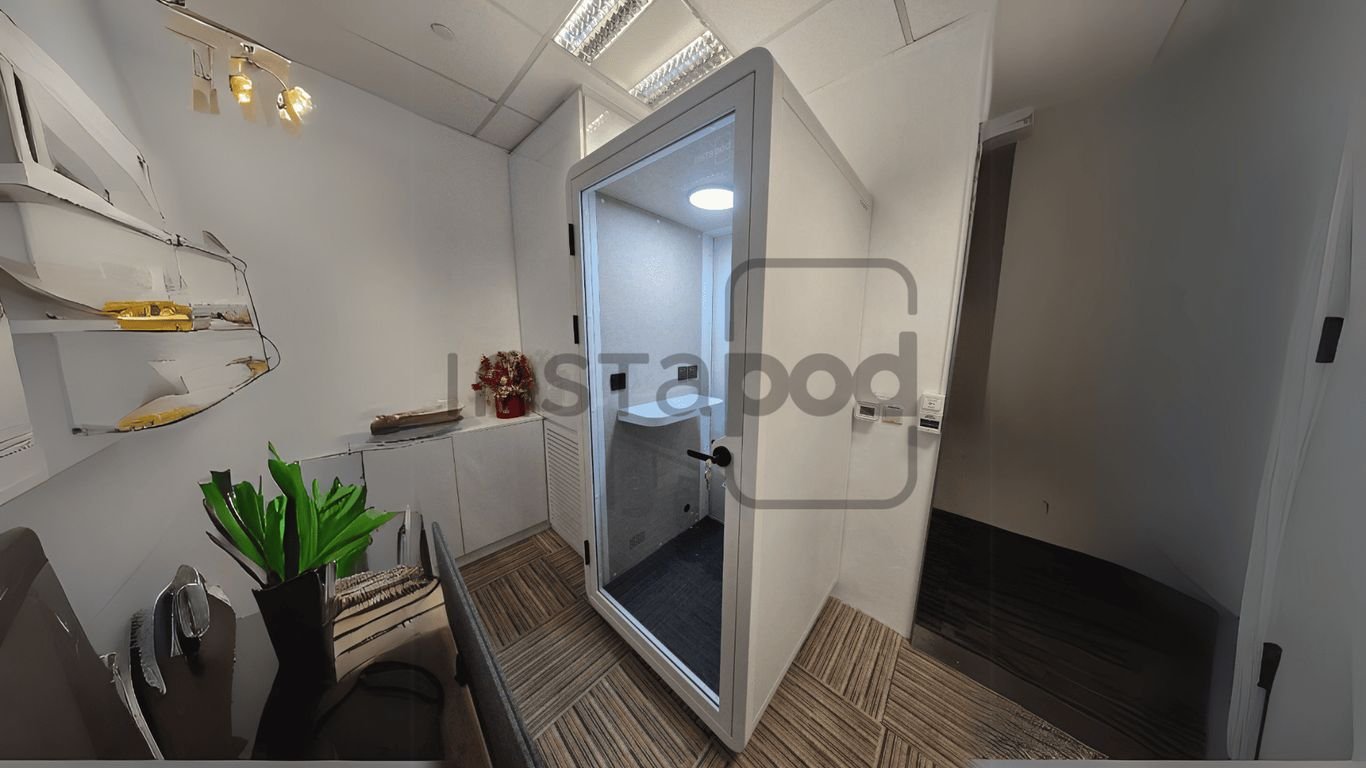
Video calls are a big part of work now, but let’s be real, they can be a total headache. Trying to sound professional when there’s a marching band practicing next door? Not ideal. Open offices, while great for some things, are often noisy and full of distractions. That’s where the humble office phone booth steps in. These aren’t just little rooms; they’re becoming the secret weapon for making your video calls actually work well, giving you a quiet space to focus without bothering anyone else.
Key Takeaways
- An office phone booth provides a quiet, private spot for video calls, cutting out office noise and interruptions.
- These booths are built with materials that help block sound, making your calls sound clearer and more professional.
- Good lighting, air circulation, and enough space make these booths comfortable for calls, even longer ones.
- Placing booths where people can easily find them encourages more people to use them.
- Using an office phone booth helps employees feel more comfortable and less stressed, which is good for morale and keeping people happy at work.
The Rise Of The Office Phone Booth
Let’s face it, the whole idea of the open office, meant to spark collaboration, often ends up being a constant barrage of noise. You’ve got sales calls happening, keyboards clacking away, and coworkers chatting – it’s not just annoying, it can really mess with productivity. Some studies even say it can cut down how much work gets done by a lot and make people more stressed. That’s where these office phone booths come into play.
Think of them less as a fancy extra and more like a necessary tool. They’re like little private spots you can use whenever you need to focus. They give you the quiet you need for important calls, video meetings, or just getting some deep work done, all without messing up the open feel of your office.
Addressing Open Office Distractions
The modern office, especially those with an open layout, can be a real challenge for concentration. Walls are down, and work areas are often spread out. While this setup can be great for quick chats and feeling connected, it’s a disaster when you need to have a private conversation or a meeting that requires focus. The constant hum of activity means you’re always a little bit on edge, waiting for the next interruption. It’s estimated that an office worker gets distracted every few minutes, and getting back on track can take a significant chunk of time. This isn’t just about lost minutes; it’s about the mental energy it takes to constantly filter out noise and distractions.
Reimagining Traditional Workspaces
We’ve moved away from the old cubicle farms, and that’s a good thing in many ways. But this shift towards more open and fluid spaces has created a new problem: where do you go for privacy? The traditional phone booth, the kind you’d find on a street corner, is long gone. However, the need for that private, quiet space hasn’t disappeared. Instead, it’s moved indoors. These new office phone booths are essentially bringing back that concept of a personal, sound-dampened sanctuary, but adapted for the modern workplace. They offer a way to get that much-needed privacy without needing to build permanent walls.
The Evolution of Communication Hubs
As our work lives become more digital and remote, the way we communicate has changed dramatically. Video conferencing is now a standard part of many jobs. But holding a professional-looking and sounding video call in a noisy, open office is tough. These booths are evolving from just a place to take a quick call to becoming dedicated communication hubs. They are designed to support the technology we rely on, providing a stable, quiet environment where video calls can happen without the usual office chaos. They represent a step forward in how we manage our communication needs within a shared workspace.
Enhancing Video Call Quality With Booths
Let’s be honest, video calls can be a real headache in a busy office. You’re trying to nail that client presentation or have a serious chat with a colleague, but suddenly there’s a printer whirring, someone walking by your screen, or just general office chatter. It’s distracting, and frankly, it doesn’t make you or your company look very professional. That’s where these office phone booths really shine. They’re not just fancy boxes; they’re designed to fix those exact problems.
Boosting Audio Clarity and Professionalism
Think about it: if people can’t hear you clearly, or if they’re constantly hearing background noise, your message gets lost. It’s like trying to have a conversation in the middle of a rock concert. These booths are built with sound-dampening materials, kind of like what you’d find in a recording studio, but for everyday office use. This means your voice comes through crisp and clear, and you don’t have to repeat yourself a dozen times. This level of audio clarity makes a huge difference in how seriously your calls are taken.
Here’s a quick look at how they stack up:
| Feature | Open Office Space | Phone Booth |
|---|---|---|
| Audio Clarity | Often low | High |
| Background Noise | High | Significantly low |
| Professionalism | Inconsistent | Consistent |
Minimizing Background Noise and Interruptions
Open offices are great for collaboration, but they’re terrible for focused calls. People walking by, phones ringing, colleagues chatting – it all adds up. A phone booth acts like a shield against all that chaos. It creates a private bubble where you can actually concentrate on the conversation. No more awkward pauses while you wait for a distraction to pass or someone to stop talking behind you. It’s a dedicated space where your call is the only thing that matters.
The biggest win is reclaiming your focus. When you’re not fighting against the office noise, you can actually listen and respond thoughtfully. This simple act of reducing distractions can dramatically improve the effectiveness of your communication.
Creating a Focused Environment for Calls
Beyond just blocking noise, these booths are designed to be comfortable and functional for calls. They usually come with:
- Good Lighting: Soft, adjustable LED lights that don’t cause glare or eye strain, even on longer calls.
- Proper Ventilation: Built-in fans keep the air fresh, so you don’t feel stuffy or drowsy.
- Ample Space: Enough room to sit comfortably, maybe even with a small desk for your laptop or notes.
- Power Outlets & USB Ports: So you’re never scrambling for a charger mid-call.
These features might seem small, but they add up. They create a space where you can actually relax a bit and concentrate on the person you’re talking to, rather than on your surroundings. It makes the whole experience less stressful and more productive.
Key Features Of An Effective Office Phone Booth
When you’re looking at office phone booths, or maybe even privacy pods and meeting room pods, it’s easy to get lost in all the options. But really, a good one boils down to a few core things. You want something that actually works, not just looks pretty.
Prioritizing Soundproofing And Acoustic Ratings
This is probably the most important part. If you can hear everything happening outside, or if people outside can hear your call, then it’s not doing its job. Look for specific noise reduction ratings. A common benchmark is around 30 dB, which means it significantly cuts down on background chatter and other office noise. A booth that doesn’t have solid acoustic performance is basically just a decorative box. When you’re comparing different privacy booths, ask for the certified dB reduction. Anything less might mean you’re compromising on call quality.
Ensuring Comfort With Ventilation And Lighting
Nobody wants to sit in a stuffy, dark box. Good ventilation is key. You want a system that exchanges the air regularly, so you don’t feel drowsy or get a headache during a call. Aim for an Air Changes per Hour (ACH) rating that ensures fresh air. Think about lighting too; it should be bright enough to see clearly but not harsh. Adjustable lighting is a nice bonus.
Designing For Usability With Ample Space And Amenities
These aren’t just for quick phone calls anymore; they’re for video meetings. So, they need to be comfortable. Is there enough room to sit without feeling cramped? Is there a small desk or shelf for your laptop and notebook? Power outlets and USB ports are a must for charging devices. You want these privacy pods to be functional spaces, not just tiny rooms.
A well-designed booth considers the user experience from start to finish. It’s not just about blocking sound; it’s about creating a productive and comfortable micro-environment for focused work and communication.
Strategic Placement For Maximum Adoption
So, you’ve got these cool new phone booths, but where do you actually put them so people actually use them? It’s not just about sticking them anywhere. Think about how your team moves around and what they need. The goal is to make them so easy to find and use that people don’t even think twice about stepping into one for a call.
Creating Accessible ‘Privacy Hubs’
Putting these booths in places that make sense is key. If someone has to walk halfway across the building or go on a wild goose chase to find a quiet spot, they’re probably just going to try and make do at their desk, which defeats the whole purpose. We want these booths to be like little oases of quiet, readily available when the need strikes.
- Near High-Traffic Areas: Place booths close to where people naturally gather or walk, like near break rooms or main corridors. This makes them super convenient for spontaneous calls.
- Adjacent to Workstations: Having a booth just a few steps away from desks means employees can quickly duck in without disrupting their workflow or colleagues.
- Visible and Inviting: Don’t hide them away. Make sure they’re easy to spot, maybe with clear signage or a design that stands out a little.
The best placement feels intuitive. It should be obvious where to go when you need a private moment for a call, without having to consult a map or ask around.
Distributing Booths Throughout The Office
One booth in a corner isn’t going to cut it for a busy office. You need to spread them out so everyone has a fair shot at using one without a long wait. Think about different departments or teams and their specific needs.
| Placement Area | Accessibility | Likelihood of Use |
|---|---|---|
| Near team workstations | High | Very High |
| Central common areas | Medium | High |
| Out-of-the-way corners | Low | Low |
Considering Sightlines And User Comfort
When you’re deciding on locations, take a moment to think about what it’s like to actually use the space. Are the booths tucked away so much that people feel isolated? Or are they so out in the open that they feel exposed? Finding that sweet spot is important. Also, make sure there’s enough room around them for people to walk by comfortably without feeling like they’re intruding on someone’s call. It’s about creating private spaces that still feel connected to the rest of the office environment.
Choosing The Right Office Phone Booth
So, you’ve decided that a phone booth is the way to go for your office. That’s great! But not all booths are created equal, and picking the wrong one can be a real bummer. It’s like buying a fancy coffee maker that only brews lukewarm water – totally defeats the purpose. You need to look past the shiny exterior and check out what’s really going on under the hood. Getting the specs right is key to making sure your investment actually helps your team.
Understanding Acoustic Performance Needs
This is probably the most important part. If a booth can’t block out noise, it’s just a small, expensive room. You need to ask suppliers for the actual sound reduction rating, usually measured in decibels (dB). A good booth should offer a significant reduction, making conversations inside inaudible from the outside. Think about the general noise level in your office – a bustling open-plan space will need a booth with a higher acoustic rating than a quieter area. Don’t just take their word for it; ask for certified ratings.
- Look for certified dB ratings: Reputable manufacturers will have this data readily available.
- Consider the type of calls: Are they mostly quick chats, or long video conferences with sensitive information?
- Test if possible: If you can, try making a call from a demo booth to see how it feels.
Evaluating Ventilation and Airflow Ratings
This is where many booths fail, and it’s a real productivity killer. If the air inside gets stale and stuffy, people won’t want to use it, no matter how quiet it is. You need to check the ventilation system. A good system will exchange the air multiple times per hour (ACH). Without enough fresh air, CO₂ levels rise, making people feel tired and unfocused. It’s a silent problem, but a big one.
- Air Changes Per Hour (ACH): Aim for a rating that ensures fresh air is circulated frequently, ideally every few minutes.
- Fan Noise: Make sure the ventilation fan isn’t adding to the noise problem.
- User Control: Some booths offer adjustable fan speeds, which is a nice bonus.
Assessing Materials, Safety, and Durability
When you’re looking at booths, think about what they’re made of and if they’re built to last. Safety is a big deal, especially with electrical components. You want to see certifications like UL or CE, which show that the electrical parts have been tested and meet safety standards. Also, consider the structural materials – is it a sturdy frame? Is the glass safe (tempered or laminated)? And what about fire ratings for the interior materials? A booth that’s falling apart or poses a safety risk is just not worth it.
Choosing a booth isn’t just about aesthetics; it’s about functionality, safety, and long-term value. A well-chosen booth becomes a reliable tool for your team, while a poorly chosen one becomes a neglected expense.
Here’s a quick checklist to keep handy:
- Acoustic Rating: Certified dB reduction.
- Ventilation: High ACH rating, low fan noise.
- Electrical Safety: UL or CE certification.
- Structural Integrity: Robust frame, safety glass.
- Fire Ratings: For interior materials.
- Warranty: What’s covered and for how long?
- Total Cost: Including shipping, taxes, and installation.
The Impact On Employee Well-Being
It’s easy to focus on the productivity gains and call quality improvements that office phone booths bring, but let’s not forget about the people using them. These little spaces can actually make a big difference in how people feel about their workday.
Providing a Recharge Station for Introverts
Think about it: a lot of people aren’t energized by constant social interaction. For introverts, the open office can be a real drain. Having a quiet, private booth available means they have a place to go when they need to step away from the noise and bustle for a bit. It’s not about hiding; it’s about managing energy. This simple amenity can be a game-changer for their comfort and ability to focus.
Demonstrating Commitment to Neurodiversity
Beyond introversion, people have all sorts of different needs when it comes to their work environment. Some folks need absolute quiet to concentrate, while others might be sensitive to certain sounds or visual clutter. Providing these private spaces shows that the company is thinking about everyone’s needs, not just the majority. It’s a tangible way to support a diverse workforce and make sure everyone has a fair shot at doing their best work.
Improving Morale and Retention Through Privacy
When employees feel respected and supported, they’re generally happier and more likely to stick around. Having access to private spaces for calls or focused work can reduce daily frustrations. No more awkward silences trying to find a quiet corner, or being overheard during a sensitive conversation. This sense of control over one’s environment contributes to a more positive workplace culture.
Here’s a quick look at how these booths can help:
- Reduced Stress: Less background noise and fewer unexpected interruptions mean a calmer workday.
- Increased Control: Employees can choose when and where they need privacy, leading to a better sense of autonomy.
- Better Focus: Dedicated quiet time allows for deeper concentration, making work feel more manageable.
- Improved Mood: Feeling understood and accommodated can significantly boost overall job satisfaction.
Ultimately, investing in these private spaces is an investment in your people. It acknowledges that different work styles and needs exist and provides practical solutions. This can lead to a more engaged, less stressed, and more loyal team.
Wrapping Up
So, there you have it. Office phone booths aren’t just a fancy office perk; they’re a practical solution to a real problem. In today’s world, where video calls are a daily thing, having a quiet, private space makes a huge difference. It means clearer conversations, fewer interruptions, and honestly, just less stress for everyone involved. If your office is still struggling with noisy video calls and constant distractions, it might be time to seriously consider adding a few of these pods. It’s a small change that can lead to big improvements in how your team communicates and gets work done.
Frequently Asked Questions
Why are offices putting in these phone booths?
Offices are adding phone booths because they help people have better video calls and focus. In open offices, it’s noisy and distracting. These booths give people a quiet, private space to talk without interruptions, making work calls sound more professional and helping people concentrate.
How do these booths make video calls better?
Phone booths are built to block out noise. They use special materials that soak up sound, so you won’t hear office chatter or other distractions. This means your voice sounds clearer, and you can hear the other person better, making the whole call smoother and more productive.
What makes a phone booth good for calls?
A good phone booth has strong soundproofing to keep noise out and conversations private. It also needs good airflow to keep the air fresh, comfortable lighting, and enough space to sit and work with a laptop. Things like power outlets for charging devices are also important.
Where should offices put these booths?
It’s best to place booths where people can easily find them, like near work areas or common spots. Putting a few together can create ‘privacy zones.’ It’s also smart to avoid putting them where people feel like they’re being watched, so they feel more comfortable using them.
Are these booths safe and comfortable?
Yes, good booths are designed with safety in mind. They use materials that are safe if there’s a fire and have electrical parts checked by safety experts. They also have fans for fresh air and good lights, so they don’t feel stuffy or dark, making them pleasant to use.
How do phone booths help employees feel better at work?
Phone booths give people a private space to escape the busy office for a little while. This is especially helpful for people who are more introverted and get tired from too much noise and activity. Having this quiet spot can reduce stress, make people happier, and show that the company cares about everyone’s needs.