No pods added to your quote request yet. Add some now for a free quote!
Key Takeaways
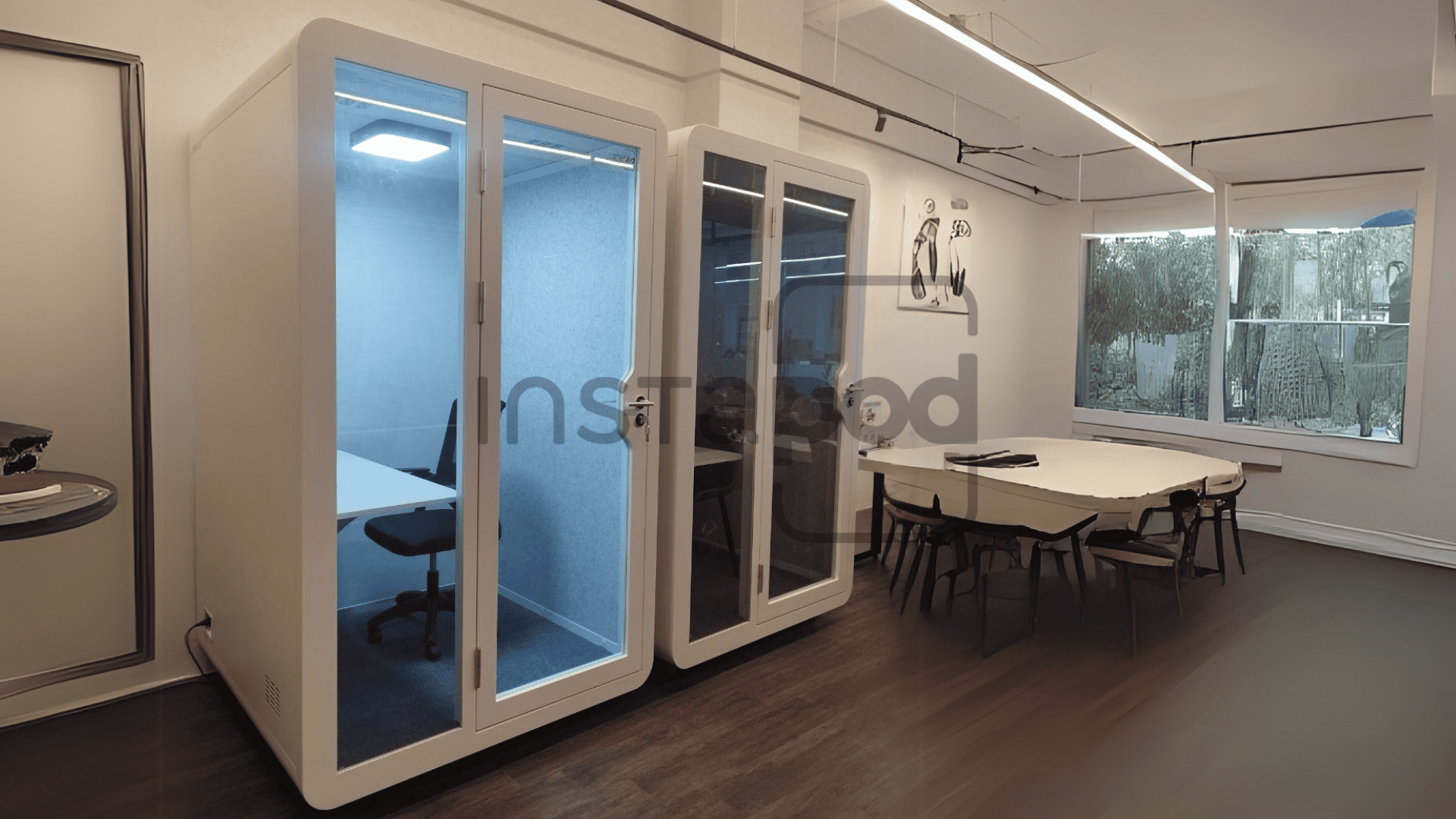
Modern work environments are shifting toward modular, flexible floor plans that prioritize both collaboration and private focus time. The following list summarizes key benefits for offices adopting soundproof solutions:
- Meeting booths reduce office noise levels significantly for employees.
- These pods offer a scalable alternative to traditional hard-walled construction.
- Real-time usage data helps managers optimize underutilized floor space.
- Dedicated private spaces allow for superior communication during focus work.
- Modular designs allow companies to repurpose space as business needs evolve.
The evolving office environment in Singapore
Singaporean offices are increasingly defined by a delicate balance between high-density footprints and the need for a comfortable creative atmosphere. As businesses move away from rigid, legacy layouts, they are adopting more agile furniture solutions that adapt to daily fluctuations in occupancy. This shift is reshaping how employees utilize common areas, turning traditional desks into hubs for quiet, concentrated output.
Managing high-density workspace constraints
Maximizing every square meter is a priority for commercial real estate in Singapore. By using compact, high-efficiency furniture, companies find that they can provide the necessary amenities without requiring additional square footage. These solutions ensure that even small offices maintain a professional atmosphere while avoiding the feeling of overcrowding.
Navigating the challenges of hybrid work models
Hybrid schedules mean that office attendance varies significantly from Monday to Friday. Organizations must handle the unpredictability of foot traffic while maintaining a workplace that feels vibrant for those who arrive on-site. Investing in modular architecture allows facilities managers to scale their infrastructure based on seasonal usage peaks.
Balancing open-plan layouts with the need for privacy
Open-plan offices often suffer from high ambient noise, which disrupts deep work sessions. By integrating designated spaces for individual or pair work, businesses protect the quietude required for sustained cognitive exertion. Creating this contrast helps employees stay focused throughout their workday while still allowing them to tap into the collaborative energy of an open floor.
Improving internal communication flow with meeting booths
Incorporating meeting booths directly into the center of busy workspaces changes how departments share information. Instead of treating every interaction as a formal appointment, teams can engage in quick discussions the moment an idea surfaces. This fluidity sustains momentum throughout the week, as workers transition between solo contributions and brief group consultations.
Minimizing background noise during team interactions
When voices from surrounding desks bleed into meetings, clarity suffers and participants become distracted. A soundproof booth ensures that critical discussions remain intelligible, allowing the focus to stay on the agenda. This acoustic separation creates a protected zone where team members can speak at normal volumes without disrupting the surrounding group.
Eliminating commute time between workspaces and conference rooms
Walking to a distant, formal conference room often breaks the flow of an ongoing project. Having a work booth readily available on the main floor enables spontaneous, efficient collaboration without these travel delays. Consider how proximity impacts your team’s throughput:
- Decreased time spent navigating office corridors saves minutes every hour.
- Instant access to private space supports a more responsive organizational culture.
- Shortening physical distances fosters a more connected and available management team.
- Proximity encourages staff to resolve minor issues before they escalate.
Teams that utilize multiple distributed booths report that they spend less time searching for available space and more time actively solving problems.
Streamlining spontaneous syncs and quick huddles
Quick huddles should feel natural rather than like a massive logistical undertaking. By providing immediate housing for these short chats, companies ensure that important feedback loops remain closed. These office booths act as reliable anchors for daily standups, ensuring everyone stays aligned without requiring complex schedule reservations.
Tactical advantages for project coordination workflows
Strategic coordination depends on the ability to isolate specific, sensitive, or high-priority tracks in a project. When project teams have access to secure, private environments, they can discuss complex plans without the inherent risks of shared-space broadcasting. The following table illustrates common coordination improvements seen in firms leveraging these installations.
| Coordination Metric | Traditional Office | Pod-Enabled Workspace |
|---|---|---|
| Booking Efficiency | High manual overhead | Low with automated logs |
| Noise Distractions | Frequent interference | Negligible impact |
| Space Flexibility | Fixed and limited | Highly modular |
These enhancements transform how internal teams approach their daily project cycles. By removing physical barriers to collaboration, firms enable their staff to focus entirely on their specific business objectives.
Enabling confidential discussions for sensitive business matters
Some topics require total auditory privacy, which is rarely achievable in a standard open office. A dedicated, private environment allows executives and team leads to discuss personnel matters or proprietary strategies with full confidence. This level of security is essential for high-stakes business operations where conversation secrecy is non-negotiable.
Facilitating faster cross-departmental collaboration
Cross-departmental work often stalls because finding a common space for teams to gather is difficult. Distributing pods across the floor makes it easier for departments to merge for a quick lunch-and-learn or a cross-functional check-in. This ease of movement breaks down silos and encourages a more interconnected, multi-disciplinary work culture.
Reducing reliance on bulky, underutilized traditional meeting rooms
Large conference rooms are magnets for inefficiency when only two people use them. Replacing large, underutilized spaces with smaller, specialized units ensures that every square centimeter is productive. This transition right-sizes the office, ensuring that meeting space capacity always matches the actual size of the gathering.
Essential features for modern office pods
Modern pods integrate a variety of creature comforts that keep users productive for extended intervals. Because these structures are designed for performance, they prioritize long-term utility alongside basic physical necessities. When evaluating options, look for an emphasis on interior comfort that mimics a premium home-office setup.
Advanced acoustic insulation and soundproofing standards
High-quality materials ensure that noise reflects internally rather than escaping. Precision manufacturing ensures that the seals around doors and ventilation units block as much outside sound as possible. Reliable soundproofing is the defining characteristic that separates a functional meeting pod from a simple cubicle.
Integrated power, high-speed data, and connectivity hubs
Disconnected technology leads to frustration, so every unit must feature seamless power access. Ports for ethernet and universal charging cables ensure that employees can walk in and immediately start their workday with total battery security. When all devices remain charged and connected, the transition into a focus session is instantaneous.
Optimized ventilation and climate control systems
Air quality determines how long an occupant feels comfortable inside a contained space. Quiet, high-velocity airflow ensures the interior remains fresh throughout the day, preventing the stuffiness often associated with small enclosures. Proper climate control is non-negotiable for ensuring that user comfort remains high during multi-hour focus periods.
Ergonomic interior design for long-duration tasks
An ergonomic interior is vital for avoiding physical fatigue during long, taxing workdays. The chair height, tabletop positioning, and aesthetic finish work in tandem to support healthy posture. By treating the interior like a dedicated station for concentrated professional output, developers prioritize the actual physical health of the user.
Strategic implementation for maximum workplace performance
Implementing new furniture systems requires a clear layout strategy that aligns with the natural movement of employees. Rather than placing units randomly, organizations should analyze how people naturally traverse their office space to choose the most logical spots for installation. Successful implementation makes the pods feel like a natural part of the office landscape rather than an awkward afterthought.
Strategic placement of modular furniture transforms how people utilize their surroundings, turning unused corners into high-performance zones for concentration and collaborative interaction.
When managers use data to track which areas see the most engagement, they can rotate their furniture layout to better serve their team’s evolving requirements. This iterative approach ensures the office stays dynamic and responsive over time.
Identifying high-traffic zones for pod placement
Placing units near high-traffic areas makes them visible and accessible to the entire team. By positioning them in transitional spaces, you ensure everyone knows where to go when they need to step away for a quick call. This high-visibility approach encourages frequent use, justifying the space allocated to these items.
Planning for future scalability of modular furniture
As your business grows, your needs will shift in both scope and volume. Modular solutions allow you to expand your private zones without needing to alter the building’s permanent structural footprint. This growth-oriented mindset ensures that your workplace remains capable of supporting the team as it scales throughout the years.
Aligning installation requirements with Singapore’s building safety codes
Regulatory compliance is a critical step in the successful integration of any modular structure. By selecting vendors who maintain strict adherence to fire, electrical, and seismic safety guidelines, you eliminate the risk of retrofitting or permit delays. Working with compliant furniture options provides a secure foundation for safe, efficient office growth.
Leveraging digital booking systems to monitor usage trends
Booking systems allow you to see exactly how and when employees gather within the pods. This data identifies whether you need more units for intensive collaborative days or more focus-oriented pods for individual deep work. Using these patterns simplifies the management of office resources and helps leadership make informed decisions about future floor plan adjustments.
Achieving long-term ROI in corporate real estate
Managing assets in corporate real estate requires careful consideration of how every square meter adds value to the firm’s bottom line. Modular pods yield a higher return on investment because they create more usable desk space without the high costs of traditional construction. This versatility allows firms to pivot their interiors whenever lease cycles or business strategies change.
Reducing costs associated with permanent structural renovations
Traditional office renovation involves costly contractor fees and weeks of disruption. Modular pods offer an affordable, sustainable alternative that avoids the mess and expense of wall-building. This approach saves significant upfront capital while providing a higher level of long-term flexibility.
Increasing the functional value of square footage
Every square meter of your office should contribute to productivity, and modular pods turn underutilized corners into active work hubs. This ensures that your facility is working as hard as your employees. By efficiently diversifying your space, you eliminate empty pockets within the office that offer no tangible business value.
Boosting overall employee productivity and focused work sessions
When staff have a guaranteed, soundproof environment to retreat to, their output increases dramatically. These pods minimize distractions and allow them to finish complex tasks in a fraction of the time. Improving the conditions for focus work pays dividends through higher finished quality and reduced project turnaround times.
Conclusion
Transitioning to a modular office design allows firms to adapt to modern coordination needs efficiently. By integrating soundproof units for private meetings and focus work, business leaders in Singapore can ensure their workspaces remain productive and cost-effective. Investing in this infrastructure creates a flexible environment where communication stays fluid and high-quality results remain the standard.
Frequently Asked Questions
How long does it typically take to install a modular work booth?
Most modern modular booths can be installed by professionals in just a few hours, causing very little disruption to the rest of the office environment.
Can these booths be relocated if we change our office layout?
Yes, because these units are modular and free-standing, they can be easily moved to different areas of the floor or even a completely new office space as your needs change.
Will I need to apply for building permits to add these booths?
Most modular booths are designed to align with standard fire and electrical codes, so they often do not require the intensive permitting processes needed for traditional structural renovations.
How does the ventilation system work in a small soundproof pod?
These booths utilize specialized, low-noise ventilation fans that cycle fresh air into the unit continuously throughout the day, ensuring the temperature remains comfortable during use.
Are these quiet enough for high-stakes business calls?
They are specifically engineered with professional-grade acoustic insulation to block external noise, making them ideal for sensitive phone calls and video conferences where clarity is critical.
Do we need a dedicated internet connection for each pod?
Modern units often come equipped with integrated data ports, allowing you to connect them directly to your existing office network for reliable, high-speed internet connectivity.
How do managers measure the impact of these booths on productivity?
Many companies utilize digital booking systems to track usage rates, which provides managers with analytics on how often their team uses these spaces for deep work or collaboration sessions.