No pods added to your quote request yet. Add some now for a free quote!
Key Takeaways
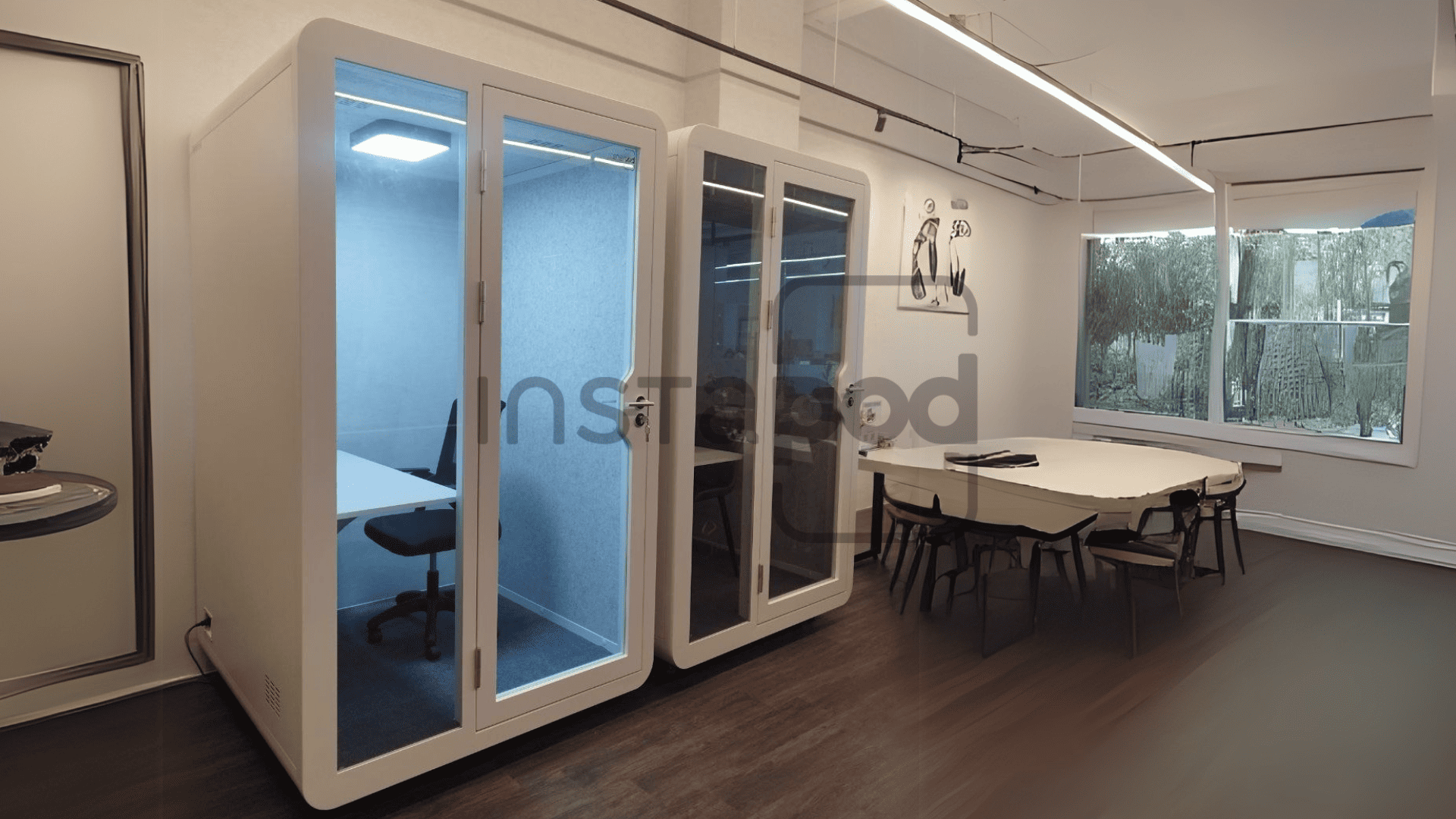
Adopting private meeting solutions helps modern law firms balance open-office collaboration with the high demand for absolute client confidentiality and focus.
- Improved acoustic privacy ensures that sensitive attorney-client conversations remain protected and private.
- Modular infrastructure allows firms to adapt floor plans without the high costs of permanent construction projects.
- Soundproof enclosures help staff maintain concentration by creating quiet zones in busy environments.
- Strategic placement of booths supports hybrid work models while maximizing existing premium office space.
- Better environmental control leads to higher client satisfaction during long-duration virtual depositions or hearings.
The importance of acoustical privacy in legal environments
Legal professionals operate under strict mandates regarding the protection of sensitive data and client interactions. As open-plan offices gain popularity in global business hubs, the traditional wall-to-wall partition has often been replaced by shared layouts, which can inadvertently risk the security of private conversations. Implementing a dedicated acoustic solution ensures that the firm maintains its obligation to protect information by providing a controlled space for sensitive work.
Maintaining attorney-client privilege during consultations
Preserving confidentiality is a core tenet of legal practice, and modern firms must ensure their facilities reflect the critical need for total confidentiality during every conversation. When a lawyer conducts a call in an open area, accidental leakages of privileged information can compromise case integrity. By utilizing a work booth for specific discussions, firms create a controlled environment where sound attenuation is a standard expectation.
- Use private chambers to avoid overheard sensitive details during remote client consultations.
- Ensure all phone calls are held in isolation to keep case strategies secure from nearby visitors.
- Provide a dedicated, sound-dampened area that signals to clients that their privacy is a top priority.
These additions offer a simple way to maintain the high standards required for legal work without sacrificing the firm’s overall design aesthetic.
Complying with Singapore’s Personal Data Protection Act
Compliance with local data regulations is not merely a technical concern but an physical one, as sensitive files and discussions must be handled with care. The PDPA requires rigorous safeguards for personal information, yet modern high-pressure offices frequently overlook the physical vulnerability of in-person discussions. By integrating SyncPod systems, firms reinforce their commitment to information security, as these enclosures are built to mitigate acoustic leakage that could violate data protection requirements.
Reducing workspace distractions in high-pressure legal settings
Lawyers often handle high-stakes document reviews that require deep concentration or extended periods of uninterrupted thought. The noise floor in a typical open-office setting often fluctuates with team meetings and impromptu gatherings, creating persistent barriers to complex analytical tasks. Providing a QuietFlow workstation offer allows for deep work segments, enabling staff to escape office noise to complete time-sensitive filings or research.
Enhancing productivity with integrated meeting booths
Modern legal environments demand flexibility, allowing teams to pivot quickly between collaboration and independent research without wasting time traveling to remote meeting rooms. Integrating agile office booths transforms floor plates into high-performance zones, allowing lawyers to manage their workflow more fluidly while minimizing wasted movement. By prioritizing these assets, firms can reduce the reliance on hard-wired conference spaces that are often locked behind scheduling conflicts or maintenance needs.
Facilitating seamless virtual depositions and client hearings
Virtual depositions require precise technology and an environment that prevents external disruptions to keep testimony clear and professional. The following table illustrates the typical performance and efficiency markers observed in firms implementing high-standard acoustic solutions.
| Feature | Conventional Room | Modern Meeting Booth | Efficiency Impact |
|---|---|---|---|
| Noise Attenuation | Variable | High | Significant improvement |
| Setup Time | Minutes (booking) | Immediate | Optimized workflow |
| Space Utilization | Low | High | Higher density achievable |
Standardizing on high-quality enclosures allows legal teams to focus entirely on the proceedings rather than managing the technology or the room acoustics.
Minimizing session interruptions for complex document review
Focused research is the foundation of effective legal strategy, yet finding a quiet space to dive into deep document review is difficult in modern open floor plans. The ability to step away into an AcoustiLaw pod, which uses specialized soundproofing to maintain a silent interior, provides the necessary isolation for deep analysis.
A focused environment is essential when the accuracy of a legal document depends entirely on the lawyer’s ability to avoid outside interruptions and maintain a state of sustained clarity.
By ensuring that these booths are readily available, firms can better manage the intense mental load required for their most complex case files.
Optimizing floor space efficiency in premium Singapore real estate
In markets where office rents remain at a premium, making every square meter count is vital for firm profitability. Modular booth systems allow teams to define work areas in under-utilized architectural corners, effectively expanding the firm’s capacity without traditional construction. This adaptability ensures that the firm remains responsive as headcount shifts, keeping overhead costs aligned with immediate operational requirements.
Key features to prioritize for professional legal offices
Selecting the right infrastructure requires careful attention to material quality and technical specifications that meet the needs of a demanding legal practice. A professional-grade booth should integrate seamlessly into the office, providing consistent performance across daily tasks while resisting the wear and tear of a busy firm.
Advanced soundproofing materials and STC ratings
Superior acoustic performance relies on the Sound Transmission Class (STC) rating of the enclosure, which measures how well materials effectively block sound. For legal environments where conversation privacy is paramount, choosing units with high-density foam, sealed-tapered doors, and vibration-dampening panels is essential. These components create a quiet bubble, ensuring no sensitive discussions escape the booth’s interior during high-stakes client meetings.
Ergonomic environmental control for long-duration meetings
Temperature regulation and airflow are often overlooked features that significantly impact the productivity of anyone using a compact meeting booth. Because lawyers often spend multiple hours in these spaces during virtual hearings, integrated, silent ventilation systems are necessary to ensure the interior remains comfortable throughout the session. Proper lighting is also a standard requirement, as adjustable color temperatures can prevent eye strain during long document reviews.
Seamless integration of legal conferencing hardware
Modern legal calls require dedicated cable management and power, as well as space for secondary monitors to review evidence across multiple screens. A professional-grade solution must support these needs natively rather than requiring temporary or messy cabling configurations. By ensuring all technology is hidden and ready to use, firms provide their lawyers with a reliable environment for every professional interaction.
Strategic implementation in modern Singapore law firms
Successful adoption goes beyond simply purchasing equipment, requiring a thoughtful strategy that aligns the physical placement of units with the firm’s workflow and internal branding. Leadership should evaluate how these units support current team behaviors, adjusting the distribution of units to maximize accessibility and usage rates throughout the day.
Selecting optimal locations within an open-office floor plan
Placing private pods effectively means finding the balance between accessibility near high-traffic zones and the need for relative calm. The best placement helps prevent bottlenecks by ensuring that lawyers are never more than a few steps from a quiet environment, which encourages spontaneous use for unexpected client calls that arise during the work day.
Aligning modular booth aesthetics with firm branding
Each addition to the office should reinforce the firm’s visual identity and professional reputation. Modern design options allow firms to customize exterior textures and lighting to match their corporate interior, ensuring that these functional booths feel like a cohesive part of the architecture rather than an afterthought. This alignment demonstrates that the firm is intentional about providing first-class facilities for its team.
Planning for scalability as firm communication needs evolve
Scalability is a critical factor for law firms expecting growth or planning changes in their office usage. Modular designs allow for the simple addition of more units or the relocation of existing pods to support shifting team needs. Having a long-term plan ensures the office remains agile, allowing firm leadership to scale their private space infrastructure without needing to disrupt ongoing operations or invest in permanent build-outs.
Measuring the efficiency gains of private meeting spaces
Understanding the impact of these spaces on firm efficiency helps leadership justify the investment and refine their workplace strategy. By tracking how frequently these pods are used and gathering anecdotal feedback from staff regarding their ability to focus, firms can confirm the direct correlation between acoustic infrastructure and daily performance.
Evaluating time savings compared to reserving central boardrooms
Moving away from the central booking bottleneck is one of the most immediate benefits identified by firms that provide accessible meeting pods. This eliminates the time spent navigating room calendars and moving between meeting spaces, keeping lawyers within their active workflow. The convenience of immediate access transforms how quickly teams can respond to urgent client inquiries.
Impact of improved acoustics on billable hour concentration
Distractions inherently degrade the precision required for high-quality legal output, which can inadvertently impact the efficiency of billable hour generation. By shielding consultants from background noise, the firm directly aids in maintaining the mental intensity required for complex research. When lawyers sustain higher levels of focus, they effectively complete work more accurately and with less need for iterative revisions.
Enhancing lawyer focus and employee well-being in hybrid workflows
In a hybrid work culture, creating a space where team members feel supported is essential for retaining top talent and promoting general office morale. Giving lawyers a calm, private sanctuary signals institutional commitment to their needs as professionals, which reduces the fatigue often caused by competing with the noise levels of a busy office. A better work experience contributes to lower burnout rates and a consistently higher standard of professional output across the entire team.
Conclusion
Providing dedicated meeting booths enables Singapore law firms to secure their sensitive client discussions while simultaneously boosting the individual focus of their team members. By prioritizing quality acoustics and ergonomic design, firms create an environment that honors client privacy and supports the high-intensity nature of legal work, ensuring they remain resilient in an evolving competitive landscape.
Frequently Asked Questions
Is a professional meeting booth better than a permanent wall construction?
A booth is typically faster to implement, significantly cheaper, and provides the flexibility to reconfigure office space without the disruption of traditional construction work.
How many booths does a mid-sized law firm usually need?
Ideally, firms assess their current volume of virtual calls and independent research needs to estimate an initial count, often starting with a ratio of one booth for every eight to ten attorneys.
Can these soundproof pods be moved if we relocate our office?
Yes, most modular booths are designed specifically to be disassembled and relocated, making them a long-term investment that travels with the firm as its needs and rental locations change.
Will the ventilation in a booth be quiet enough for sensitive calls?
High-quality modern enclosures use specialized, low-decibel ventilation systems that ensure air circulation remains silent enough to avoid any audible disturbance during professional phone or video calls.
How does an acoustic booth assist in maintaining lawyer focus?
By providing a consistent, sound-attenuated environment, these units remove the background cacophony of an open office, enabling lawyers to retain deep concentration when reviewing complex case files.
Is it possible to integrate conferencing technology into the booth?
Most units are built to support standard conferencing equipment, with dedicated power outlets and cable management channels hidden within the booth panels to keep the space clean and ready for work.
Do clients perceive these pods as professional environments?
Because they provide a private, high-performance setting for sensitive information, clients typically view these as professional indicators that the firm treats their confidentiality and time with high regard.