No pods added to your quote request yet. Add some now for a free quote!
It feels like everywhere you look these days, offices are trying to figure out how to make things work better. Open plans were supposed to be the answer for collaboration, but honestly, they often just end up being loud. People need places to focus, you know? That’s where privacy booths come in. They’re popping up as a pretty smart way to give people a break from the noise and actually get some real work done. It’s not about hiding away, but about having a choice to concentrate when you need to. These little spaces are changing how people use their workdays.
Key Takeaways
- Privacy booths create quiet areas in busy offices, helping people concentrate without being disturbed by noise or distractions.
- Using acoustic furniture and screens can help dampen sound and create visual separation, making spaces more conducive to focus.
- Well-designed focus zones support different work styles and can be particularly useful in hybrid work environments.
- Effective focus zones are designed with purpose, considering factors like lighting, layout, and clear usage guidelines, not just looks.
- Implementing privacy booths shows a company values employee attention and productivity, leading to better work and less burnout.
Creating Quiet Sanctuaries with Privacy Booths
Open offices are great for bouncing ideas around, but let’s be real, they can be a nightmare when you actually need to get some serious work done. That’s where privacy booths, or as some call them, acoustic office pods, really shine. They’re like little quiet zones you can drop into whenever the office noise gets too much. Think of them as personal sanctuaries designed to help you concentrate without the constant buzz of conversations or keyboard clicks.
Acoustic Furniture for Sound Dampening
It’s not just about having walls. The furniture itself can make a big difference in cutting down noise. Things like high-backed chairs with built-in sound-absorbing panels, or modular seating arrangements that have cushioned sides, do a lot of the heavy lifting. These pieces help soak up sound, making the whole space feel calmer. They give you that feeling of being in your own little world, ready to tackle tasks, without feeling totally cut off from everyone else.
Strategic Placement of Privacy Screens
Privacy screens are another smart way to create these focus areas. Modern ones are often sleek and can be moved around, so they don’t make a space feel permanently closed off. They’re really good at creating visual breaks and muffling those everyday distractions that pop up when everyone can see everyone else. Placing them strategically can help define quiet zones without needing full walls.
Office Pods for Concentration and Efficiency
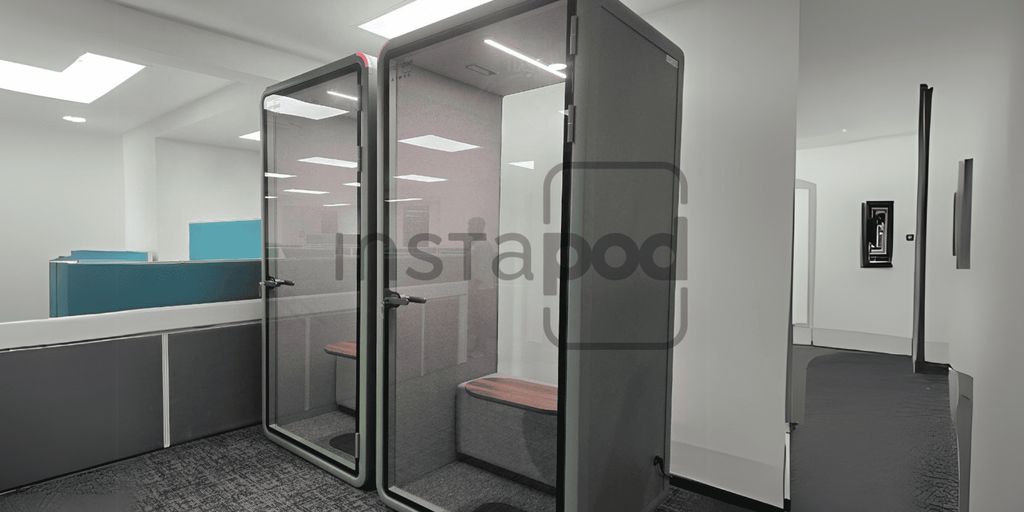
These enclosed units, often called meeting room pods or privacy pods, are specifically built to offer a quiet and private space. They’re a direct answer to the challenge of constant interruptions in open-plan offices. By providing a dedicated spot to shut out noise and visual clutter, they create an environment where productivity can really happen. It’s about giving your brain a clear signal that it’s time to focus, cutting down on all the little things that pull your attention away. They really help improve individual output and make the whole workspace run more smoothly.
Balancing Collaboration and Concentration
It’s a tricky thing, isn’t it? Trying to get work done when there’s always something going on around you. Open offices are great for those quick chats and brainstorming sessions, but when you actually need to buckle down and think, it can feel like you’re trying to read a book in the middle of a concert. That’s where privacy booths really shine. They give you a place to concentrate without completely cutting yourself off from everyone else. It’s about finding that sweet spot where you can still be part of the team but also have your own quiet corner when you need it.
Supporting Diverse Work Styles
Not everyone works the same way, and that’s totally fine. Some people thrive on the buzz of a busy office, bouncing ideas off each other. Others need quiet to really get into the zone. Privacy booths cater to both. They offer a dedicated space for those who need to focus, reducing the mental load that comes from constant background noise and interruptions. This flexibility means people can choose the environment that best suits their task and their personal work style, leading to better output overall.
The Role of Privacy Booths in Hybrid Models
With more people splitting their time between home and the office, the office space needs to work harder. When people come in, they often want to do the tasks that are harder to do at home – like collaborative meetings or focused, uninterrupted work. Privacy booths provide that structure. They offer a reliable quiet space, which can be hard to guarantee in a shared home environment, and give employees a clear reason to come into the office, knowing they have the resources to be productive.
Facilitating Quick Chats and Deep Thinking
Think of these booths as versatile tools. They’re perfect for when you need to have a private phone call without disturbing others, or when you need to really dig into a complex problem. But they also don’t prevent spontaneous collaboration. You can easily pop out of a booth to ask a colleague a quick question or join a brief discussion. It’s about having options, not limitations.
- Quiet Focus: Ideal for writing, coding, data analysis, or any task requiring deep concentration.
- Private Communication: Perfect for sensitive client calls, one-on-one meetings, or virtual team check-ins.
- Mental Reset: A place to decompress, gather thoughts, or simply have a moment of peace away from the office bustle.
Creating these dedicated spaces acknowledges that different types of work require different environments. It’s a practical way to support productivity and employee well-being without sacrificing the collaborative spirit of the workplace.
Designing Effective Focus Zones
Designing a focus zone isn’t just about throwing a few chairs in a quiet corner. It’s about being intentional with the space, showing your team that their concentration and deep work are valued. Think of it as creating a specific environment for a specific task – getting things done without the usual office buzz.
Intentional Design Over Aesthetics
Sure, a space can look nice, but if it doesn’t actually help people focus, what’s the point? The real goal here is function. You want a spot that feels separate from the main hustle, a place where someone can actually get into their work without being pulled out of it every five minutes. It’s less about looking like a magazine spread and more about creating a practical sanctuary.
Creating a Haven for Deep Work
So, how do you actually build this haven? It starts with understanding what kills focus. For most people, it’s noise and visual clutter. That means thinking about acoustics – using materials that absorb sound, like upholstered furniture or even simple fabric panels. Placement is also key; you don’t want your focus zone right next to the coffee machine or the main walkway. It needs to feel a bit tucked away, a place you can retreat to.
Here’s a quick breakdown of what makes a good deep work spot:
- Location: Away from main traffic, printers, and loud meeting rooms.
- Sound Control: Use furniture with sound-dampening qualities or acoustic screens.
- Lighting: Opt for warm, adjustable lighting, not harsh overhead fluorescents.
- Comfort: Comfortable seating that supports good posture, not slouching.
The most effective focus zones are designed with a clear purpose in mind. They signal to employees that their need for quiet concentration is understood and supported, leading to better output and reduced stress.
Signaling Value for Employee Attention
When you put effort into creating these zones, it sends a message. It tells your team, “We see you, we understand you need different environments to do your best work, and we’ve provided that.” This isn’t just about giving people a place to hide; it’s about acknowledging that different tasks require different settings. It shows you value their attention and are willing to invest in making their work experience better, which can really boost morale and productivity.
Key Elements of a Productive Focus Zone
Creating a space where people can actually concentrate isn’t just about throwing in a comfy chair and hoping for the best. It’s about putting together a few key things that work together. Think of it like setting up a good workstation – you need the right tools and the right environment.
Layered Lighting for Mood and Focus
Lighting is a big deal, and honestly, it’s often overlooked. Harsh, bright lights can feel like you’re under a microscope, making it hard to relax and think. Too dim, and you’ll be fighting sleep. The sweet spot is layered lighting. This means having a mix of general light for the area and a more focused light, like a desk lamp, right where you need it. Dimmable options are great because people can adjust the brightness to suit their eyes and the time of day. Warm light tones tend to be more calming and help with focus, unlike the stark, cool light you sometimes see in offices.
Thoughtful Layout for Accessibility
Where you put your focus zone matters a lot. It shouldn’t be right next to the coffee machine or the main walkway where everyone passes by. But it also shouldn’t be so far away that people feel completely cut off. A good spot is usually a bit tucked away, maybe in a corner or a less-used part of the office, but still easy to get to. It needs to be accessible so people can use it without feeling like they’re on a quest, but private enough to block out the usual office buzz.
Incorporating Natural Elements
Bringing in a bit of nature can really help people feel more settled and focused. This could be as simple as having a plant nearby or placing the focus zone where there’s some natural light coming in from a window. Studies show that being around plants or natural light can reduce stress and improve concentration. It makes the space feel less like a sterile office box and more like a place where you can actually do good work without feeling drained.
A well-designed focus zone sends a clear message: your ability to concentrate and do your best work is valued here. It’s not just about providing a quiet spot; it’s about showing respect for your team’s mental energy and their need for uninterrupted thought.
Addressing Open Office Challenges with Privacy Booths
Open office plans were supposed to make us talk to each other more, and sure, that happens. But what also happens is a lot of noise. You know, the constant chatter, phones ringing, people walking by your desk. It’s tough to get anything done when you’re always being interrupted. This is where those little office phone booths really come in handy. They’re like a personal escape hatch from the general office buzz.
Mitigating Noise and Distractions
Think about it: you’re trying to finish a report, or maybe you’re on an important client call. Suddenly, someone’s chatting loudly nearby, or a colleague stops by your desk to ask a quick question that turns into a ten-minute conversation. These aren’t just minor annoyances; they’re productivity killers. Studies have actually shown that open-plan layouts can lead to more stress and less satisfaction because of the constant noise and lack of personal space. It’s hard to get into a flow state when your environment is always buzzing with activity. The soundproofing in these booths cuts down on all that background noise. They act like shields against sound in those busy open office setups where everyone seems to be talking at once.
Providing Dedicated Quiet Zones
These booths give people a place to go when they really need to concentrate or have a private conversation without being overheard. It’s not just about having a quiet spot; it’s about giving your brain a clear signal that it’s time to focus. They offer a way to get that much-needed privacy and quiet without having to build permanent walls. It’s a flexible way to create these little pockets of calm in a busy environment. They’re a great alternative to traditional cubicles, offering better soundproofing and a truly distraction-free zone for focused work.
Enhancing Individual Output
When you can actually focus without constant interruptions, you get more done. It’s that simple. Employees get their own space to concentrate on tasks or have confidential chats without being overheard. Research shows workplaces with good soundproofing see about a 15 to 20 percent improvement in how well people perform their jobs. That makes sense when we think about how hard it is to focus when there’s constant chatter around. For companies trying to keep the benefits of open spaces while still giving workers some privacy, investing in these booths pays off both in terms of morale and actual work output.
Maximizing Productivity with Privacy Booths
Privacy booths aren’t just fancy furniture; they’re strategic tools for boosting how much work gets done. Think about it: constant interruptions and background noise chip away at your focus, making even simple tasks take longer. These pods offer a way to reclaim that lost time and mental energy.
Reducing Cognitive Load
Our brains have a limited capacity for processing information. When you’re in an open office, you’re constantly bombarded with visual and auditory stimuli – people talking, phones ringing, keyboards clacking. This forces your brain to work harder just to filter out the noise and stay on task. Privacy booths act like a mental reset button. By creating a quiet, enclosed space, they significantly reduce the amount of sensory input your brain has to manage. This frees up mental resources, allowing you to concentrate more deeply on the task at hand. It’s like clearing your desk before starting a big project; you can finally see what you need to do without distractions.
Empowering Employee Autonomy
Giving employees the choice to use a privacy booth when they need to focus is a powerful way to show trust and respect for their work styles. It means people aren’t forced into a one-size-fits-all environment. Someone who thrives on quiet concentration can grab a booth, while someone who needs to brainstorm out loud can still use collaborative spaces. This flexibility leads to happier employees who feel more in control of their workday. When people feel empowered, they tend to be more engaged and productive. It’s about providing options that cater to individual needs, rather than expecting everyone to adapt to the same conditions.
Boosting Overall Workplace Efficiency
When individuals can focus better, the entire organization benefits. Fewer errors are made, tasks are completed more quickly, and the quality of work often improves. Consider the impact of a few hours of uninterrupted deep work versus a full day of fragmented attention. The output difference can be substantial.
Here’s a quick look at how booths can impact efficiency:
- Reduced Task Completion Time: Studies suggest that focused work periods can be up to 50% more efficient than interrupted work.
- Fewer Errors: A quiet environment minimizes distractions that can lead to mistakes, especially in detail-oriented tasks.
- Improved Problem-Solving: Deep concentration allows for more thorough analysis and creative solutions.
The real value of privacy booths lies in their ability to create pockets of intense productivity within a dynamic, often noisy, open-plan office. They acknowledge that different types of work require different environments, and provide a tangible solution for achieving focus without sacrificing the benefits of an open layout.
Common Pitfalls in Focus Zone Design
So, you’ve decided to create a dedicated space for deep work, which is a fantastic idea. But it’s easy to stumble into a few common traps that can make your carefully planned focus zone less effective than you hoped. It’s not just about throwing in a comfy chair and calling it a day; there’s a bit more to it than that.
Avoiding High-Traffic Distractions
One of the biggest mistakes is placing a focus zone right in the middle of a busy thoroughfare. That little nook by the coffee machine or the printer might seem convenient, but if people are constantly walking past, chatting, or waiting, it defeats the whole purpose. The ideal spot is somewhere tucked away, away from the main flow of office activity. Think about it: if you need quiet concentration, you don’t want to be next to the water cooler gossip or the printer jam drama.
The Importance of Acoustic Design
It’s not enough to just block visual distractions; sound is a huge factor. Simply putting up a screen or a high-backed chair helps, but it’s often not enough on its own. If the space is still echoey or the ambient noise level is high, people won’t be able to truly focus. Investing in actual acoustic materials, like sound-absorbing panels or booths designed for noise reduction, makes a significant difference. It’s about actively dampening sound, not just hiding it.
Ensuring Clear Purpose and Usage
Another pitfall is not making the purpose of the space obvious. If there’s no clear signage, no informal office etiquette, or no communication about what the zone is for, it can easily get misused. People might start having quick chats there, eating lunch, or even taking personal calls. It’s important to signal that this is a space for quiet, focused work. This can be done through simple signs, a designated name for the area, or even just by mentioning it in team meetings. When everyone understands and respects the intent, the zone functions as it should.
Wrapping Up: Focus Zones for a Better Workday
So, it’s pretty clear that open offices, while aiming for connection, often create a lot of noise. That’s where these work pods really shine. They give people a quiet spot to get their heads down and do the kind of work that needs real concentration. It’s not about hiding away, but about having the option to escape the everyday buzz and actually get things done. By adding these focus zones, businesses show they care about productivity and employee well-being. It’s a simple way to make the office a better place to work, helping everyone get more done without feeling totally drained by the end of the day.
Frequently Asked Questions
What exactly are work pods?
Work pods are like small, private rooms built inside a larger office. They’re made to be quiet and help you concentrate on your tasks without getting bothered by noise or people around you. Think of them as your own little quiet space.
How do work pods help me focus in a busy office?
In busy offices, pods give you a quiet spot away from all the talking and movement. This helps you really focus on what you’re doing, so you can get more work done and do a better job because you’re not getting distracted.
Can work pods really give me privacy?
Yes, they are great for privacy! Pods have walls that block out sound and what people can see. This means you can have private phone calls, video meetings, or just think without others seeing or hearing you.
What problems do work pods solve in open offices?
Open offices are meant for teamwork, but they can get really noisy and distracting. This makes it tough to get important work done. Pods solve this by giving you a quiet place to concentrate, which is a big help.
How do focus zones help improve individual work?
It’s not just about having a quiet spot. It’s about giving your brain a clear signal that it’s time to focus. These pods cut down on distractions like noisy chats or pings from colleagues nearby, helping you do your best work.
What are the key things to consider when designing a focus zone?
To make a good focus zone, think about using furniture that absorbs sound, placing screens to block distractions, and using lighting that helps you concentrate. Also, make sure the space is easy to get to but not too noisy, and maybe add some plants to make it feel calm.