No pods added to your quote request yet. Add some now for a free quote!
Key Takeaways
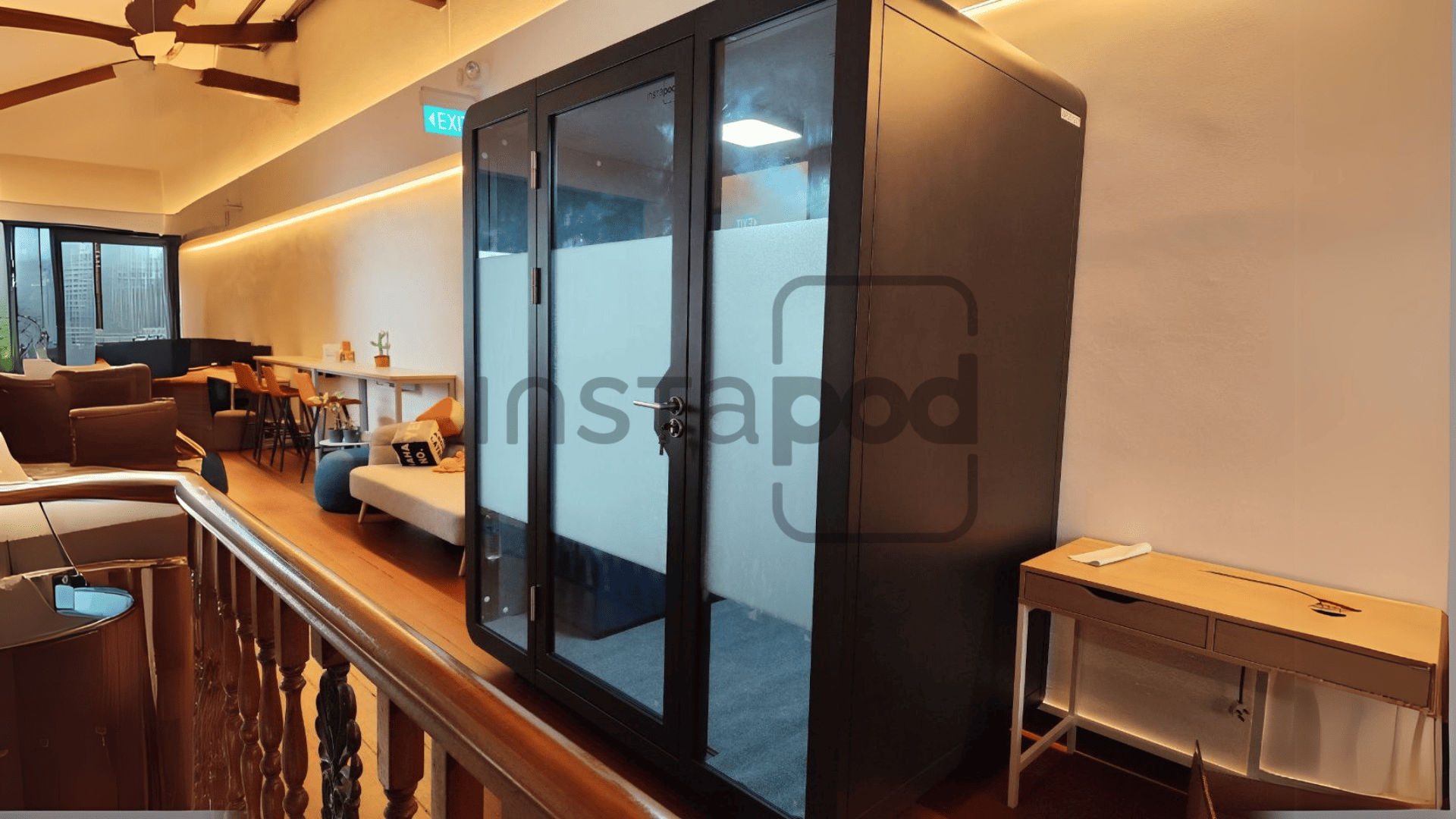
Transitioning to a dedicated workspace within a compact Singaporean condo requires careful planning. These five points highlight how an office pod serves as an effective, flexible solution for modern professionals.
- Incorporating modular pods maximizes usable square footage without structural renovations.
- Soundproofing creates necessary acoustic separation from residential noise.
- Dedicated environments foster psychological focus for deep work sessions.
- Professional installations require close coordination regarding floor loads and building logistics.
- Long-term ROI is realized through improved performance and flexible spatial utility.
Overcoming workspace constraints in Singaporean condos
Living in high-density urban areas often forces professionals to merge their living and working spheres within a few hundred square feet. This blending frequently leads to diminished output and sustained stress, as the home ceases to be a place of recovery. An office pod for home provides a strategic intervention, effectively partitioning space to reclaim functionality.
Managing limited square footage in urban apartments
When every square meter counts, homeowners must choose furniture that serves a singular, high-utility purpose. Modular units allow occupants to reclaim portions of a living room or bedroom for professional tasks without permanent wall construction. By selecting a compact footprint, one can preserve the open feel of an apartment while still maintaining a professional-grade atmosphere during business hours.
The impact of ambient building noise on executive productivity
A typical condo environment features constant disturbances ranging from elevator traffic to residential renovations. These sounds penetrate standard partition walls, significantly disrupting concentration during complex tasks. Implementing a controlled acoustic environment allows professionals to filter out these background echoes, ensuring that video calls and deep thinking sessions remain undisturbed by external household activity.
Creating a physical boundary between personal and professional life
The lack of a transition space often results in the blurring of boundaries, making it difficult to mentally unplug at the end of the day. A standalone booth acts as a physical gatekeeper; when you step inside, you are at work, and when you exit, you are at home. This clear separation is essential for maintaining sustained performance and preventing burnout in smaller apartments.
Assessing the benefits of an office pod for deep work
Deep work demands an environment where interruptions are minimized and concentration can flourish. A dedicated enclosure offers the level of isolation often missing in busy residential layouts, allowing for longer intervals of sustained output.
Achieving professional-grade acoustic isolation
Sound management is the primary advantage of these enclosures, which utilize acoustic panels to dampen internal and external sound waves. By creating a vacuum from home distractions, users can engage in high-concentration tasks without the need for constant background noise cancellation. This creates an environment that aligns with modern workplace performance standards.
Psychological shifts triggered by designated work environments
Human behavior is heavily influenced by environment, and having a specific place for work cues the brain to enter a state of heightened focus. This Pavlovian response, developed by consistently working in a private booth, helps users enter their flow state more rapidly. Utilizing this specialized furniture promotes a sense of intentionality that is rarely achieved at a kitchen table.
Maintaining privacy for sensitive corporate calls
Corporate communication often involves confidential information that cannot be shared in open-plan or shared-living areas. Using a phone pod office ensures that conversations remain secure and that external listeners are barred from accessing proprietary information. This privacy is non-negotiable for executives dealing with high-stakes client matters or internal board discussions.
Optimizing air quality and circulation for prolonged focus
Stagnant air within small spaces can quickly lead to fatigue and reduced cognitive function during long afternoons. Premium pods integrated with whisper-quiet ventilation systems maintain fresh airflow, ensuring oxygen levels remain stable. This focus on circulation prevents the drowsiness that often affects professionals working in cramped, poorly ventilated areas.
Key selection criteria for executive-grade office pods
Selecting the right enclosure requires a balance of acoustic performance, aesthetic integration, and technical capacity. As with many office assets, careful consideration at the time of purchase prevents future frustration.
Mandatory soundproofing standards for residential settings
Quality soundproofing is measured by the decibel reduction achievable during peak noise hours. Choosing a unit that consistently meets laboratory-tested standards for sound attenuation ensures that the interior remains silent. The following table illustrates typical performance benchmarks for various enclosure types:
| Feature | Entry-Level Pod | Executive Grade | Custom Enclosure |
|---|---|---|---|
| Noise Reduction (dB) | 20-25 dB | 30-35 dB | 40+ dB |
| Acoustic Glass | Single Pane | Laminated Double | Triple Acoustic |
| Ventilation Rate | Moderate | High-Flow | Quiet/Adaptive |
These ratings indicate the degree of external disruption that can be successfully neutralized in a noisy condo building.
Adapting ventilation systems for Singapore’s tropical humidity
Singapore’s distinct climate requires units to be equipped with moisture-resistant components and adaptive ventilation. High humidity levels demand consistent air exchange to prevent the buildup of heat and humidity within a small, enclosed space. Ensuring the airflow system is rated for tropical environments is a critical step for long-term hardware reliability.
Connectivity and power requirements for seamless tech integration
Modern professionals require reliable power and high-speed data access within their work booth. Units must feature internal routing for ethernet cables and multiple electrical inputs, ensuring that dual-monitor setups or hardware can be powered without external clutter. A central hub configuration allows for a clean, professional aesthetic.
Customizing pod aesthetics to match high-end interior design
An office unit should complement, rather than clash with, existing decor. Many providers offer finishes including wood veneers and matte-neutral tones that soften the look of the structure. Selecting high-quality exterior panels ensures the pod aligns with the interior design language of a luxury condo.
Navigating logistical challenges in condo installations
Bringing a large unit into a residential unit requires attention to detail. Professional planning mitigates the risks associated with moving large hardware through tight corridors and elevators.
Verifying floor load capacity for heavy modular units
Before finalizing a purchase, checking the structural load-bearing capacity of the apartment floor is essential. These pods are constructed from dense, sound-attenuating materials that can concentrate significant weight over a small surface area. Engaging a professional early prevents structural issues during the heavy lift.
Coordinating delivery and assembly with building management
Condo buildings often have specific rules regarding delivery times and service elevator requirements. Successful installation requires proactive communication with building management to secure access and scheduling. Failure to synchronize with these policies can lead to significant logistical delays for the assembly team.
Identifying placement strategies for power access and cooling
Placement is dictated by proximity to existing outlets and ventilation channels. Strategic positioning ensures the pod does not obstruct flow while maintaining easy access to the electrical grid. Planning the layout in advance keeps the workspace ergonomic and accessible.
Aligning with condo association renovation and usage guidelines
One must always review the association bylaws regarding temporary structures. Most modular units are permitted because they are non-permanent; however, confirming the installation procedure with the association is a recommended standard practice to ensure compliance. Consider the following checklist:
- Draft a floor plan showing exact pod dimensions and placement.
- Confirm service elevator hours and loading bay clearance.
- Obtain written documentation on the non-permanent status of the booth.
- Schedule assembly during off-peak hours to minimize disruption to neighbors.
This simple list ensures that the installation process is smooth and prevents common regulatory friction.
Optimizing the executive workflow within a pod
Once installed, the pod becomes the crucible of daily productivity. Fine-tuning the internal experience allows one to maximize efficiency and maintain physical comfort over extended hours.
Ergonomic seating and desk configurations for long-term comfort
Ergonomics are the backbone of modern executive performance. Adjusting desk heights and pairing them with high-quality seating allows a user to maintain spinal alignment throughout a long workday. Providing the body with the right support helps sustain focus and avoids injury over years of use.
Utilizing adjustable lighting to regulate focus throughout the day
Lighting should shift based on the task at hand, moving from bright, energizing levels for mornings to softer, warm light for evening review. Smart integrated dimmers allow for this transition, preventing digital eye strain and supporting the natural human wake-sleep cycle within a windowless environment.
Strategic setup of monitors and communication hardware
Screen placement should be direct and natural, keeping the user in an upright, neutral pose. Positioning monitors at eye level minimizes the need for neck strain, while communication hardware like microphones should be positioned to pick up audio clearly without crowding the workspace. A clear monitor layout preserves focus.
Organizing peripherals to minimize internal distractions
Internal clutter acts as visual noise, which can be just as distracting as auditory feedback. Utilizing built-in cable trays and organized docking stations keeps the desk surface clear. A minimalist approach to peripherals ensures that the user remains oriented toward the task, rather than managing cables and secondary input devices.
Analyzing the return on investment for home office upgrades
Investing in a dedicated office tool is a financial decision weighed against improved productivity. The long-term value extends beyond simple task completion to include personal health and business growth.
Translating productivity gains into business outcomes
Professional output is directly correlated to the environment in which work occurs. By reducing latency caused by household distractions, an executive can increase their billable hours and the quality of their strategic decision-making. These gains compound over time, making an office pod a valuable asset for career longevity.
Evaluating the long-term value of a flexible home office solution
Unlike permanent office renovations, a portable unit remains a sellable asset. Whether an executive decides to move or upgrade, the pod can be disassembled or relocated. This flexibility ensures that the capital invested is stored within the hardware itself rather than being lost to site-specific improvements.
Assessing the aesthetic and functional resale potential of premium home office fixtures
High-end, modular work installations hold significant resale value. Because these units represent a modern standard for home working, they remain in high demand by other remote-working professionals. Maintaining the interior and exterior in peak condition ensures that the initial investment remains liquid should the owner choose to sell it later.
Conclusion
Incorporating a dedicated office booth into a Singaporean condo transforms how professionals approach their daily workload. By prioritizing sound isolation, ergonomic comfort, and environmental control, users can create a professional-grade space that balances living and business demands, ultimately leading to greater sustained performance.
Frequently Asked Questions
Do office pods require a building permit?
In most residential contexts, these units are considered freestanding furniture rather than permanent construction, so they generally do not require extensive renovation permits.
How does the ventilation system work in a small pod?
Modular booths include integrated active airflow systems, typically utilizing quiet fans to cycle fresh air through, ensuring that air remains cool and free of odors during long sessions.
Can I relocate my pod if I move apartments?
Yes, these solutions are designed as modular kits, meaning they can be disassembled by professional technicians and moved to a new home as needed.
How loud is it inside the booth compared to open space?
High-end units are engineered to reduce ambient noise by 30 to 40 decibels, creating a near-silent environment that effectively masks typical household and street-level noise.
What are the power requirements for a typical home unit?
Most units are designed as plug-and-play, connecting directly to standard wall outlets, though larger units may require dedicated circuits depending on your power draw.
Can I install a large pod in a small corner?
Yes, as long as you account for door clearance and at least few inches of ventilation space around the exterior panels to ensure proper airflow from the room into the unit.
Are these pods suitable for all-day use?
Provided the unit includes adjustable lighting and high-quality ergonomic surfaces, these spaces are fully equipped to support full-time executive workloads without discomfort or fatigue.