No pods added to your quote request yet. Add some now for a free quote!
Key Takeaways
Maintaining strict confidentiality for personnel information requires careful planning in modern workspaces.
- Understanding the Personal Data Protection Act (PDPA) is crucial for Singaporean HR departments.
- Physical workspace solutions like pods can significantly improve speech privacy.
- Proper acoustic insulation prevents sensitive information leaks.
- Regular training protocols complement physical infrastructure investments.
- Strategic placement of private pods enhances overall organizational trust.
The intersection of HR privacy and Singaporean law
HR professionals in Singapore operate within a strict regulatory environment where the protection of sensitive employee information is paramount. Privacy requirements demand that verbal interactions and digital data be treated with the highest degree of security to ensure compliance with local statutes. Failing to address these standards can lead to significant institutional risk and degradation of employee trust.
PDPA implications for confidential HR conversations
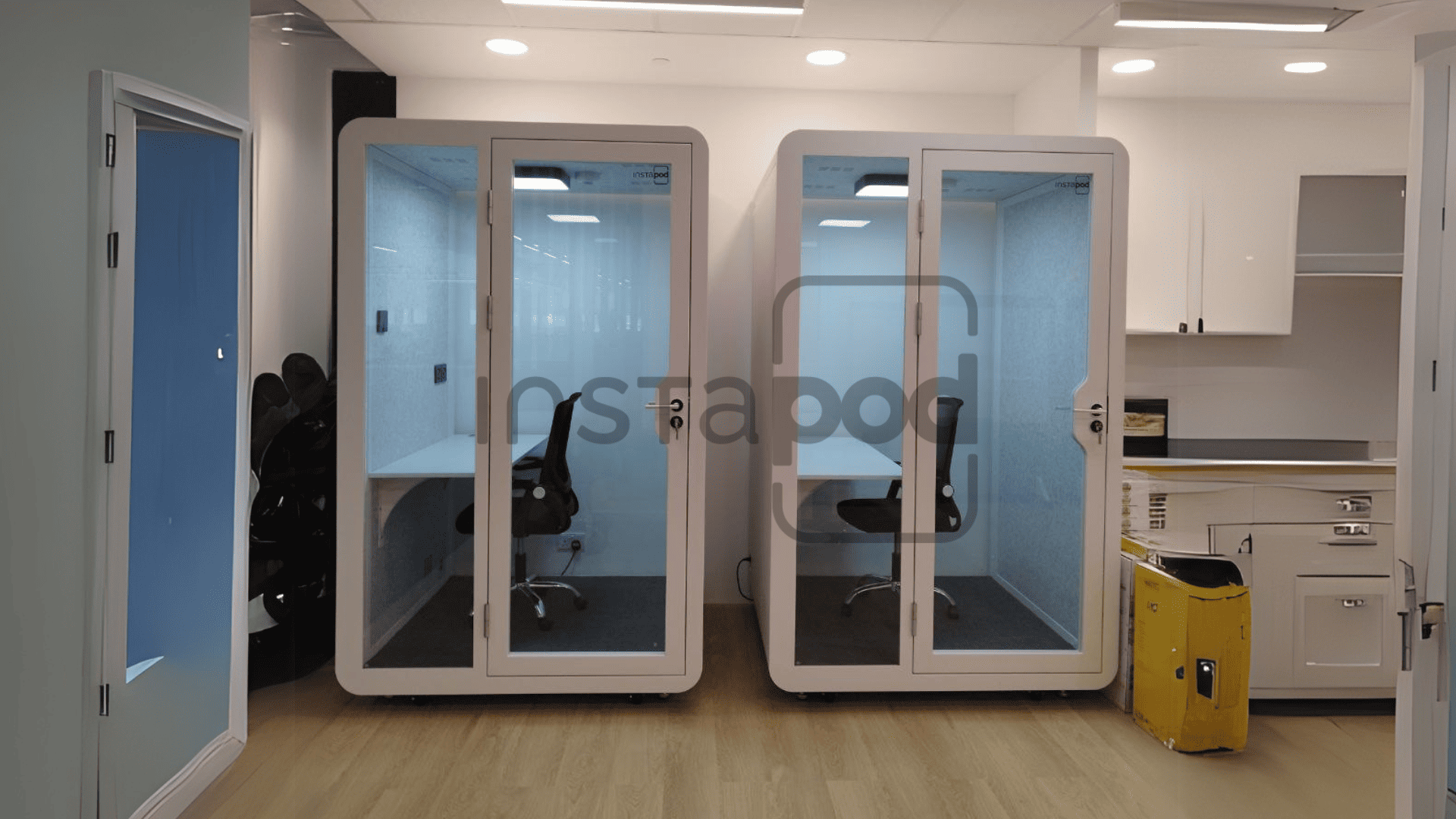
The Personal Data Protection Act governs how private sector organizations handle personal information, including data shared during performance reviews or private counseling. When HR teams hold meetings, they must ensure that verbal communication does not inadvertently breach non-disclosure mandates. Installing a high-quality soundproof office pod can serve as a secure environment, preventing accidental data exposure that might occur in shared spaces.
Managing employee expectations regarding data privacy
Employees expect their employers to handle sensitive reports about their career trajectory and medical status with discretion. Open-plan environments often fail to provide this security, leading to skepticism about how much the company values private information. Communicating that the firm has invested in secure physical zones demonstrates a long-term commitment to maintaining confidentiality during sensitive HR interactions.
Risk mitigation for personnel information leaks in open-plan offices
Open offices present acoustic challenges where voices easily carry across common floor plates. Even low-volume conversations about payroll or personnel status can become audible to unintended listeners if background noise levels are low. Implementing an acoustic office pod allows teams to isolate those discussions entirely, mitigating the risk of inadvertent leaks that challenge internal company morale.
Architectural benefits of a soundproof office pod
Integrating proprietary sound-management solutions into an existing floor plan shifts the standard of what constitutes a private meeting space. Architects and workplace designers prioritize these modular structures because they address the specific acoustic weaknesses of modern commercial builds. By focusing on sound attenuation, these pods transform casual corners of a building into rigorous environments for personnel reviews.
Sound transmission class ratings for confidential discussions
Sound transmission class ratings inform designers how well a structure blocks speech. For HR departments, ensuring these ratings meet specific thresholds is non-negotiable when discussing high-level compensation or private grievances. High-performance models like those from Framery offer technical soundproofing that ensures critical discourse remains contained within the footprint of the enclosure.
Physical security features to prevent unauthorized access
Security goes beyond privacy; preventing physical interruptions is key to maintaining professional integrity during a sensitive review. Modern booths include latching mechanisms and occupancy indicators that signal when a room is in use, keeping unauthorized personnel from walking into private discussions. Some models, such as the Zenbooth, emphasize durability and design that seamlessly integrates into the security posture of an corporate environment.
Maintaining balanced indoor air quality in small workspaces
Small enclosed spaces require efficient airflow to ensure the comfort of occupants over extended durations. Balancing acoustic dampening with ventilation prevents the air from becoming stagnant or uncomfortable, which is vital when a meeting runs long. The following table illustrates some key environmental factors managed within a typical modular office pod:
| Feature | Function | Benefit |
|---|---|---|
| Acoustic Lining | Sound Absorption | Eliminates Echo |
| HVAC Integration | Constant Air Exchange | Comfort and Freshness |
| LED Lighting | Optimized Visibility | Professional Ambience |
Properly configured ventilation systems ensure that users can conduct necessary business without feeling distracted by poor air quality or internal temperature spikes.
Selecting a suitable pod for sensitive HR workflows
Finding the right solution requires evaluating both the technical capability of the unit and its practicality in a daily workflow. HR managers must prioritize booths that don’t just look good, but provide actual attenuation of private noise for personnel interactions. Selecting a robust model is essential to ensure that the physical infrastructure supports the necessary confidentiality of personal discussions across the entire team.
Assessing acoustic insulation levels for speech privacy
Speech privacy is the primary goal when investing in a soundproof office pod for HR. Not all models perform equally; testing the unit against expected ambient noise levels in a standard commercial office is advisable. A unit that reduces ambient noise by internalizing sound waves helps guarantee that nothing said inside the booth is intelligible to those standing just a few feet away.
Evaluating pod size and interior configuration for interviews
Interviews and talent acquisition workflows often require more room than a basic one-person booth provides. Ensuring that a unit has enough interior space for two or three participants allows for comfortable performance reviews and candidate screenings. For organizations that might consider an outdoor office pod as part of a larger terrace or campus renovation, interior comfort is the deciding factor in usage.
Connectivity requirements for secure digital HR systems
HR systems now lean heavily into digital tools, making power and connectivity within the booth non-negotiable. Modern employees expect the following technical capabilities to be ready upon entry:
- High-speed Ethernet ports for secure wired connections.
- Integrated USB-C charging for laptops and tablets.
- Adaptive, video-friendly lighting systems for remote interviews.
- Motion-activated power and air controls.
Ensuring these connections are integrated at the point of installation allows the staff to transition into private sessions without worrying about battery life or digital connectivity issues.
Implementing soundproof workspace solutions in Singapore
Implementing new office infrastructure in Singapore requires strict adherence to fire safety and building standards set by local authorities. Organizations must balance these regulations with their need for privacy, often requiring coordination with facilities managers to ensure a seamless rollout. Successful execution relies on planning logistics and space optimization before the first unit arrives.
Navigating Singapore’s commercial fire safety and building standards
All construction inside a Singapore office must satisfy local safety codes, particularly regarding fire suppression and sprinkler coverage. Any office room, including a modular office pod, needs to be situated in a way that does not impede emergency exits or block existing sprinkler efficacy. Consult with local building experts to ensure that your chosen model complies with these essential safety mandates.
Optimizing floor plans for dense or compact office footprints
In cities like Singapore, floor space is a premium asset that must be allocated with precision. Optimizing for compact footprints means choosing units that maximize internal utility without encroaching on transit lanes or collaborative common zones. A strategic floor plan treats the booth as a functional building block rather than an object to be tucked away in a corner.
Installation logistics and essential power infrastructure
White-glove installation services often manage the arrival, leveling, and testing of these pods. Coordination is key to minimize disruption to the office rhythm during the hours when furniture is being moved or wired power is being connected. Confirm with your vendor that installation packages include removal of all external packaging materials upon completion.
Enhancing internal HR data protection strategies
Hardware solutions are only one piece of the privacy puzzle. Integrating booth usage into everyday HR culture is vital for establishing a reliable data protection strategy across the organization. This involves a mix of policy decisions and staff training to ensure those resources are utilized consistently.
Implementing clean desk policies within high-privacy zones
Clean desk policies discourage the leaving of paper or digital device logs inside a shared pod after a meeting concludes. HR leaders should mandate that private documents are either secured in a cabinet or shredded immediately following review sessions to ensure the space remains scrubbed for the next user. Constant attention to this policy prevents leakage of sensitive payroll or performance information.
Securing video conferencing environments for payroll and sensitive reviews
Digital privacy is as crucial as acoustic privacy. When using video conferencing for sensitive matters like annual pay reviews, ensure the network is secure and cameras are positioned to avoid capturing background material that might reveal protected info. Maintaining a clean and neutral background visual in the video frame reinforces the professional environment required for such discussions.
Training HR staff on protocols for private verbal communications
Training ensures that even when employees are in a private booth, they practice good hygiene by modulating their voices. Staff should be taught that an acoustic office pod is an aid, not a shield, and that standard precautions still apply regardless of the privacy technology currently in the booth.
Maximizing the return on office infrastructure investment
Evaluating the investment by looking only at the initial cost ignores the long-term gains in productivity and trust. While it might be tempting to seek out a cheap office pod, focusing on quality ensures that the infrastructure remains a valuable asset for years to come. The long-term return exists in the focused output of the staff and the employee satisfaction levels.
Boosting internal HR team focus with distraction-free zones
HR departments are often the most interrupted teams in an organization. Providing them with dedicated zones for deep focus allows them to complete complex tasks like talent management reports without the noise of the main office grid. This reduction in multitasking directly correlates to improved accuracy and output quality.
Improving employee trust during sensitive feedback interactions
When an employee feels their private information is being handled with care, their psychological safety increases. Utilizing a soundproof space for feedback signals that the organization respects the individual and their career, which fosters genuine loyalty.
Scaling workspace solutions for growing HR departments
As a department scales, the need for private meeting availability also rises. Modular systems permit a flexible approach to growth, allowing offices to add more units incrementally as demand dictates. This scalability prevents the need for massive office redesigns, keeping the workspace agile in the face of personnel shifts.
Conclusion
Investing in soundproof workspace technology addresses the critical need for confidentiality in modern HR departments while aligning with Singaporean regulatory demands. By selecting high-quality pods and integrating them into a rigorous data protection culture, organizations can secure their most sensitive personnel communications and demonstrate a lasting commitment to employee well-being.
Frequently Asked Questions
How does an office pod improve meeting privacy?
An office pod utilizes acoustic panels and insulated seals to reduce the transmission of sound, creating a private zone where conversations remain largely inaudible to those outside.
Can office pods be easily moved?
Most modular pods are designed for relocation, allowing businesses to adjust their floor plans or move pods to new office locations as their spatial needs change over time.
Do pods require specialized electrical setups?
Many office pods are designed as plug-and-play solutions, requiring only a standard commercial power outlet to activate internal lighting, ventilation, and data ports.
How is air quality managed inside an enclosed pod?
Integrated ventilation systems continuously circulate fresh air into the unit, ensuring that the interior climate remains comfortable for the occupant during extended meetings.
Are there specific fire safety regulations to consider?
Yes, businesses must ensure that any installed enclosure complies with local building and fire safety codes concerning sprinkler placement, exit path clearance, and material flammability.
How do pods help with remote video conferencing?
Sound-dampening interiors minimize background noise for high-quality audio, while specialized lighting options improve video clarity for professional remote interviews and meetings.
Does interior layout affect acoustic performance?
Interior configuration, including the quality of interior flooring and wall dampening elements, directly impacts how well a pod absorbs sound and provides a quiet, focused environment.