No pods added to your quote request yet. Add some now for a free quote!
Key Takeaways
Executive focus requires intentional environments to combat high-density office distractions. Professional acoustic solutions provide the necessary infrastructure for sustained deep work.
- Improved sound isolation for high-stakes calls
- Enhanced privacy for confidential executive discussions
- Reduced cognitive load through physical separation
- Optimized space utilization in premium offices
- Future-ready designs for evolving hybrid workplace requirements
Managing distraction in high-density Singapore tech offices
Singapore tech offices often feature open-plan designs intended to foster quick communication and agile workflows. However, these settings frequently interrupt deep thinking for leadership teams who require concentrated periods of isolation. When background noise and spontaneous interruptions become the norm, maintaining executive momentum proves difficult.
Identifying common environmental stressors in open-plan layouts
Visual motion and continuous auditory stimuli are primary drivers of stress in dense workspaces. These factors force the brain to constantly filter out irrelevant information, eventually leading to diminished attention spans during critical tasks. A soundproof booth serves as a tactical retreat from this ambient noise, allowing for the peace required to synthesize complex business strategies.
The hidden cost of constant connectivity on executive workflows
Executives operate in a cycle of immediate response, but the expectation of being reachable at every moment harms long-term performance. Frequent context switching destroys the continuity of deep work, turning hours of time into fragmented bursts of effort. By utilizing a dedicated workspace for focused tasks, leaders can reclaim their cognitive bandwidth from the persistent pull of instant notifications.
Balancing client confidentiality with team collaboration
While collaborative zones are vital for team synergy, client negotiations and sensitive personnel matters demand absolute discretion that open areas simply cannot provide. Integrating secure private spaces allows for high-level conversations to occur safely without requiring meeting rooms that may be booked elsewhere. This approach ensures that confidential data remains contained while the rest of the floor stays productive during team meetings.
Essential features of a professional-grade telephone booth
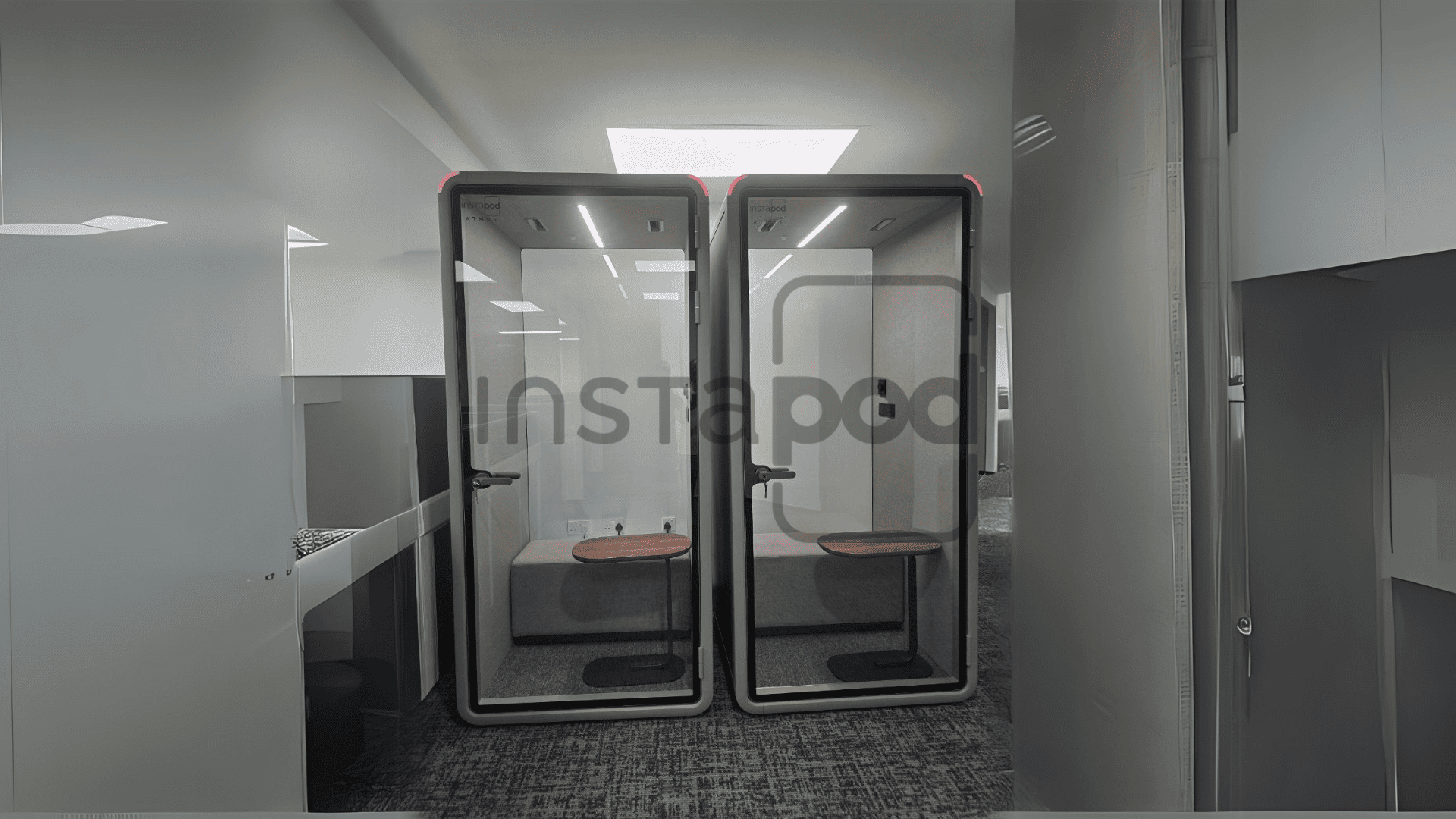
Modern executive needs demand booths that transcend simple quiet spaces. A well-engineered telephone booth must incorporate precise environmental controls to remain effective for extended use cases during a demanding Singapore workday.
Acoustic performance and sound-dampening materials
Effective booths utilize advanced acoustic paneling alongside tempered glass to create an interior environment that reflects minimal sound. This dual-layer approach effectively neutralizes external chatter and ensures that private discussions inside remain inaudible to those outside. When analyzing hardware options, organizations should evaluate the decibel reduction rating to ensure the performance meets professional standards.
| Specification | Benefit | Application | | :— | :— | :— | | Acoustic Rating | Enhanced privacy | Sensitive calls | | Ventilation Rate | Sustained comfort | Full work hour | | Interior Illumination | Visual clarity | Video meetings |
Selecting high-performance materials allows teams to maintain acoustic integrity even in the busiest office corners.
Ergonomic considerations for long-duration calls
Extended meetings require more than just a quiet environment; they necessitate physical support that prevents the onset of fatigue. Adjustable height surfaces and posture-friendly seating choices allow executives to maintain focus throughout long virtual conference sessions. Comfort remains a critical factor for ensuring that the transition into a private pod feels natural and supportive.
Integration of high-speed connectivity and charging ports
Seamless transitions between mobile devices and internal network systems are non-negotiable for modern tech leadership. Every meeting booth should feature high-speed data connectivity directly integrated into the structure, alongside readily available power ports. This ensures that video calls run without interruption and devices remain charged regardless of session length.
Strategic impact on executive productivity
Shifting the environment at specific intervals recalibrates the mind and helps maintain energy levels throughout the work shift. High-performing leaders identify this physical change of state as a core component of their daily efficiency strategy.
Minimizing the cognitive load of multitasking
When leaders step into a controlled environment, they are freed from the peripheral pressures of their surroundings. This physical boundary creates a clear signal to the mind, enabling a singular focus on complex problem solving or strategic drafting. Removing the temptation to multitask leads to faster project completion and higher quality output.
Creating a dedicated space for high-stakes decision making
Important choices benefit from an intentional, distraction-free environment that promotes calm processing. These booths act as sanctuaries for high-stakes analysis where external interruptions or urgent team requests cannot intrude upon the deliberation process.
Improving personal professional flow during busy work hours
Flow states are essential for high-level contributions, yet they are easily broken by the rhythm of modern office life. By utilizing office booths as a gateway to private sessions, executives can buffer themselves against the unpredictable flux of the office floor. These short-duration blocks allow for deeper engagement with documentation, strategic roadmaps, or critical review cycles.
Optimal placement and implementation for tech workspaces
Strategic placement determines how naturally employees integrate these tools into their daily routines. Placing utility closer to the user minimizes the friction associated with moving between collaborative zones and private spaces.
Balancing accessibility in high-traffic zones
Positioning units near core collaborative hubs allows for immediate access without causing congestion in common areas. This placement strategy creates a distinct border between active teamwork zones and localized heads-down focus areas, simplifying how staff navigate their daily space requirements.
Scaling telephone booth installations for growing Singapore startups
Startups often require modular infrastructure that keeps pace with rapid headcount expansion. Selecting flexible, floor-independent designs allows leadership to adapt the office floor plan every quarter as teams grow and physical requirements shift. This scalability ensures that your investment continues to pay dividends regardless of how much space you currently occupy.
Aligning with local workplace interior design standards
Modern Singapore offices prioritize light-filled, minimalist aesthetics that reflect efficiency and transparency. Choosing designs with sleek glass profiles ensures the new installations blend seamlessly into an established corporate design scheme. Key layout considerations often include these factors:
- Natural light penetration through structural materials
- Footprint efficiency tailored for smaller city footprints
- Aesthetics consistent with the broader corporate architecture
Aligning the installation with the existing office design preserves the clean, professional visual language while adding necessary functionality.
Navigating the trade-offs of acoustic booth integration
Decisions regarding physical infrastructure often involve considering cost versus longevity. Investing in quality components at the start prevents common pitfalls like degrading sound seals or failing ventilation hardware after heavy, sustained use.
Budgeting for premium modular solutions
While initial costs for premium units are higher, they offer a significantly longer operational lifespan compared to lighter-duty alternatives. Quality components and robust sound dampening materials resist wear and tear over years of constant usage. Assessing total ownership value rather than just the initial price point allows for smarter capital allocation.
Managing space constraints in efficient city offices
In markets where real estate cost is at a premium, efficient space management is necessary for profitability. Modular pods allow businesses to maximize every square meter, providing private work utility without requiring the construction of permanent, immovable rooms. This flexibility preserves the office footprint while increasing the number of usable work settings available to the team.
Maintenance requirements for long-term acoustic integrity
Regular inspections of door seals, ventilation filters, and interior electronics will protect your investment over the long term. These maintenance cycles ensure that the acoustic barrier remains tight and that the internal air quality stays professional and fresh. Proper care effectively doubles the utility period of these installations, maintaining the optimal focus environment year-round.
Future-proofing your executive office layout
Planning for long-term office utility means anticipating the requirements of a workforce that frequently shifts between home and the office. Designing for agility ensures the physical layout remains useful for many years.
Incorporating intelligent lighting and climate control
Advanced booths now include automated climate regulation and lighting that mimics natural circadian rhythms, significantly improving comfort for long sessions. These systems adjust to the specific user’s needs, maintaining a consistent environment that promotes focus even on the longest afternoons. Integrated sensors ensure these systems activate only when the unit is occupied, saving electrical energy.
Adapting fixed internal spaces for hybrid work requirements
Hybrid models have changed how staff utilize the office, making flexible space essential. By moving away from permanent walled offices toward modular private areas, companies gain the ability to shift their floor plans in response to actual seat attendance. This agility allows the workspace to shrink or expand based on current hybrid staffing levels without further construction.
Selecting telephone booth designs that reflect modern corporate branding
Modern physical design is an extension of corporate culture, and the tools provided to staff should reflect this ethos. Choosing units with customizable finishings allows companies to integrate their unique colors and style directly into the interior design. This unified aesthetic signals to clients and employees that the company is thoughtful about supporting the professional environment where deep work occurs.
Conclusion
Integrating a high-quality telephone booth into executive office layouts allows for the essential balance between collaborative energy and individual deep-work productivity. By choosing robust, adaptable, and ergonomically sound solutions, leaders can secure their ability to perform in the high-paced environment of Singapore tech. Ultimately, the right infrastructure serves as a foundational pillar for sustainable, long-term business growth.
Frequently Asked Questions
Do soundproof booths require permanent floor installation?
Most modern models are freestanding and require only a power connection, allowing them to be moved or reconfigured as office layouts change.
How are these pods ventilated?
Professional units feature integrated, silent ventilation systems that cycle internal air frequently to keep the environment comfortable for long durations.
Can they accommodate video conference equipment?
Yes, the internal dimensions are designed to support laptops or mounted screens suitable for professional video calls.
What are the main benefits for open offices?
They provide immediate, private space that reduces background noise for the user and prevents disruptive conversations from impacting neighboring team members.
How does the soundproofing work?
Advanced structural materials, dense acoustic panels, and precision-sealed glass work together to absorb interior echoes and block outside distractions.
Is lighting and temperature under user control?
Many units include interior control panels allowing for individual adjustment of brightness and climate settings during use.
Are they suitable for long-term office planning?
Their modular nature makes them a strategic asset for growth, as they can be easily moved or added to as business capacity needs change.