No pods added to your quote request yet. Add some now for a free quote!
Key Takeaways
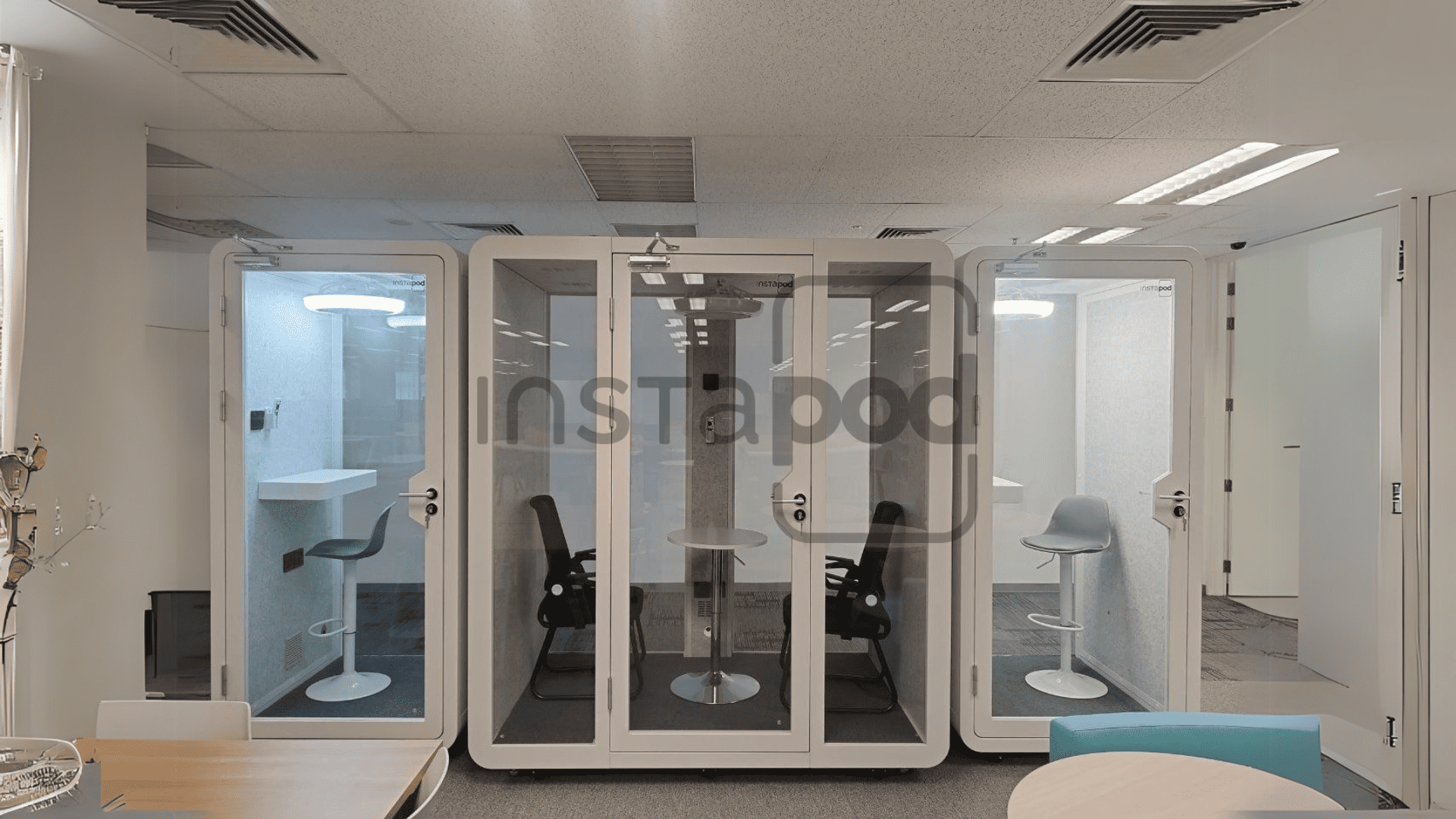
Creating a secure office environment is essential for maintaining confidentiality in dense urban markets like Singapore. This guide details how acoustic solutions safeguard your business integrity.
- Improved acoustic control enhances employee focus.
- Modular units offer flexibility for changing spatial needs.
- Secure areas prevent unintended information leakage.
- Investing in professional soundproofing supports executive privacy.
- Strategic placement maximizes real estate efficiency.
The competitive landscape of Singapore’s business districts
Singapore maintains one of the most intense corporate environments in the world. Professionals navigating the CBD often struggle to find truly isolated environments to conduct high-stakes negotiations or sensitive planning sessions.
High-stakes meetings in dense corporate hubs
In the high-pressure atmosphere of Marina Bay or Raffles Place, silence is a luxury that impacts the bottom line. Executives need consistent access to isolated spaces where they can finalize agreements without the interference of neighboring office chatter. This requirement for a physical barrier has led many firms to incorporate a dedicated meeting pod singapore into their floor plans to ensure that critical discussions remain uninterrupted.
The necessity of acoustic security for confidential deals
When handling sensitive information, the risk of accidental exposure during a cross-border meeting is a significant liability. Managing confidential dialogue in a glass-walled office environment requires specialized hardware that effectively dampens sound travel. To provide a clearer view of how these units compare, consider the following specifications often evaluated by facility managers:
| Unit Type | Noise Reduction (dB) | Ideal Usage Case |
|---|---|---|
| Small Phone Booth | 30-35 dB | Private calls and focus work |
| Medium Meeting Pod | 35-40 dB | Client meetings/consultations |
| Large Collaboration Pod | 40+ dB | Executive board strategy sessions |
Selecting a unit based on these acoustic insulation targets ensures that your team maintains total control over their environment, preventing even the most subtle audio signals from reaching common areas.
Managing reputation in transparent office layouts
Transparency is a modern office staple, yet it can create vulnerabilities in security-conscious sectors like finance or law. Organizations must balance an open-plan aesthetic with the reality that partners, regulators, and clients may be present in public-facing zones. By utilizing an acoustic pod as a structural buffer, businesses can create a high-privacy zone that projects professionalism and discretion to all visitors.
Understanding the role of a privacy pod in corporate security
Security is not merely about digital encryption; physical barriers play an equal role in protecting intellectual property. Modern workspace design must incorporate physical safeguards that prevent unauthorized access to private, real-time strategy meetings.
Soundproofing technology vs. data privacy
Modern hardware manufacturers prioritize sound-dampening materials that absorb high-frequency sounds to keep internal conversations enclosed. Unlike temporary partitions that offer only visual separation, a high-quality unit ensures that external noise does not intrude on the content of a meeting. These structures facilitate a secure working environment where sensitive data can be shared without the risk of interception by unauthorized personnel standing outside.
Preventing unintentional eavesdropping in open-plan offices
Open layouts often suffer from the "coffee shop effect," where casual noise from a public zone leaks into a private desk area. Employees attempting to conduct sensitive phone calls or interviews often face the challenge of being overheard by near-seated peers. An office pod singapore provides a dedicated space that blocks vocal projection, allowing employees to maintain the confidentiality of their work tasks regardless of the noise density in the surrounding office floor.
Creating a designated strategy bunker for sensitive discussions
Leadership teams need a reliable area to hash out organizational changes that require absolute silence. Providing a standalone, well-ventilated enclosure allows stakeholders to conduct intensive reviews of proprietary documents without needing to book multi-purpose conference rooms. When teams have a reliable, high-end phone pod at their disposal, they can shift between team-based collaboration and confidential planning on demand.
Compliance and design standards for Singapore workspaces
Adhering to local construction standards is paramount when retrofitting modern offices with modular additions. Singapore workspace regulations emphasize fire safety, accessibility, and high standards for internal air quality.
Navigating building and construction authority regulations
Building owners must ensure that any installed structures meet rigorous fire safety standards set by the BCA. Because modular zones can impact ventilation and fire sprinkler coverage, it is vital to work with suppliers that provide certified, compliant installations. Meeting these requirements early in the project lifecycle prevents costly delays and ensures that the workspace remains fully operational under local occupational health codes.
Optimizing floor space in high-value premium real estate
In the core of the city, every square foot comes at a high premium, requiring office designs that optimize rather than consume space. Modular privacy units allow businesses to capitalize on underused corridors or odd-shaped corners that were previously considered dead space. Consider these benefits for implementing a density-conscious design strategy throughout your facility:
- Increases utilization of previously abandoned office corners.
- Provides a compact, non-permanent infrastructure for evolving teams.
- Enables rapid reconfiguration to support business growth.
- Enhances employee satisfaction by providing private, quiet retreats.
- Maintains open-plan light flow while securing specific zones.
This approach effectively turns inefficient architectural gaps into profit-generating hubs of high-value professional output.
Integrating modular units into modern industrial aesthetics
Modern Singapore offices are increasingly shifting toward clean, minimalist design themes that mirror contemporary architectural trends. Designers should focus on integrating modular units that feature neutral palettes, slim-profile glass, and high-end wood grain finishes. This ensures that the privacy installations function as a cohesive element of the interior decor rather than an afterthought or an intrusive obstacle in the workspace environment.
Key features to prioritize for high-level decision makers
Investing in infrastructure for your leadership team requires evaluating build quality alongside functional longevity. Executives will demand a seamless experience that allows them to start working immediately without technical setup.
Understanding acoustic insulation ratings
Deciding on the right level of insulation depends primarily on the typical volume of discussions held inside the unit. Testing these ratings involves reviewing STC (Sound Transmission Class) metrics, which quantify how much external sound passes through a wall surface and into the unit. Aiming for a rating that supports deep focus in high-activity areas ensures that your executive team will receive the best possible performance from their investment.
Ensuring air quality and thermal comfort for long sessions
Comfort is the primary driver of adoption for any privacy installation. Without active and quiet ventilation, users will quickly avoid the unit for longer meetings because of the buildup of carbon dioxide and heat. High-quality systems prioritize silent airflow and precise temperature control, ensuring that occupants remain comfortable even when trapped in hour-long performance reviews or intense strategy sessions.
Integrated technology for secure digital connectivity
Seamless integration of power, high-speed data, and connectivity ports is non-negotiable for modern professionals. Devices must be able to hook directly into the building’s backend infrastructure without creating hazardous cable clutter that degrades the visual appeal of the pod. A clean, integrated digital interface allows executives to sync their presentations and secure calls instantaneously with minimal setup effort.
Strategic deployment in modern Singapore offices
Placing equipment strategically can change how a team flows through the office on a daily basis. By analyzing high-traffic paths and quiet areas, management can ensure these units are used effectively.
Placing units to balance accessibility and seclusion
Location dictates utility, as pods placed too close to high-traffic hallways face constant interruptions, while pods placed too far away collect dust. The ideal layout features these units at the intersection of private and communal zones, positioned just outside the main desk blocks. This enables spontaneous transitions for quick, quiet chats without forcing workers to travel long distances across the floor plate.
Encouraging executive adoption of private work zones
Leadership teams, often accustomed to private offices, may be slow to transition to new, shared modular spaces. Demonstrating the utility of these pods by keeping them strictly reserved for sensitive, high-importance actions can reinforce their value as a professional tool rather than a generic break-out space. Once they experience how effective these zones are for deep focus and executive decision-making, adoption typically follows quickly.
Measuring the impact of physical privacy on decision speed
Leadership throughput often improves when individuals have the right environment for tackling complex tasks without external distraction. Tracking the reduction in time spent re-focusing after an interruption often reveals a significant boost in professional output. While qualitative, this impact on decision speed justifies the shift toward more focused work zones that protect an employee’s time and energy during the working week.
Conclusion
Implementing high-performance modular privacy tools across Singapore business hubs serves as an critical investment into operational stability. By proactively addressing the challenges of transparency, acoustic leak, and space management, organizations effectively safeguard their key strategic discussions and empower their workforce to operate with greater focus and professional discretion.
Frequently Asked Questions
What are the main benefits of using a privacy pod in a crowded office?
These units provide a quiet environment away from the noise and activity of an open-plan office space, allowing users to concentrate on tasks or conduct sensitive meetings without being overheard.
How effective are these units at blocking out office noise?
They utilize specialized sound-insulating materials and construction techniques designed to absorb ambient noise and suppress speech transfer, often providing meaningful reductions in decibels compared to an unprotected workstation.
Can these units be moved easily if my office layout changes?
Many styles of pods are designed as modular furniture, meaning they are built to be dismantled or relocated if the company decides to reorganize its workspace floor plan.
Do pods require special ventilation systems?
High-quality pods include sophisticated internal ventilation systems that ensure constant airflow for the comfort of the occupant, which is vital during longer or back-to-back meetings.
Are they compatible with standard building electrical systems?
Most modern units are built to plug directly into standard wall sockets to power lights, internal ventilation, and device charging stations without requiring elaborate electrical upgrades to the facility.
How does a privacy unit impact workplace design aesthetics?
Many modern designs feature clean lines, glass panels, and premium materials that allow them to blend into professional office decor, sometimes acting as contemporary architectural accents rather than clunky additions.
What makes a privacy pod different from a traditional conference room?
These pods are smaller, often mobile, and designed for individual or small-group use, providing a high-performance alternative that does not require the extensive spatial footprint of a full-sized fixed conference room.