No pods added to your quote request yet. Add some now for a free quote!
Key Takeaways
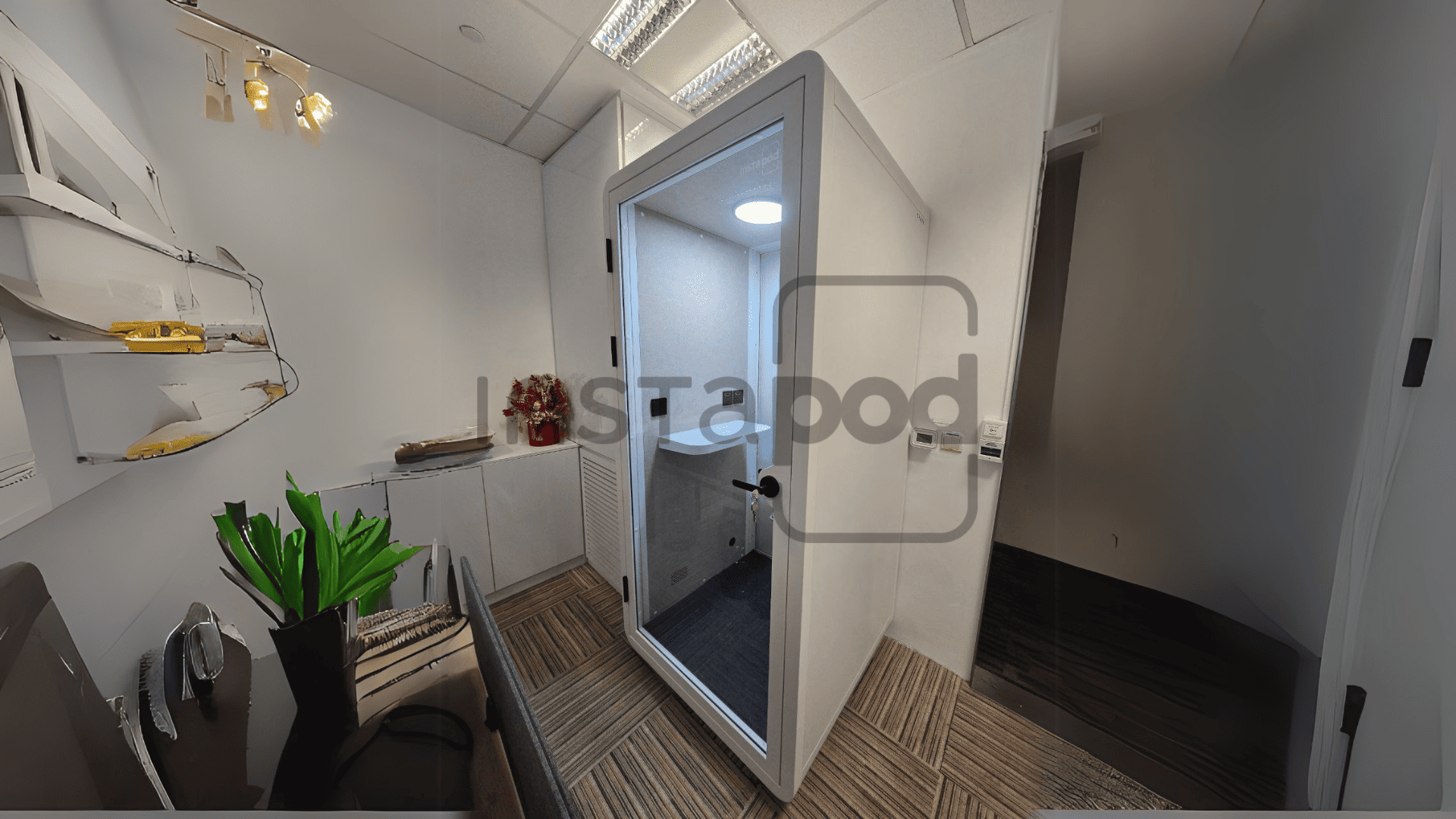
Modern law firms face unique challenges in maintaining client confidentiality while fostering collaboration. Implementing acoustic architecture ensures that sensitive legal information remains protected while optimizing the functionality of the modern, open-concept office space.
- Improved acoustic control shields confidential client data from inadvertent disclosure in open layouts.
- Dedicated quiet zones foster deep focus for high-stakes legal research and document drafting.
- Modular infrastructure allows firms to adapt floor plans efficiently without costly permanent renovations.
- Advanced soundproofing technology supports professional video consultations and secure remote litigation.
- Strategic placement of office privacy pods enhances overall workflow efficiency by reducing office distractions.
The critical role of privacy pods in preserving client privilege
Attorneys and support staff must navigate the delicate balance of an accessible office environment without compromising their professional obligations. When noise and conversations bleed between workstations, the risk of violating attorney-client privilege increases significantly. By utilizing a privacy pod, firms can establish designated spaces where the separation between private discussions and public office activity is absolute.
Upholding confidentiality in modern open office environments
In contemporary shared workspaces, the lack of physical barriers poses a direct threat to the sanctity of legal discourse. Ambient noise from colleagues can distract, but the leaking of sensitive details regarding ongoing cases is a far more serious concern. Installing an office privacy pod creates a secure boundary that ensures conversations remains within the chamber, maintaining the privacy expected by discerning clients.
Minimizing the risk of inadvertent information disclosure
Beyond just ambient sound, the human element of working in close proximity often leads to hearing things not intended for general consumption. Even a passing mention of a client name or a specific case strategy can constitute a professional lapse. By providing an enclosed and secure environment, practitioners can discuss sensitive matters without fear of nearby staff or visitors overhearing critical, privileged information.
Meeting strict ethical standards for digital communication
Digital communication requires as much physical security as in-person meetings, especially when video conferencing is involved. An office privacy pod equipped with proper acoustic lining mitigates sound reflection, ensuring that client calls remain private and that the attorney’s audio is crisp for the recipient. These structures align with the high expectations of the legal profession, ensuring every virtual consultation meets the necessary standards of care.
How privacy pods drive productivity in the legal sector
Legal professionals often find themselves trapped in a cycle of constant interruption that hampers their ability to complete complex tasks. The constant murmur of busy office activity can act as a persistent tax on cognitive resources, making long-form work difficult to sustain. Providing a quiet, dedicated space allows staff to step away from the hubbub and focus deeply on the heavy research required for complex litigation.
Eliminating auditory disruptions during high-stakes research
When a partner needs to review voluminous evidence or draft intricate legal briefs, silence is not merely a preference—it is a functional necessity. Stepping into a quiet pod allows the professional to isolate from the office din, facilitating better concentration. Using a PrivacyPod for these tasks allows for a consistent, quiet environment that supports the brain’s ability to parse complex information without interference.
Creating a secure environment for confidential client consultations
Consultations often involve emotional or highly private subject matter, and clients need to feel their story is being heard in a safe space. A dedicated privacy booth offers a calm, controlled setting that contrasts with the fast-paced nature of a law firm floor. This atmosphere encourages openness and professionalism, ensuring that the client feels their concerns are the firm’s central priority.
Enabling efficient remote litigation and court appearances
As courts increasingly move toward remote proceedings, the quality of a firm’s video conferencing setup has become a competitive advantage. Reliable, high-quality audio prevents the stuttering or lack of focus that can plague judges or opposition during a session. A stable, sound-isolated booth provides the professional polish necessary to project authority and confidence during virtual appearances.
Essential technical features for legal-grade acoustic booths
When evaluating infrastructure, firms must look beyond mere aesthetics to the underlying engineering of the acoustic environment. Sound control is a science, and not every booth is rated for the high-pressure needs of an active law office. Understanding the metrics of sound attenuation is vital to ensuring that investment in such furniture actually yields the promised results for your legal team.
Understanding sound transmission class ratings for private dialogue
Sound Transmission Class (STC) ratings define how effectively a structure blocks sound from moving through it. For law firms, choosing a booth with a high STC rating is mandatory, as this ensures that even loud, clear speech is muted to an unintelligible level for those standing outside. Consider the following performance benchmarks for typical acoustic environments found in modern professional settings:
| Feature Type | Target STC Rating | Best Application |
|---|---|---|
| Basic Phone Muted Booth | 20-25 | Standard internal calls |
| Mid-Range Meeting Booth | 30-35 | Client consultations |
| Professional Acoustic Pod | 40+ | Depositions/Virtual court |
Selecting the right tier helps match the infrastructure cost to the firm’s specific communication needs while avoiding over-specification for basic administrative tasks.
Prioritizing ventilation systems for comfort during extended negotiations
Sound-isolated spaces can easily become stifling if the internal air quality is not managed with advanced circulation systems. High-caliber ventilation ensures that fresh air flows continuously without creating acoustic bridges that leak sound. Comfort is a prerequisite for long negotiation sessions, as a stuffy, loud environment will lead to fatigue and impatience among all parties involved.
Integrating essential hardware for seamless remote connectivity
Connectivity must be built into the infrastructure, not added on as an afterthought that creates cable clutter or connectivity gaps. The best booths feature internal power, ethernet, and space for professional-grade cameras. A well-designed office privacy pod integrates these tools seamlessly, ensuring the user can walk in, connect, and start a video call without a second of hesitation or technical friction.
Strategic layout and implementation for law firms
Integrating new furniture into an existing law office requires careful planning to maximize utility and ensure that the flow of traffic remains coherent. You cannot simply place pods anywhere; they must be situated where they are most accessible to the junior associates and partners who will use them most frequently. Successful implementation is about harmonizing the new quiet zones with the firm’s established operational rhythm.
Balancing collaborative office design with dedicated quiet zones
Successful firms create a tiered environment: collaborative areas for immediate, open discussion, and private booths for concentrated professional work. This hybrid layout acknowledges that attorneys work in cycles of high-intensity collaboration and high-intensity individual focus. By layering these zones, the firm ensures that no individual worker is prioritized over another, accommodating all phases of the legal workflow.
Managing office traffic flow to protect sensitive conversations
High-traffic areas, such as breakrooms or main hallways, are poor locations for sensitive consultations. Placing privacy solutions away from these busy thoroughfares reduces the likelihood of constant movement acting as a visual distraction for the person inside. A thoughtful floor plan should group these pods logically to achieve the following outcomes:
- Minimal noise transfer from hallway foot traffic.
- Easy access for staff moving from communal workspaces.
- Clear visual indicators to staff when a booth is currently in use.
- Ergonomic alignment that complements existing office desk arrays.
By carefully mapping these zones, the firm maximizes the usage of the pods while maintaining its overall layout efficiency.
Addressing spatial limitations in urban law office environments
In cities where square footage is extremely premium, every inch of space must justify its existence. Privacy pods offer a modular, compact footprint that provides private space without the multi-week construction periods required to build traditional dry-walled meeting rooms. This flexible approach allows firms to scale their privacy needs up or down based on their immediate head-count or shifting case requirements.
Evaluating the return on investment for law firm infrastructure
Measuring the ROI for office furniture is less about simple math and more about professional impact and long-term risk mitigation. A booth that costs several thousand dollars quickly pays for itself if it prevents one single significant client breach or allows for a more efficient, persuasive virtual court performance. The value of a firm’s reputation for security and professionalism is, ultimately, its primary asset.
Protecting the firm’s professional reputation through rigorous security
Clients choose law firms specifically because they trust them to manage their most sensitive affairs. Demonstrating that the office is equipped with security-conscious infrastructure, such as soundproofed booths, serves as a tangible signal of that commitment. It reinforces the idea that the firm takes every aspect of client protection, including auditory privacy, with the utmost individual care.
Assessing the long-term benefits of modular privacy solutions
Unlike traditional fixed meeting rooms, modular pods can be relocated or sold should the firm move or undergo a major renovation. This flexibility turns a static equipment expense into a reusable asset. By investing in high-quality modular units now, the firm avoids the sunk costs associated with building permanent walls that may become irrelevant or obstructive as the firm’s needs change over the decade.
Key factors when selecting durable and secure furniture for firms
Durability is paramount in a professional, long-term legal setting where the booth will likely see heavy daily use. Materials should be selected for their resistance to wear, ease of cleaning, and their ability to complement the firm’s visual identity. Focusing on heavy-duty hinges, reinforced glass, and high-performance sound-deadening fabric ensures the investment withstands the standard wear and tear of a busy office life.
Conclusion
Integrating the right privacy tools into a law office is no longer a luxury but a fundamental necessity for firms prioritizing client privilege and internal productivity. By understanding the intersection of sound engineering, thoughtful design, and long-term modular benefits, partners can tailor their workspace to better support the high-stakes work inherent in the legal profession. As technology and work patterns shift, these smart installations remain a robust choice for any firm looking ahead.
Frequently Asked Questions
What are the main benefits of using a privacy pod in an office?
Privacy pods reduce ambient noise, protect confidential conversations, and create dedicated spaces for focused work, which leads to higher productivity and improved security for sensitive interactions.
How does a privacy pod differ from a traditional conference room?
Privacy pods are modular, require no construction permits, and offer a much smaller footprint than traditional rooms, while providing equivalent sound-blocking performance for individual or small-group use.
Can privacy pods be relocated if the office layout changes?
Yes, most modern work pods are designed to be mobile or easily disassembled, allowing them to be moved or rearranged as the specific space requirements of your office evolve over time.
Do these booths require special ventilation or lighting installations?
These units are typically self-contained, meaning they come equipped with built-in, automated airflow and lighting systems that turn on when the user enters, requiring only a standard building power outlet.
Are there different sizes available for varying team needs?
Yes, manufacturers offer a range of sizes, from single-person booths designed for phone calls to larger collaborative units that can accommodate several people for in-depth team meetings and strategy sessions.
How effective is the soundproofing compared to a solid wall?
High-quality pods are engineered with acoustic materials and seals that provide sound attenuation comparable to, or sometimes better than, standard interior walls, effectively isolating sound through advanced material science.
Does installing a privacy pod require professional contractor labor?
Most modular pods can be installed by the furniture supplier’s team without the need for drywallers, electricians, or general contractors, making the implementation process clean, fast, and remarkably less intrusive.