No pods added to your quote request yet. Add some now for a free quote!
So, you’re thinking about getting an office phone booth? Smart move. These little private spaces are popping up everywhere, and for good reason. They help cut down on noise and give people a spot to actually get stuff done without a million distractions. But honestly, not all of them are built the same. Picking the wrong one can be a waste of money and just annoy your staff. This guide will walk you through what really matters when you’re looking to buy one, so you don’t end up with a dud.
Key Takeaways
- When looking at an office phone booth, the main thing is how well it blocks sound. If it doesn’t cut down noise, it’s pretty much useless. Check for good decibel reduction numbers, solid materials, and vents that don’t let sound escape.
- Comfort is also important. Make sure the booth has good air circulation so it doesn’t get stuffy. Nobody wants to work in a hot, stuffy box, even if it is quiet.
- Think about different types of booths. There are small ones for just a quick call, bigger ones with chairs for longer work, and even multi-person ones for small group chats. Choose what fits your office needs best.
- Where you put the office phone booth matters. Put them where people can easily find them, but not in a spot where people walking in and out will bother others. Make sure they fit with how your office looks and feels.
- Don’t forget practical stuff like power outlets and USB ports. Also, check if the booth is big enough and easy to use for everyone, including people with disabilities. It’s about making sure the office phone booth works for all your employees.
Understanding the Core Functionality of Office Phone Booths
When you’re looking at office phone booths, it’s easy to get caught up in how they look or how many people they can fit. But really, the most important stuff is what’s going on inside them. It’s all about making sure they actually do the job they’re supposed to do: provide a quiet, comfortable space.
Prioritizing Acoustic Performance for Privacy
This is probably the biggest reason people get these booths. Nobody wants their private chat about, say, a sensitive project or a personal matter to be overheard by the whole office. Good acoustic performance means the booth is built to block sound from getting in and out. Think about it like this: a really well-built booth should make it so someone standing right outside can barely hear a whisper from inside, and vice-versa. This isn’t just about making calls; it’s about giving people a place to concentrate without the constant hum of office chatter or keyboard clicks.
- Soundproofing Materials: Look for booths made with dense materials that absorb sound, like thick panels and specialized foam.
- Sealed Doors and Windows: Even small gaps can let a lot of noise through. Doors and windows should fit snugly.
- Internal Finishes: The inside surfaces also matter. Soft materials help soak up sound bouncing around.
The goal is to create a personal bubble of quiet, no matter what’s happening just a few feet away.
Ensuring Optimal Ventilation and Comfort
Okay, so it’s quiet, but what if it feels like a sauna in there? Nobody can focus if they’re sweating or feeling stuffy. Good ventilation is key. You want air to circulate so it stays fresh and at a comfortable temperature. Some booths have simple vents, while others have small, quiet fans. It’s also about the space itself – is there enough room to sit comfortably, maybe stretch your legs a bit? A cramped, hot box isn’t going to help anyone’s productivity.
Evaluating Material Quality for Sound Disruption
This ties back to acoustics, but it’s also about the overall feel and durability. Cheap materials can sometimes vibrate or rattle, which adds its own kind of noise. Think about the walls, the floor, the door hinges – are they solid? Do they feel like they’ll last? High-quality materials not only help with sound but also make the booth feel more substantial and less like a flimsy temporary structure. It’s the difference between a place you’d happily spend ten minutes in and a place you’re desperate to escape.
| Feature | Importance Level | Notes |
|---|---|---|
| Acoustic Rating | High | Measured in decibels (dB) reduction. |
| Ventilation System | High | Active (fan) or passive (vents). |
| Door Seal Quality | Medium | Prevents sound leakage. |
| Interior Materials | Medium | Affects sound absorption and comfort. |
| Build Sturdiness | Medium | Avoids rattling or vibrations. |
Exploring the Diverse Types of Office Phone Booths
When you’re looking at getting some privacy booths for your office, you’ll quickly see there isn’t just one kind. Think of them like different tools for different jobs. You’ve got your basic models, and then some fancier ones. It’s good to know what’s out there so you can pick the right acoustic office pods for your space.
The Standard Single-Person Booth
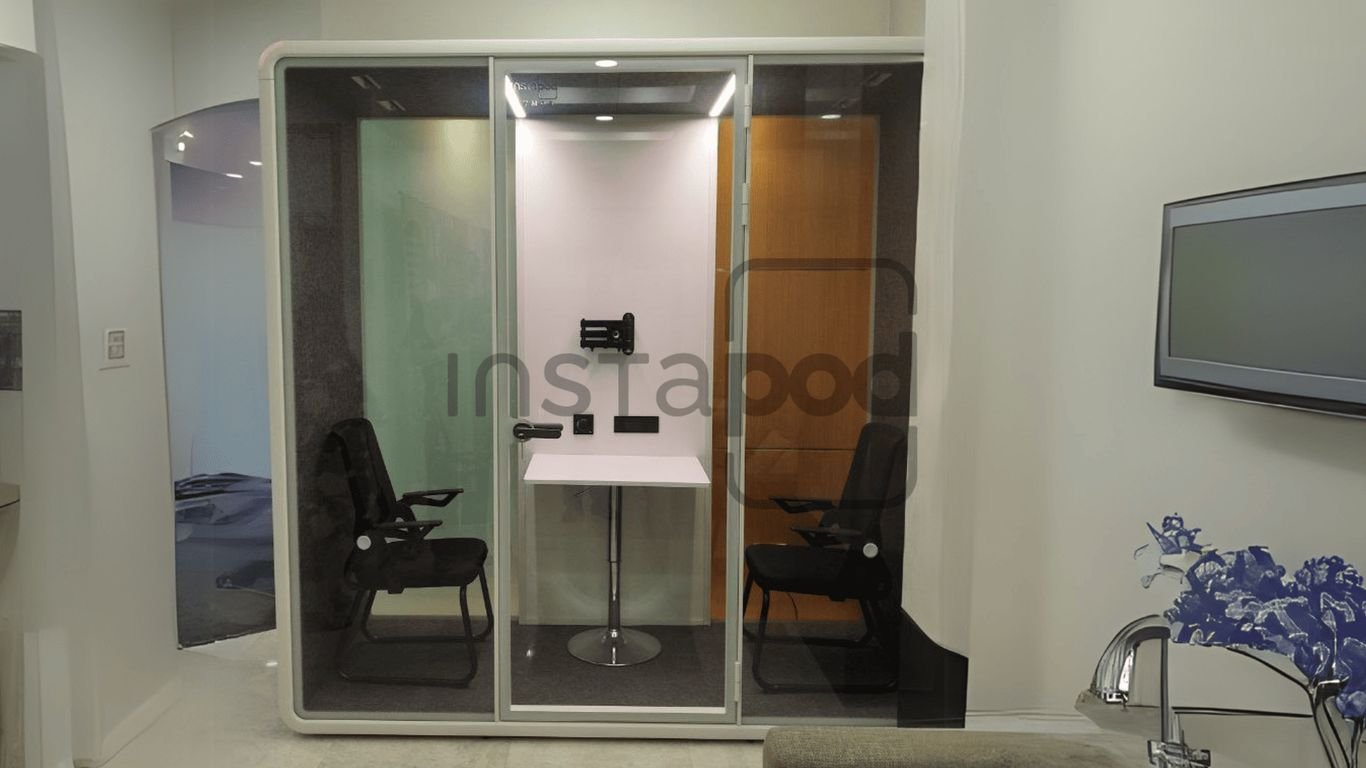
These are probably what most people picture when they hear "office phone booth." They’re designed for one person, usually just enough room for a chair and maybe a small surface. They’re perfect for taking calls or doing quick, focused work without being interrupted. You won’t be doing any yoga in here, but for a private chat or to escape the office buzz for a bit, they do the trick.
Extended Booths for Enhanced Comfort
If you find the standard booths a bit cramped, an extended version might be better. These give you a bit more legroom and space to move around. Some even have a more comfortable chair, making them suitable for longer calls or if you just need a bit more personal space to think. They’re still private pods, just with a little extra breathing room.
Multi-Person Booths for Collaboration
These are the bigger guys. Think of them as mini meeting room pods. They can fit two, three, or even four people. If your team needs to huddle up for a quick brainstorm or a short, informal meeting without booking a conference room, these are ideal. They offer a contained space for discussion while still being easily accessible.
Compact Phone Box Units
These are the smallest options, sometimes even wall-mounted. They’re really just for a quick phone call. They help cut down on noise from conversations spreading through the office. If your main goal is just to contain the sound of phone calls, these compact units are a simple and effective solution. They’re less about deep work and more about immediate communication privacy.
Key Benefits of Integrating Office Phone Booths
So, you’re thinking about getting some of those little phone booths for the office? Smart move. They’re not just fancy boxes; they actually do a lot to make the workplace better.
Boosting Productivity and Focus
Let’s be real, open offices can be loud. People talking, phones ringing, keyboards clacking – it all adds up. It’s tough to get anything done when you’re constantly being pulled away from your thoughts. These booths give people a quiet spot to really concentrate. Think about it: no more trying to finish a report while someone’s on a loud call next to you. This dedicated quiet space means fewer interruptions and more deep work.
- Reduced Distractions: Employees can focus on tasks without ambient noise.
- Improved Concentration: Ideal for complex problem-solving or writing.
- Confidentiality: Perfect for sensitive calls or discussions.
Noise is a productivity killer. Studies show it can really mess with how much people get done and even make them more stressed. Having a booth is like giving everyone a personal focus zone.
Enhancing Employee Well-being and Satisfaction
It’s not just about getting more work done, though. These booths also make people happier. When you can step away for a moment of quiet, or have a private chat without feeling overheard, it makes a big difference. It shows the company cares about your comfort and your ability to manage your own space. This kind of autonomy can really cut down on stress and prevent burnout.
- Stress Reduction: A quiet retreat from office bustle.
- Sense of Control: Employees can choose their work environment.
- Improved Morale: Feeling valued leads to greater job satisfaction.
Improving Collaboration and Communication Quality
While they’re great for solo focus, booths are also good for talking to others. Need to jump on a quick video call with a client or a remote team member? A booth provides a clear, echo-free space. No more worrying about background noise ruining the conversation. For smaller teams, some booths can even fit a couple of people for a quick, private huddle or brainstorming session. It makes those interactions much smoother and more professional.
Strategic Placement and Office Integration
So, you’ve decided to get some phone booths for the office. That’s a smart move! But just plopping them down anywhere isn’t going to cut it. Where you put these things really matters for how well they work and how much people actually use them. Think of it like setting up a new coffee station – you want it somewhere easy to get to, right? Same idea here.
Convenient and Accessible Location Strategies
When you’re figuring out where to put these booths, think about who’s going to use them and when. If it’s mostly for quick calls, putting them near busy work areas or common spaces makes sense. People can pop in and out without trekking across the whole office. For visitors, placing a booth near the reception or entrance is a good bet. It gives them a private spot to make a call without feeling like they’re in the way.
Here are a few ideas:
- Near high-traffic zones: Think hallways, break rooms, or areas where people naturally gather. This makes them super easy to spot and use.
- Close to workstations: If your team often needs to jump on a quick, private call, having booths nearby means less disruption to their workflow.
- Visitor-friendly spots: Near the lobby or reception area so guests have a comfortable, private space.
- Away from noisy equipment: Try to avoid placing them right next to loud printers or HVAC units if you can help it.
The goal is to make these booths so convenient that using them becomes second nature. If people have to go out of their way, they’ll probably just end up taking calls at their desks, defeating the whole purpose.
Aligning Booths with Office Culture and Branding
These booths aren’t just functional boxes; they can actually say something about your company. If your brand is all about being modern and sleek, choose booths that look the part. Many companies let you customize the colors, add your logo, or even pick different finishes. This makes the booth feel like a natural part of your office, not just an afterthought.
- Color coordination: Match the booth colors to your company’s branding or the general office aesthetic.
- Logo integration: Adding your company logo can reinforce brand identity.
- Material choices: Select materials that fit the overall vibe of your workspace, whether it’s minimalist, industrial, or something else.
- Interior touches: Consider adding small touches like a plant or a small whiteboard if the booth design allows, making it feel more welcoming.
Maximizing Space and Resource Efficiency
Phone booths are actually pretty great for making the most of your office space, especially if you’re in a smaller spot. They create dedicated quiet zones without needing to build permanent walls. This means you can have more open areas for collaboration or other uses while still providing private spaces when needed. Some booths are even on wheels, which is handy if you think your office layout might change down the line. You can just roll them over to a new spot. It’s a flexible solution that doesn’t require major renovations, saving you time and money.
Making an Informed Office Phone Booth Purchase
So, you’re thinking about getting some phone booths for the office? That’s a smart move, especially with how offices are these days. But before you just grab the first one you see, let’s talk about what really matters. You don’t want to end up with a fancy box that doesn’t actually do what you need it to, right? It’s about getting good value and making sure your team actually uses them.
Assessing Decibel Reduction Capabilities
This is probably the most important thing. If a booth can’t keep sound in or out, it’s pretty much useless for its main job. You need to know how much noise it actually blocks. Look for booths that advertise their decibel reduction. A good starting point is something that can cut down noise by at least 28 decibels. Some manufacturers will even give you an ISO 23351 rating, which is a standardized way to measure sound insulation. Don’t just take their word for it; ask for the numbers.
Here’s a quick rundown of what to check:
- Soundproofing Materials: Are there thick, dense panels inside? Is the glass double-paned and designed for acoustics? These details matter.
- Door Seals: Check the rubber or foam seals around the door. Gaps here are like little sound highways.
- Ventilation Design: Even the vents need to be designed so sound doesn’t sneak through.
Remember, the goal isn’t just quiet; it’s privacy. Whether it’s a confidential client call or a sensitive HR discussion, the booth needs to provide a secure sound environment.
Considering Power and Connectivity Needs
People aren’t just making phone calls anymore. They’re joining video conferences, using laptops, and charging their phones. So, you’ve got to think about power outlets and USB ports. Is there enough for what your team needs? Some booths might even offer Wi-Fi boosters, which could be a nice bonus if your office Wi-Fi is spotty in certain areas. Make a list of what your employees typically do in these spaces and make sure the booths can handle it.
Ensuring Accessibility for All Employees
This is a big one that sometimes gets overlooked. Your phone booths should be usable by everyone on your team. That means thinking about:
- Physical Access: Can someone in a wheelchair easily get in and out? Is the door wide enough?
- Interior Space: Is there enough room inside to maneuver?
- Controls and Features: Are light switches, power outlets, and any other controls at a reachable height for most people?
It’s not just about compliance; it’s about making sure everyone feels included and can use the resources your company provides. Investing in booths that are designed with universal access in mind shows you care about all your employees.
The Role of Office Phone Booths in Modern Workplaces
Addressing Noise and Privacy in Open Offices
Open-plan offices were supposed to make us talk more, and sure, they do. But they also make it really easy to hear everyone else’s conversations, which isn’t always ideal. This constant background chatter can really mess with your focus. It’s tough to concentrate on a complex task or have a private chat when you’re worried about who’s listening or when the person next to you is on a loud call. Phone booths act like little quiet zones, popping up where you need them most. They give you a break from the general office buzz, letting you actually get work done without feeling like you’re in a fishbowl. It’s a simple fix, but it makes a big difference for a lot of people.
Supporting Hybrid Work Models
With more people splitting their time between home and the office, the office space needs to work differently. Video calls are now a daily thing for many, and trying to join a Teams meeting from your desk, surrounded by colleagues, is just awkward. You end up whispering, or worse, everyone else hears your meeting. Phone booths are perfect for this. They offer a private, quiet spot where you can jump on a video call without disturbing anyone or being disturbed yourself. It means people coming into the office can still connect with their remote teammates effectively, without adding to the office noise.
Increasing Office Flexibility and Adaptability
Offices aren’t static anymore. Companies change, teams grow, and work styles shift. Traditional meeting rooms are often too big for quick chats or too few for when everyone needs one. Phone booths are like office furniture that you can actually move around. Need more quiet space in one area? Move a booth. Your team is expanding and needs a dedicated spot for calls? Add another booth. They don’t require major construction, so you can adjust your office layout as needed. This makes the whole workspace more adaptable to whatever the business throws at it.
The modern office is less about fixed desks and more about creating an environment where people can choose how and where they work best. Phone booths are a key part of that flexibility, offering private spaces on demand.
Wrapping It Up
So, there you have it. Office phone booths are really more than just fancy boxes for calls. They actually help people focus, keep conversations private, and make the whole office feel a bit less chaotic, especially with everyone on video calls these days. Picking the right one means thinking about how well it blocks sound, if it’s comfy inside, and if it fits your office vibe. It’s a pretty smart move for businesses looking to make their workspace work better for everyone. They’re not just about quiet; they’re about making the office a more productive and pleasant place to be.
Frequently Asked Questions
What exactly is an office phone booth?
Think of an office phone booth as a small, quiet room you can set up almost anywhere in your office. It’s designed to be a private space where you can talk on the phone, join a video call, or just focus on your work without being bothered by noise or distractions from the main office area.
Why do offices need these booths?
In today’s busy offices, especially those with open layouts, it’s hard to find a quiet spot. These booths help by cutting down noise and giving people a private place for important calls or focused work. This means fewer interruptions and better concentration for everyone.
What makes a good phone booth?
A great phone booth needs to be really good at blocking sound. It should also have good airflow to keep it fresh and comfortable inside. The materials used are important too, as they help stop sound from getting in or out.
Can one person use a phone booth, or are there bigger ones?
There are different kinds! Some are just right for one person to take a call or do some solo work. Others are a bit bigger, with comfy seats, for two or even four people to have a quick meeting or brainstorm together.
Where should I put these booths in my office?
It’s best to put them in places that are easy for people to get to, but not right in the middle of a busy walkway. Think about placing them near work areas or common spots so employees can quickly pop in when they need some quiet time.
Do I need to worry about power or internet in the booths?
Most modern phone booths come with built-in power outlets and USB ports, so you can charge your devices or plug in your laptop. Some might even have Wi-Fi access, making them fully equipped for work.