No pods added to your quote request yet. Add some now for a free quote!
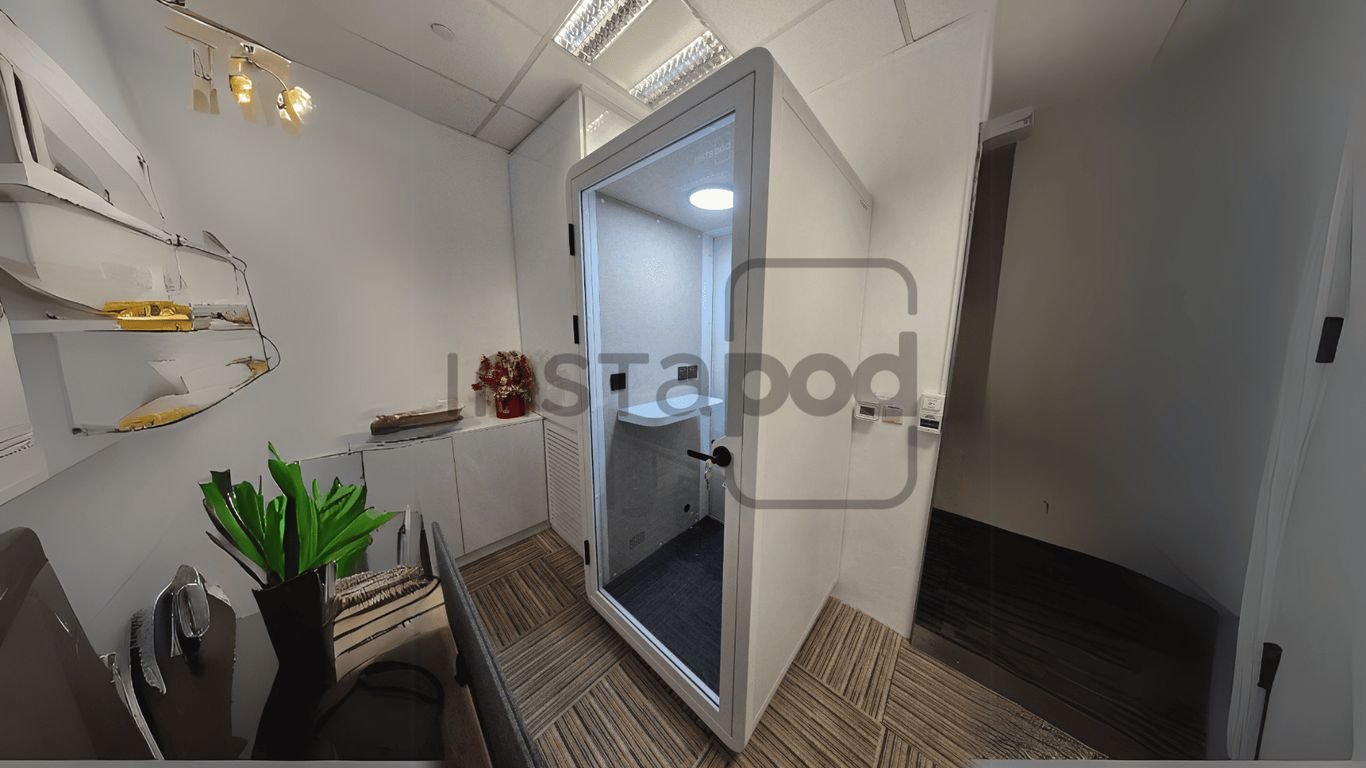
Deciding between meeting pods and traditional conference rooms for your office space can feel like a big choice, especially when you’re thinking about money. It’s not just about how much something costs upfront. You also have to consider the long-term expenses, how much space you’re using, and even how it affects your team’s work. This article will look at these things to help you figure out if office pods Singapore are a better deal for your business.
Key Takeaways
- Meeting pods usually cost less to buy and set up compared to building new conference rooms.
- Over time, meeting pods save you money because they are easier to move and change as your office needs shift.
- Office pods Singapore help you use your office space better, fitting into existing areas without big construction projects.
- Using meeting pods can make your real estate costs lower, especially in expensive cities.
- Meeting pods can help employees be more productive by giving them quiet, private spots to work or meet.
Understanding The Appeal Of Office Pods Singapore
Office pods, often seen as sleek additions to modern workplaces, are more than just a trend. They’re practical solutions designed to address some of the biggest challenges in today’s office environments. In a city like Singapore, where space is at a premium and the pace of business is relentless, these compact units offer a surprising amount of utility. They’re not just about looking good; they’re about making work itself better.
Defining Meeting Pods
So, what exactly are we talking about when we say ‘meeting pods’? Think of them as small, self-contained rooms that you can place almost anywhere within a larger office space. They come in various sizes, from single-person units that function like a private phone booth singapore, perfect for confidential calls or focused work, to larger pods that can accommodate small teams for quick discussions. They’re essentially pre-fabricated spaces designed for specific purposes, offering a level of privacy and quiet that’s often missing in open-plan layouts. They can be equipped with basic furniture, power outlets, and sometimes even integrated tech like screens.
The Versatility Of Meeting Pods
The real magic of work pods singapore lies in their sheer adaptability. They aren’t fixed structures like traditional meeting rooms. Need a quiet zone for someone to concentrate on a report? A pod can do that. Have a sudden need for a small brainstorming session with a few colleagues? Grab a pod. Need a private space for a video conference without background office noise? You guessed it, a pod. This flexibility means they can serve multiple functions throughout the day, adapting to the ever-changing needs of a dynamic team. It’s like having a toolkit for your workspace.
Here’s a quick look at how versatile they can be:
- Private Calls: Ideal for sensitive conversations or virtual meetings.
- Focus Work: A sanctuary for deep concentration.
- Small Team Huddles: Quick, informal discussions without disrupting others.
- Quiet Zones: A place to escape the general office buzz.
The ability to reconfigure and repurpose these units means they can evolve with your company’s needs, offering a dynamic solution to workspace challenges.
Meeting Pods And Employee Productivity
It’s not just about having extra rooms; it’s about how these spaces impact the people working in them. When employees have access to quiet, private areas, their ability to concentrate significantly improves. Distractions are a major productivity killer, and pods offer a direct solution by creating a sound-dampened environment. This means fewer interruptions, better focus, and ultimately, more work getting done. Plus, giving employees the choice of where they work – a busy collaborative zone or a quiet pod – can lead to greater job satisfaction and a sense of control over their workday. It’s a simple concept, but the impact on output can be quite substantial.
Cost-Effectiveness: Office Pods Singapore Versus Traditional Rooms
When you’re looking at setting up meeting spaces, the money side of things is always a big question. It’s not just about the sticker price today, but what makes sense for your budget over the next few years. Traditional meeting rooms often mean construction, which can get pricey fast, especially in a place like Singapore where real estate costs are no joke. You’re talking about permits, materials, and labor – it all adds up. Plus, once that room is built, it’s pretty much permanent.
Office pods, on the other hand, offer a different approach. They’re more like furniture you can place where you need it. This means less hassle with building codes and a much quicker setup. Think about a quiet phone booth for those important calls or a small huddle space for quick team chats. These pods can be a fraction of the cost of building out a dedicated room, especially when you factor in the time saved.
Initial Investment Comparison
Let’s break down what you’re looking at when you first buy. Traditional meeting rooms require significant upfront investment. You need to allocate space, potentially do structural work, and furnish it. This can easily run into tens of thousands of dollars, depending on the size and finishes.
Office pods have a more manageable entry cost. You can find basic models for a few thousand dollars, and even more feature-rich ones are typically less than the cost of building a small room. Remember to include delivery and installation in your calculations, as these can vary. Some companies offer leasing options, which can spread out the initial financial hit, making them more accessible.
Long-Term Cost Benefits Of Meeting Pods
This is where pods really start to show their value. Because they’re modular, you can move them around if your office layout changes. No need for expensive renovations or demolition. If your company relocates, you can often take your pods with you, which is a huge saving compared to leaving a built-out room behind. They’re also generally more energy-efficient than larger, permanent rooms, which can lead to lower utility bills over time. It’s like buying a piece of equipment that adapts with you, rather than a fixed asset that might become obsolete.
Cost-Effectiveness In Major Cities
In bustling urban centers like Singapore, every square foot of office space is precious and expensive. Traditional meeting rooms can take up a lot of prime real estate that might otherwise be used for revenue-generating activities or more flexible workspaces.
Meeting pods allow you to create functional meeting areas without committing to permanent structures. You can strategically place them in underutilized corners or open-plan areas. This flexibility means you’re not wasting money on space that’s not being used efficiently. For businesses in high-cost-of-living cities, this ability to maximize existing space without major construction is a significant financial advantage.
The decision between pods and traditional rooms isn’t just about the upfront price. It’s about how adaptable your spending is over time, how well you use your expensive office real estate, and what makes the most sense for your company’s future needs and budget.
Here’s a quick look at how they stack up:
| Feature | Meeting Pods | Traditional Meeting Rooms |
|---|---|---|
| Initial Cost | Generally lower, more predictable | Often higher, with potential for overruns |
| Installation | Quick, minimal disruption | Time-consuming, requires construction |
| Flexibility | High; can be moved and reconfigured | Low; fixed once built |
| Relocation Savings | Significant; pods can be moved | Minimal; built-in rooms are left behind |
| Space Utilization | Optimizes existing space effectively | Can require dedicated, large floor plans |
Space Efficiency And Real Estate Impact
When you’re trying to make the most of your office space, especially in a pricey city like Singapore, every square foot really matters. Traditional meeting rooms, with their fixed walls and permanent structures, can eat up a lot of valuable real estate. They’re built for a specific purpose and size, and changing them is a whole production. This is where office pods really shine. They’re designed to be flexible, letting you create meeting or focus areas without committing to permanent construction. Think of it as having modular meeting spaces you can rearrange or even move if your office layout needs a refresh. This adaptability means you’re not stuck with a room that’s too big or too small for your current needs, which can be a huge money saver in the long run.
Comparing Space and Size Requirements
Traditional meeting rooms often require significant upfront planning and construction. You need to allocate a fixed amount of space, build walls, install doors, and furnish it. This process can be time-consuming and costly. Meeting pods, on the other hand, are often pre-fabricated units. You simply choose the size and configuration that fits your needs, and they can be installed relatively quickly. This means you can get a functional meeting space up and running much faster, and with less disruption to your existing office environment. Plus, you can often find pods in a variety of sizes, from single-person booths for quiet calls to small huddle rooms for quick team chats, making them suitable for a wider range of uses than a standard, fixed meeting room.
Here’s a quick look at how they stack up:
- Traditional Rooms: Require dedicated, often larger, fixed spaces. Renovation is needed for changes.
- Meeting Pods: Can be placed in existing open areas. Easily moved or reconfigured.
- Versatility: Pods can serve multiple functions – calls, focused work, small meetings.
Real Estate Value and Meeting Pods
Using meeting pods can significantly impact how you view and utilize your office’s real estate. Instead of dedicating large, fixed areas to meeting rooms that might not always be full, pods offer a more dynamic solution. You can deploy them where needed, creating impromptu collaboration zones or private workspaces without the need for major structural changes. This flexibility means your office layout can evolve with your company’s needs. If your team grows or your project focus shifts, you can simply add, remove, or reposition pods. This adaptability is a major plus for companies that want to keep their office space agile and responsive to changing demands. It’s about getting more mileage out of your existing footprint.
The ability to quickly reconfigure or relocate meeting spaces without major construction offers a distinct advantage in managing office real estate. This flexibility can lead to substantial savings on renovation costs and allows for more efficient use of square footage.
Impact on Real Estate Costs
When you consider the cost of real estate in major cities, every decision about space allocation has financial implications. Building traditional meeting rooms involves significant capital expenditure for construction, materials, and potentially permits. These are fixed assets that tie up your investment. Meeting pods, however, represent a more flexible investment. Their initial cost might seem comparable to a small renovation, but their portability and reusability mean you’re not locked into a specific layout. If your company relocates, pods can often be moved to the new space, preserving your investment. This contrasts sharply with built-in rooms, where the investment is lost if the space is no longer suitable. Ultimately, pods can help reduce the overall cost of providing adequate meeting and private workspace facilities, especially when factoring in the long-term flexibility they provide.
Flexibility And Adaptability In Modern Workspaces
In today’s fast-paced business world, the ability to change your workspace on a dime is a massive advantage. Traditional meeting rooms, being permanent fixtures, can feel like anchors. If your company decides to shuffle its layout or even move offices, those rooms are pretty much stuck. This lack of give can be a real drag, especially if your industry is always on the move.
Supporting Flexible Work Culture
Office pods are a natural fit for companies that embrace flexible work. They don’t require permanent construction, meaning you can set them up, move them, or even take them down with relative ease. This makes it simple to adjust your office layout as your team’s needs evolve. Need a quiet spot for a remote call? Deploy a pod. Want to create a temporary project hub? Group a few pods together. It’s about having a workspace that can keep up with your business, not the other way around.
Mobility And Relocation Savings
Think about moving day. With traditional rooms, you’re essentially leaving built-in spaces behind, which can feel like a loss of investment. Pods, however, are designed with portability in mind. They can be disassembled and reassembled in a new location, saving you the headache and cost of building new rooms from scratch. This is a huge plus for companies that anticipate growth or potential relocations.
Here’s a quick look at how pods handle common office changes:
- Team Expansion: Simply add more pods. No construction needed.
- Project Shifts: Reconfigure pods to create dedicated project zones.
- Office Relocation: Move your existing pods to the new space.
Making Informed Decisions
When you’re deciding between pods and traditional rooms, consider how your business might change in the next few years. Will your team grow? Might you need to reconfigure your office layout frequently? If the answer to these is yes, the adaptability of office pods could be a significant benefit. They offer a way to future-proof your workspace, allowing for adjustments without the major disruption and expense of structural changes.
The key takeaway is that office pods offer a dynamic solution for modern workspaces. Their ability to be moved, reconfigured, and scaled makes them a smart choice for businesses that value agility and want to avoid the rigidity of traditional built-in meeting rooms. This flexibility translates directly into cost savings and a more responsive work environment.
Enhancing The Work Environment With Office Pods
Providing Private Workspaces
Open-plan offices are great for collaboration, but let’s be honest, they can be a real challenge when you need to concentrate. That’s where office pods step in. They give you that much-needed private workspace right in the middle of the action. These pods offer a place to escape the general office buzz and really focus on tasks that need deep thought. Plus, they give you a sense of privacy that’s pretty hard to find in a big, open space. It’s like having your own little office without all the fuss and expense.
Reducing Distractions With Meeting Pods
Distractions are productivity killers, plain and simple. Constant noise, people walking by, impromptu chats – it all adds up and makes it tough to get anything done. Meeting pods tackle this head-on by creating a quiet, enclosed spot where you can actually concentrate. Many of these pods come with soundproofing features that really cut down on outside noise. This means you can focus on your work without being pulled away every few minutes. It’s like having a personal office privacy booth right where you need it, offering a sanctuary for focused work.
Improving Workplace Acoustics
Beyond just blocking out noise, these pods also help improve the overall sound environment of the office. They create a buffer, meaning conversations or calls happening inside a pod are less likely to disturb others outside. This is a big deal for maintaining focus and reducing stress for everyone. It also means sensitive discussions can happen without worrying about being overheard, which is important for privacy and security.
The ability to step into a quiet, enclosed space can significantly reduce stress and help employees recover during the workday. For many, especially those accustomed to the quiet of remote work, a busy open office can feel overwhelming. Having these private spaces available at the workplace can be a strong motivator for people to return to the office.
Here’s a quick look at how these pods can help:
- Reduced noise levels
- Fewer interruptions
- Increased concentration
- Improved focus
- Enhanced privacy
Traditional Meeting Rooms: Strengths And Limitations
Traditional meeting rooms have been the backbone of office collaboration for ages. They’re the go-to for formal discussions, presentations, and when you just need a dedicated space away from the general office buzz. Think of them as the classic, reliable workhorses of the office environment. These rooms are built to be permanent fixtures, offering a sense of established structure and privacy. They usually come equipped with tables, chairs, and often the necessary tech for presentations, like projectors or screens. Their primary design goal is to provide an acoustically sealed environment, keeping outside noise out and internal conversations in.
Accommodating Larger Groups
One of the standout features of traditional meeting rooms is their capacity. While smaller pods are great for one or two people, these rooms are built to handle a crowd. If you’ve got a team of 10, 15, or even more people who need to gather for a board meeting, a client pitch, or a company-wide briefing, a traditional room is usually the only practical option. Trying to cram that many people into a small pod just isn’t feasible and defeats the purpose of a comfortable, productive meeting.
Traditional Room Space Considerations
Let’s face it, traditional meeting rooms take up a significant chunk of real estate. They’re not modular; they’re built into the office structure. This means they require dedicated square footage that can’t easily be repurposed. If your office layout is already tight, dedicating space to a large, fixed meeting room can feel like a real compromise. You’re essentially committing that space long-term, which can be a problem if your team’s needs change or if you need to reconfigure your office for better flow or more workstations.
Budgeting for Traditional Meeting Rooms
While they might seem like a given, traditional meeting rooms come with their own set of costs. Beyond the initial construction – think walls, doors, lighting, and HVAC integration – there’s the ongoing upkeep. Furniture wears out, paint chips, and technology needs upgrades. If you’re looking at building a new meeting room or renovating an existing one, the costs can add up quickly. It’s not just about the initial build; it’s about the long-term investment in maintaining a functional and presentable space.
Traditional meeting rooms offer a robust solution for group gatherings and formal discussions, but their fixed nature and significant space requirements mean they aren’t always the most adaptable choice for modern, flexible workspaces. Their cost, both upfront and ongoing, also needs careful consideration.
Here’s a quick look at where they shine:
- Handling large numbers: Ideal for big teams or company-wide meetings.
- Formal presentations: Provide a professional setting for pitches and important announcements.
- Confidential discussions: Offer a secure, private environment for sensitive topics.
- Integrated technology: Often come pre-equipped with AV systems for presentations and video calls.
So, Which One Wins?
Alright, so we’ve looked at both sides of the coin. Traditional meeting rooms have their place, especially for those big, formal get-togethers. But honestly, for most of today’s offices in Singapore, especially with how fast things change, meeting pods just make more sense. They’re way more flexible, don’t cost a fortune to set up, and help you use your office space way better. Plus, giving your team a quiet spot to focus or take a call? That’s a big win for productivity and keeping everyone happy. If you’re thinking about upgrading your workspace, definitely give meeting pods a serious look. They’re a smart move for businesses that want to stay agile and get the most out of their space.
Frequently Asked Questions
What exactly are meeting pods and how are they different from regular meeting rooms?
Meeting pods are like small, standalone rooms you can place anywhere in your office. Think of them as private little spaces for calls or small meetings. Regular meeting rooms are built into the office structure, usually bigger, and meant for larger groups. Pods are easier to move and set up, kind of like furniture, while rooms are permanent.
Are office pods really cheaper than building traditional meeting rooms?
Generally, yes. Setting up a meeting pod is usually less expensive than hiring builders, buying materials, and doing all the construction work for a whole new room. It’s more like buying a piece of equipment than starting a construction project. Plus, you save on installation time, which also cuts down costs.
How do meeting pods help save space and money in expensive cities like Singapore?
In places where office space costs a lot, every square foot matters. Meeting pods are smaller and can fit into unused corners or open areas without needing major changes. This means you can create more meeting spots without using up valuable real estate. You can also move them around, so you’re not stuck with a fixed room that might not be useful later, saving you money on rent and renovations.
Can meeting pods actually make employees more productive?
Yes, they can! Meeting pods give people a quiet place to work without all the noise and interruptions of an open office. This helps them focus better on their tasks. Having a private space for calls or focused work can reduce stress and make employees feel more in control, which often leads to better work.
Is it hard to move or change an office layout if I have meeting pods?
Not at all! One of the best things about meeting pods is how flexible they are. Because they aren’t built into the office, you can move them around easily if you need to rearrange your workspace. If your company moves to a new office, you can often take the pods with you, which saves a lot of hassle and money compared to leaving built-in rooms behind.
When would a traditional meeting room still be a better choice than a meeting pod?
Traditional meeting rooms are still great when you need to host a lot of people, like for big presentations, company-wide meetings, or workshops. They are designed to hold more people comfortably and often have built-in tech for larger audiences. If your main need is to gather a big group in one place, a traditional room might be more suitable.