Workplace Pods vs. Cubicles: Which Offers Better Focus?
Offices have changed a lot, haven’t they? We went from big open rooms to those classic cubicle setups, and now, things like workplace pods are popping up everywhere. It can be a bit confusing trying to figure out what actually works best for your team. This article breaks down whether workplace pods or cubicles are a better fit for your work style, especially when it comes to staying focused.
Key Takeaways
- Workplace pods offer a private, quiet spot for focused work or calls, acting like mini private rooms within a larger office.
- Cubicles provide some separation but often lack the noise reduction and privacy that pods offer for deep concentration.
- Pods are great for individual tasks and sensitive conversations, while cubicles might suit more open, collaborative environments.
- The best choice depends on your company’s culture – does it value teamwork more, or individual efficiency?
- Consider long-term needs, like flexibility for growth and employee well-being, when deciding between workplace pods and cubicles.
Understanding The Core Differences Between Workplace Pods and Cubicles
Okay, so we’ve got these two main ways people set up offices these days: the classic cubicle and the newer office pod. They look pretty different, and they feel even more different when you’re actually trying to get work done. It’s not just about walls, or lack thereof. Let’s break down what makes them tick.
Privacy And Focus: A Key Distinction
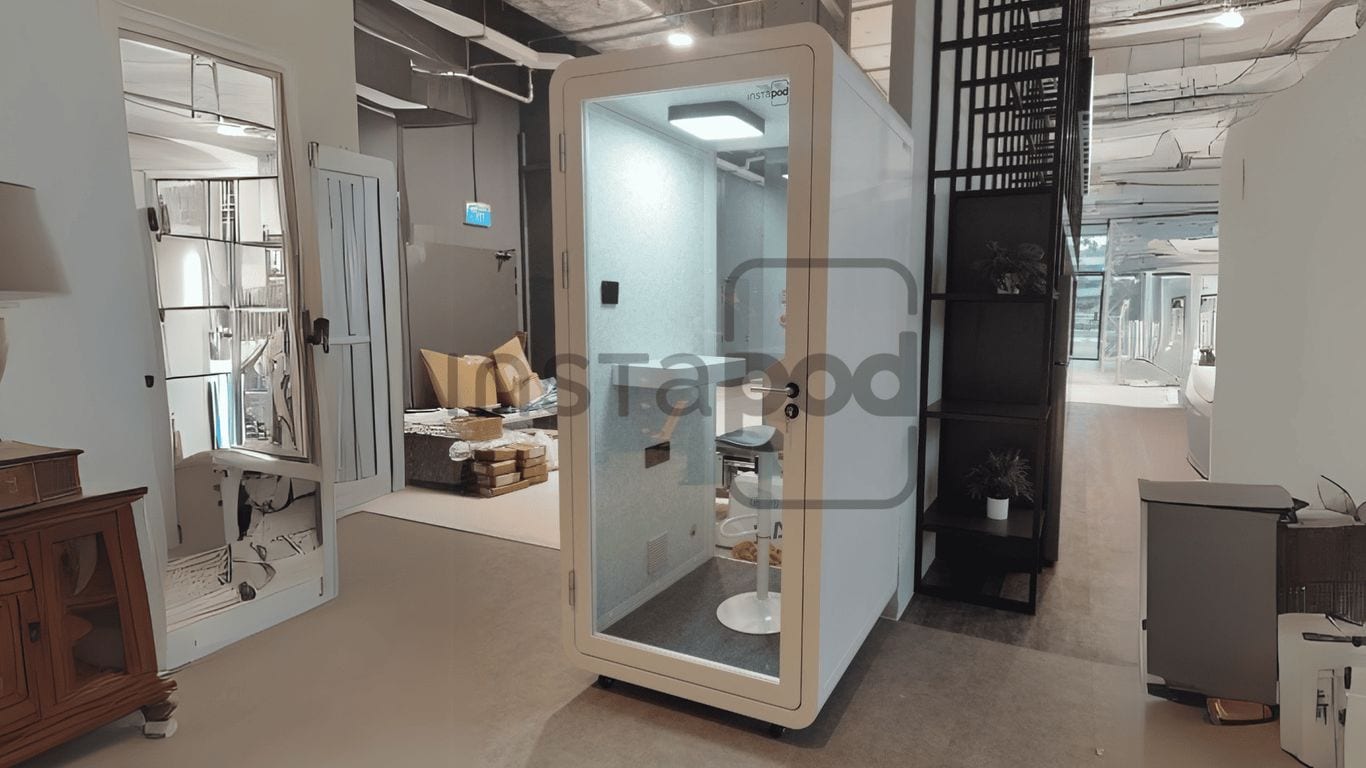
This is probably the biggest thing. Cubicles, even the ones with higher walls, are still pretty open. You can see people walking by, you can hear conversations, and people can definitely see you. It’s like a little personal space, but not exactly a fortress. Office pods, though? They’re built to be enclosed. Think of them as tiny, private rooms dropped into the middle of a bigger office. This means you get a lot more privacy, which is a huge deal when you need to really concentrate on something or just don’t want to be part of the office scenery. This enclosed nature is what really helps people focus.
Noise Reduction Capabilities
Let’s be real, open offices can get loud. Even with cubicles, sound just travels. Phones ringing, people chatting, keyboards clacking – it all adds up and can be a real distraction. Pods are usually made with sound dampening materials. They create a solid barrier that cuts down a lot on the background noise. This makes a massive difference for tasks that need you to really focus. Cubicles, while they give you a bit of separation, don’t do much to block out sound.
| Feature | Office Pods | Cubicles |
|---|---|---|
| Noise Reduction | High | Low |
| Privacy Level | High | Moderate |
Visual Distraction Management
Beyond just noise, there’s also what you see. Cubicles offer some visual separation, but you can still see movement and activity around you. This can pull your attention away from your work. Pods, being enclosed, cut off most visual distractions. You’re in your own little bubble, which can be incredibly helpful for maintaining concentration, especially if your office is a busy place with lots of comings and goings. It’s about creating a space where your eyes aren’t constantly being pulled elsewhere.
The main difference boils down to creating a personal sanctuary versus a semi-private workspace. Pods aim for a complete break from the surrounding environment, while cubicles offer a degree of separation but remain connected to the larger office flow.
How Workplace Pods Enhance Individual Focus
Dedicated Zones For Deep Work
Workplace pods are essentially built to give you a quiet zone, a place where you can actually get into the zone without the usual office chatter or random noises pulling you away. They create a personal bubble, cutting down on both sound and visual distractions. This means you can really dive into your work without constantly being interrupted. It’s like having your own mini-office within the larger office. This dedicated space allows for uninterrupted concentration, which is key for complex tasks.
Minimizing Interruptions For Concentration
Interruptions are productivity killers, plain and simple. In a typical office, you might get tapped on the shoulder, overhear loud conversations, or just get distracted by movement. Pods significantly reduce these interruptions. They act as a barrier, both acoustically and visually. This allows employees to maintain their flow state for longer periods. Think about the time saved not having to re-focus after every little disturbance.
Enhancing Individual Productivity
When it comes to getting individual work done, the right space makes a huge difference. Cubicles have been around forever, and they offer some separation, but they often don’t quite cut it for serious concentration. That’s where office pods really step in. They’re built to give you a quiet zone, a place where you can actually get into the zone without the usual office chatter or random noises pulling you away. This is super important for tasks that need a lot of focus, like writing reports or doing detailed analysis.
The constant visual and auditory input from an open environment can fragment attention, making sustained focus a challenge. Enclosed spaces, like pods, offer a way to reclaim that focused attention by minimizing external stimuli.
Here’s a quick look at how pods stack up for individual focus:
- Reduced Noise: Pods offer excellent noise reduction, creating a quiet environment.
- Visual Barrier: Their enclosed nature blocks visual distractions.
- Flow State: Enables longer periods of uninterrupted concentration.
- Task Suitability: Ideal for tasks requiring deep focus, like writing or analysis.
Cubicles: A Look At Their Role In Focus And Collaboration
The Limitations Of Cubicles For Deep Concentration
Cubicles, first dreamed up back in the 1960s, were meant to offer a middle ground – a bit of privacy without completely cutting people off from each other. They typically feature a desk surrounded by partitions, giving you your own little nook. For a long time, they were the standard for many offices. However, when it comes to really zoning in on tasks that need serious brainpower, cubicles can fall short. The partitions, while present, often aren’t tall enough or soundproof enough to block out the general office buzz. You might still hear conversations, keyboard clicks, and the general movement of people around you. This constant low-level noise and visual stimulation can make it tough to achieve that deep state of concentration needed for complex projects or writing.
Cubicles As A Foundation For Collaboration
Despite their drawbacks for solo focus, cubicles do have a role to play in how teams interact. Because they aren’t fully enclosed, they maintain a sense of connection within the office. It’s easier for colleagues to quickly ask a question or share a brief update without needing to schedule a formal meeting or walk across the office. This can be good for spontaneous problem-solving or just keeping the team vibe going. Think of them as a way to keep people somewhat separated but still part of the larger office ecosystem. They can be a decent starting point for collaboration, especially in environments where quick, informal check-ins are common.
Visual Openness And Its Impact On Focus
The visual aspect of cubicles is a double-edged sword. On one hand, the openness means you’re not completely isolated. You can see what’s going on around you, which some people find comforting or helpful for staying aware of office happenings. However, this same visual openness can be a major distraction. Seeing people walk by, noticing colleagues on their phones, or catching snippets of conversations can pull your attention away from your work. It’s hard to get into a flow state when your eyes are constantly being drawn to movement or activity outside your immediate workspace. For tasks requiring sustained attention, this constant visual input can be quite disruptive.
While cubicles offer a degree of separation, their design often prioritizes a connection to the wider office environment over absolute quiet or privacy. This can be a benefit for team cohesion but a hindrance for individual deep work.
Here’s a quick look at how cubicles stack up:
- Privacy Level: Moderate, but often insufficient for sensitive calls or deep concentration.
- Noise Reduction: Limited, primarily blocking direct line-of-sight noise but not ambient sound.
- Collaboration Facilitation: Good for quick, informal interactions due to visual and physical proximity.
- Distraction Potential: High, due to visual openness and limited soundproofing.
Workplace Pods For Sensitive Tasks And Private Conversations
Facilitating Private Meetings
Sometimes you just need to have a quick, quiet word with someone without the whole office chiming in. Trying to find an empty conference room for a two-minute chat can be a real hassle, right? This is where workplace pods really come in handy. They act like little private rooms you can just pop into. They’re perfect for those impromptu, sensitive discussions that can’t wait but also can’t be overheard. Think about needing to discuss a confidential project detail or a personal HR matter. Pods give you that immediate privacy without the fuss.
Suitability For Sensitive Tasks
Beyond just conversations, certain work tasks just demand a higher level of privacy. If you’re dealing with client data, preparing for a performance review, or just need a quiet corner to really think through a tricky problem, pods offer that secure and calm space. Cubicles, with their open tops and shared walls, just don’t provide the same level of confidentiality. The enclosed nature of pods means your work and any related discussions stay private, which is a big plus for many jobs.
Creating A Secure And Calm Environment
These dedicated spaces, including specialized office telephone booths, are designed to minimize external noise and visual clutter. This creates a sanctuary where employees can concentrate without worry. It’s not just about blocking out noise; it’s about providing a mental break from the general office buzz. This calm environment is particularly beneficial for tasks that require deep focus or handling sensitive information.
- Reduced Interruptions: Pods act as a physical barrier, cutting down on casual walk-ups and overheard conversations.
- Acoustic Privacy: Built with sound-dampening materials, they offer much better soundproofing than standard cubicles.
- Visual Shielding: The enclosed design limits visual distractions, helping maintain concentration.
Providing these private zones isn’t just a nice-to-have; it’s a practical way to ensure sensitive information stays secure and that employees can perform tasks requiring high concentration without external interference. It’s about building trust and supporting focused work.
Boosting Overall Work Efficiency With Workplace Pods
When you look at how workplace pods stack up against traditional cubicles, the potential for getting more done is pretty clear. Cubicles, while they give you a bit of personal space, often don’t do a great job with noise or really letting you focus. Workpods, on the other hand, are built with sound dampening in mind, cutting down on distractions and letting people work better. This leads to fewer errors and a smoother workflow.
Comparing Noise Reduction and Privacy
| Feature | Workplace Pods | Cubicles |
|---|---|---|
| Noise Reduction | High | Limited |
| Privacy | High | Moderate |
| Focus | Enhanced | Moderate |
| Employee Control | More control | Less control |
Employee Control Over Their Environment
Workpods give employees more say over their immediate surroundings. Think about things like lighting or even temperature, if the pod is equipped for it. This level of personal control can make a big difference in comfort and, consequently, how long someone can stay focused without feeling drained. It’s about creating a personal bubble where you can really settle in and get to work.
The Impact on Sustained Attention
Interruptions are a major drain on productivity. In a typical office, you might get a tap on the shoulder, overhear loud chats, or just get distracted by people walking by. Workpods act as a shield, both for sound and visually. This helps people stay in their flow state for longer stretches. Imagine the time saved by not having to re-focus after every little disturbance. It’s not just about quiet; it’s about creating a space where concentration can actually happen.
Providing dedicated spaces for focused work isn’t just a nice-to-have; it’s a smart way to increase output. When people have a reliable spot to concentrate, they finish tasks faster and make fewer mistakes. This directly affects the company’s bottom line and how happy employees are with their jobs.
Choosing The Right Workspace: Pods Versus Cubicles
So, you’re trying to figure out if those little office pods are the way to go, or if you should stick with the classic cubicle setup. It’s not a simple ‘yes’ or ‘no’ answer, really. It all boils down to what your team actually does all day and what kind of vibe you’re going for in the office.
Considering Cost and Space Requirements
Let’s be real, budget and square footage are always big factors. Cubicles, especially older ones, can sometimes be cheaper to buy in bulk and might fit more people into a given area if they’re designed that way. They’re like the workhorses of office layouts, you know? Pods, on the other hand, can be a bit of an investment upfront. They’re often more specialized, and you might need fewer of them, but they can take up a decent chunk of space per unit. You’ve got to think about how many you’d need and where they’d actually fit without making the whole place feel cramped.
Here’s a rough idea of what you might be looking at:
| Feature | Typical Cubicle Setup | Office Pods (Single Person) |
|---|---|---|
| Initial Cost | Lower per unit | Higher per unit |
| Space per Person | Moderate | Moderate to High |
| Installation | Generally simpler | Can be more complex |
| Flexibility | Moderate | High (relocatable) |
Evaluating Privacy Needs
This is where things get interesting. If your team deals with a lot of confidential information, client calls that can’t be overheard, or just needs serious quiet time to get stuff done without the office buzz getting in the way, pods are probably going to win out. They’re built for that. Cubicles offer a bit of a buffer, sure, but they’re not exactly soundproof or completely out of sight. You can still see people walking by, and conversations can drift.
- Pods: Excellent for deep focus, private calls, and sensitive tasks.
- Cubicles: Offer some visual separation but limited acoustic privacy.
- Open Plan: Minimal privacy, best for highly collaborative or casual environments.
The goal is to create a space where people can actually do their best work, whatever that looks like for them. Sometimes that means total quiet, and sometimes it means being able to quickly tap a coworker on the shoulder.
Balancing Collaboration and Individual Focus
This is the big juggle, isn’t it? You want people to be able to work on their own without constant interruptions, but you also need them to be able to chat, brainstorm, and work together easily. Cubicles can sometimes feel like they’re stuck in the middle – they separate you a bit, but not enough to truly block out noise, and they can make spontaneous collaboration a little awkward. Pods are fantastic for when you really need to focus or have a private chat, but you don’t want so many pods that people feel isolated from their colleagues. A good strategy might be a mix of both, or even different types of spaces, so everyone can find what they need on any given day. Ultimately, the best setup is the one that helps your specific team be most productive and happy.
Wrapping It Up
So, when it comes down to it, picking between office pods and cubicles isn’t about declaring a clear winner. It’s really about figuring out what helps your specific team do their best work. If your employees need quiet spots to really get into their tasks, those private pods are probably a good move. They give people a dedicated space to concentrate without all the office noise. But, if your team thrives on bouncing ideas around and working together a lot, a more open cubicle setup, or even a mix of both, might be the way to go. Think about the main type of work happening in your office. Is it a lot of talking and teamwork, or more heads-down, individual tasks? The best office setup is the one that supports everyone in doing their job well, whether that’s in a cozy pod or a more traditional cubicle space. It’s all about making the workplace work for the people in it.
Frequently Asked Questions
What’s the main difference between office pods and cubicles?
Office pods are like small, private rooms you can use inside a bigger office. They’re built to be quiet and help you focus. Cubicles are work areas with low walls that separate you from others, but they don’t block out much noise or offer as much privacy.
Which one is better for staying focused on work?
Office pods are usually better for really focusing. Because they’re enclosed and designed to reduce noise, they help block out distractions so you can concentrate on tough tasks. Cubicles can be noisy and make it harder to get into a deep work state.
Can office pods help with private conversations?
Yes, office pods are great for private chats or sensitive calls. They offer a soundproof space where you can talk without others overhearing, which is much harder to do in a cubicle.
Are office pods more expensive than cubicles?
Generally, office pods cost more to buy and set up than cubicles. However, they can be a good investment if the quiet and privacy they offer help your team get more done and feel happier.
When would a company choose cubicles instead of pods?
Cubicles might be a good choice if your company culture is very team-oriented and collaboration is constant. They allow for more visual connection between people. However, for tasks needing deep concentration, pods are usually better.
Do office pods help reduce distractions?
Absolutely! Office pods are designed to minimize distractions. They cut down on both noise and visual interruptions, creating a calm environment where you can concentrate better and stay focused for longer periods.
The post Workplace Pods vs. Cubicles: Which Offers Better Focus? appeared first on InstaPod Singapore.