
Meeting Pods vs Traditional Boardrooms: A Cost Comparison for Singapore
Thinking about how to set up your office space in Singapore? It’s a big decision, and honestly, it can get confusing fast. You’ve got options like those neat, modern meeting pods, or the classic, built-in boardroom style. We’re going to break down the costs for both, looking at what you pay upfront and what keeps coming up over time. It’s not just about the price tag, though; we’ll also touch on how each choice affects your business day-to-day and even the planet.
Key Takeaways
- Setting up modular meeting pods upfront is generally less expensive than building traditional boardrooms, saving money from the start.
- While meeting pods have lower initial costs, traditional construction can sometimes seem cheaper long-term if you don’t factor in relocation or adaptation needs.
- Modular meeting pods offer significant flexibility, allowing businesses to easily move or reconfigure their space as needs change, unlike fixed constructions.
- Choosing meeting pods can lead to environmental savings due to sustainable materials and less construction waste compared to building new rooms.
- Meeting pods can improve how efficiently space is used and potentially boost employee focus and happiness, indirectly saving money.
Understanding The Initial Investment: Meeting Pods Versus Traditional Construction
When you’re looking at setting up new meeting spaces, the first thing that usually comes to mind is the cost. It’s a big factor, right? You’ve got two main paths: going with sleek, modern meeting pods or sticking to the old-school way of building out traditional rooms. Let’s break down what you’re looking at upfront.
Cost Breakdown of Modular Meeting Pods
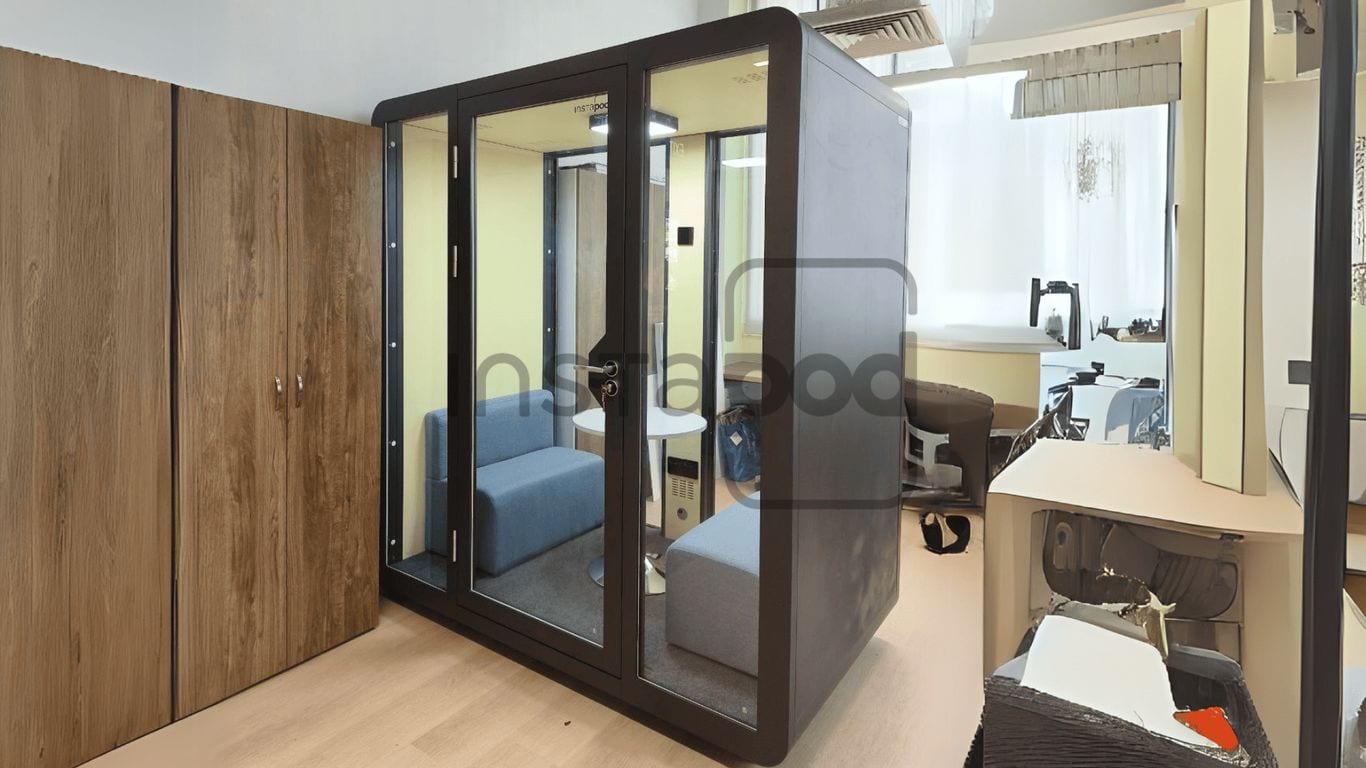
Modular meeting pods, like those portable meeting pod options you see popping up, are designed for speed and efficiency. They often come as a complete package, meaning you’re not piecing together different services. Think of them as a ready-to-go solution. Prices can vary quite a bit depending on size and features, but you can find options starting around S$17,000 for smaller units, going up to S$30,000 or more for larger ones that can fit more people. The big plus here is that installation is usually quick, often just a few hours, and they typically don’t require extensive permits because they’re considered furniture or modular structures.
The Price of Building Traditional Office Spaces
Building traditional meeting rooms from scratch is a whole different ballgame. This involves contractors, materials, permits, and a lot of coordination. You’re looking at costs that can easily climb past S$40,000, even for a modest space. This figure often includes:
- Framing and drywall
- Electrical work for lighting and power
- Flooring and ceiling installation
- Painting and finishing
- Potential architectural and engineering fees
It’s a more involved process that takes time, often months, and can disrupt your existing office environment with noise, dust, and a parade of workers.
Comparing Upfront Expenditures
So, when you put them side-by-side, the initial investment for a portable meeting pod is generally much lower than constructing a traditional meeting room. You’re paying for a finished product with modular options, whereas traditional construction is a project with many moving parts and associated costs. The speed of deployment is also a significant factor; you can have a meeting office pod up and running in a day, while a built-in room takes weeks or months. This immediate availability can translate into faster productivity and less disruption, which is a financial benefit in itself.
The upfront cost is just one piece of the puzzle. While modular meeting pods might seem cheaper initially, it’s worth considering the total cost over time, including how easily they can adapt to your changing needs.
Long-Term Financial Implications: Operational Costs
When we talk about the real cost of office space, it’s not just about what you pay each month for rent. There are a bunch of other things that add up over time, and these can really change the picture, especially when you’re comparing meeting pods to a more traditional setup.
Maintenance and Sustainability of Meeting Pods
Meeting pods, being modular and often made with specific materials, tend to have a pretty straightforward maintenance routine. Think about it: they’re designed to be durable and easy to clean. Most of the time, it’s just about keeping them tidy and checking that any built-in tech, like ventilation or lighting, is working smoothly. This usually means less hassle and fewer unexpected repair bills compared to a whole office floor. Plus, many pods are built with sustainability in mind, using materials that are easy to replace or recycle, which can also keep long-term waste and replacement costs down.
Hidden Costs in Conventional Office Setups
Traditional offices, on the other hand, can be a bit of a money pit over the years. Beyond the base rent, you’ve got service charges, property taxes, and building management fees that can creep up. Then there’s the constant need for repairs – leaky faucets, worn-out carpets, aging air conditioning systems. You also have to factor in the cost of utilities, which can fluctuate wildly, and the regular cleaning services. Don’t forget about things like security system maintenance, pest control, and even the occasional need to upgrade lighting or electrical systems to meet new standards. These aren’t usually big, one-off expenses, but they become a steady drain on your budget.
Total Cost of Ownership Analysis
To really get a handle on what’s cheaper in the long run, you need to look at the Total Cost of Ownership (TCO). This means adding up everything: the initial investment, monthly rent, utilities, maintenance, repairs, and even the cost of managing all these things. For meeting pods, the TCO is often lower because the upfront costs are less, and the ongoing operational expenses are more predictable and generally lower. Traditional offices might seem cheaper on a per-square-foot rent basis initially, but when you factor in all the extras and the potential for unexpected repairs, the TCO can quickly surpass that of a more contained, modular solution like meeting pods.
Here’s a simplified look at what can add up:
- Traditional Office:
- Base Rent
- Service Charges & Fees
- Utilities (Electricity, Water, Gas)
- Regular Maintenance & Repairs (HVAC, Plumbing, Electrical)
- Cleaning Services
- IT Infrastructure & Support
- Furniture & Fixture Replacement
- Property Taxes
- Meeting Pods:
- Initial Purchase/Lease Cost
- Minimal Maintenance (Cleaning, Basic Checks)
- Integrated Utilities (often lower consumption)
- Potential for Component Replacement (e.g., fan, light)
The real financial advantage of modular solutions like meeting pods often lies in their predictable operational expenses. Unlike a traditional office space where unforeseen repairs or utility spikes can hit your budget hard, pods offer a more stable cost structure. This predictability is gold for businesses trying to manage their finances effectively over the long haul.
Let’s consider a hypothetical scenario for a small team over five years:
| Cost Component | Meeting Pods (Estimated SGD) | Traditional Office (Estimated SGD) |
|---|---|---|
| Initial Investment | 15,000 | 50,000 |
| Annual Rent/Lease | 12,000 | 30,000 |
| Annual Utilities | 1,000 | 4,000 |
| Annual Maintenance/Repairs | 500 | 3,000 |
| 5-Year Total | 77,500 | 245,000 |
Note: These figures are illustrative and can vary significantly based on specific choices, location, and usage.
Flexibility and Scalability: A Financial Advantage
When you’re running a business, things change. You might hire more people, or maybe your team shrinks for a bit. This is where meeting pods and flexible office setups really shine, especially compared to traditional construction. Think about it: building a permanent conference room takes time and money, and once it’s built, it’s pretty much there to stay.
Adapting to Business Growth with Meeting Pods
Modular meeting pods offer a fantastic way to scale your space without a huge headache. If your team suddenly needs more room for collaboration, you can often just add more pods. It’s like building with LEGOs for your office. This means you’re not stuck paying for unused space if your headcount drops, and you can quickly get more if it rises. It’s a much smoother process than trying to reconfigure a fixed office layout.
The Inflexibility of Fixed Office Spaces
Traditional offices, with their fixed walls and permanent structures, can be a real pain when your business needs to shift. Let’s say you lease a space designed for 20 people, but then you hire 5 more. Suddenly, your nice, open plan feels cramped. You might have to look for a whole new office, which involves leases, moving costs, and downtime. That’s a lot of disruption and expense just because your team grew a little.
Cost Implications of Relocation
Moving a traditional office isn’t just about packing boxes. There are lease break fees, new deposit requirements, fit-out costs for the new space, and the sheer time your team spends not working while they get settled. It can easily run into tens of thousands of dollars, not to mention the lost productivity. Meeting pods, on the other hand, can often be relocated or reconfigured with minimal fuss, saving you from these significant costs.
The ability to adjust your workspace quickly and without major financial penalties is a direct financial benefit. It means your capital isn’t tied up in physical structures that might not fit your needs a year from now. This agility protects your bottom line and allows you to reinvest in growth rather than renovations.
Environmental Impact and Cost Savings
When we talk about office spaces, it’s easy to get caught up in the numbers – rent, salaries, equipment. But there’s a bigger picture, and that’s how our choices affect the planet, and how that, in turn, can save us money. Traditional construction, you know, building walls, putting up drywall, all that jazz, is a pretty big contributor to global carbon emissions. We’re talking a significant chunk of the 40% that the building sector is responsible for. And then there’s the waste. A lot of materials end up in landfills, which isn’t great for anyone.
Sustainable Materials in Meeting Pods
Meeting pods, especially the modular kind, often use recycled materials. Think about it: soundproofing made from recycled plastic bottles. It’s a smart way to add needed space without tearing down and rebuilding. This approach means less waste and a smaller carbon footprint right from the start. Choosing pods can significantly cut down on cumulative carbon emissions over time compared to traditional builds.
Carbon Footprint of Construction
Let’s break down the difference. Building a traditional office space involves a lot of raw materials, energy for construction, and then, eventually, demolition waste. Modular pods, on the other hand, are often prefabricated. This means less on-site disruption, less energy used during installation, and a lot less waste. Some studies suggest that modular solutions can reduce carbon emissions by as much as 33% over a decade when compared to conventional construction methods. It’s like comparing driving a gas guzzler to taking public transport – the impact is just different.
Long-Term Environmental Benefits
Beyond the initial build, modular pods are designed for flexibility. If your needs change, you can reconfigure or move them without the massive environmental cost of renovating or demolishing a fixed structure. This reusability means fewer resources are consumed over the lifespan of your office setup. It’s a more circular approach to office design, which is definitely a win for the planet and, over the long haul, for your budget too. Less waste, less energy, and more adaptability all add up.
The construction industry has a substantial environmental impact, both in terms of resource consumption and waste generation. Opting for modular solutions offers a more sustainable path by minimizing waste, utilizing recycled materials, and reducing the energy required for installation and future modifications.
Here’s a quick look at how they stack up:
| Feature | Traditional Construction | Modular Meeting Pods |
|---|---|---|
| Material Waste | High | Low |
| Recycled Content | Varies | Often High |
| Installation Energy | High | Low |
| Reconfigurability | Low | High |
| Carbon Footprint | High | Lower |
Productivity and Efficiency Gains
When we talk about office spaces, it’s easy to get bogged down in rent figures and square footage. But what about how the space actually helps your team get work done? This is where meeting pods and traditional boardrooms can show some real differences in how productive everyone is.
Optimizing Space Utilization with Meeting Pods
Meeting pods are designed to be flexible. Instead of having a large, fixed boardroom that might sit empty most of the day, pods can be deployed where and when they’re needed. This means you’re not paying for unused, prime office real estate. Think about it: a pod can be set up in a common area, or even tucked away in a corner, providing a quiet spot for a quick call or a small team huddle. This smart use of space means less wasted money and more opportunities for focused work.
- Pods can be moved or reconfigured as your team’s needs change, unlike permanent boardrooms.
- They offer dedicated quiet zones in otherwise open-plan offices, reducing distractions.
- Smaller footprints mean you can fit more functional spaces into the same amount of overall office area.
Impact on Workforce Happiness and Productivity
Let’s be honest, nobody likes feeling cramped or constantly interrupted. Traditional offices, especially older ones, can sometimes feel like a maze of cubicles or large, impersonal meeting rooms. Meeting pods, on the other hand, offer a sense of privacy and control. Having a dedicated space for a confidential chat or a focused brainstorming session can significantly reduce stress and improve concentration. Happy employees are generally more productive employees, and providing them with the right tools, including effective workspaces, is a big part of that.
Reducing Real Estate Mismanagement
Mismanaging office space is a silent killer of budgets. You might have a huge boardroom that’s only used for 10% of its potential, or you might have teams struggling to find quiet spots to collaborate. Meeting pods help avoid this. They allow for a more granular approach to space allocation. Instead of one giant meeting room, you might have several pods, each serving a specific purpose or team. This prevents the common issue of over-provisioning space that sits empty, which is a direct hit to your bottom line.
The shift towards flexible workspaces isn’t just a trend; it’s a response to how people actually work best. Providing adaptable, private spaces can lead to fewer distractions, better focus, and ultimately, more work getting done efficiently. It’s about making sure your office supports your team, not hinders them.
Here’s a quick look at how different setups might impact your team:
| Feature | Meeting Pods | Traditional Boardroom |
|---|---|---|
| Space Utilization | High; adaptable and deployable where needed | Lower; fixed location, often underutilized |
| Privacy & Focus | Excellent; designed for quiet work | Varies; can be noisy or interrupted |
| Flexibility | High; can be moved or reconfigured | Low; permanent construction |
| Cost per Use | Potentially lower due to efficient use | Potentially higher if underutilized |
| Impact on Morale | Positive; offers choice and reduces stress | Neutral to negative; can feel impersonal |
Strategic Considerations for Singapore Businesses
When you’re looking at office space in Singapore, it’s not just about the monthly rent. You’ve got to think about what kind of business you’re running and what your future plans look like. It’s a bit like picking the right tool for the job – you wouldn’t use a hammer to screw in a lightbulb, right?
Evaluating Meeting Pods for Startups and SMEs
For startups and small to medium-sized enterprises (SMEs) in Singapore, the appeal of meeting pods and flexible office solutions is pretty strong. Think about it: you’re often trying to keep costs low while staying agile. Meeting pods offer a way to get dedicated, quiet spaces for calls or small meetings without committing to a huge chunk of office real estate. They’re quick to set up, and you can often move them around if your office layout needs a tweak. This flexibility means you’re not tied down by long leases or expensive build-outs. Plus, for a new business, the initial investment is much lower compared to building out a traditional meeting room.
- Speed to deployment: Get a functional meeting space almost immediately.
- Cost-effectiveness: Lower upfront costs and predictable monthly expenses.
- Adaptability: Easily reconfigure your workspace as your team grows or needs change.
- Focus: Provides a quiet zone away from the main office bustle.
For many new businesses, cash flow is king. Meeting pods offer a way to get the functionality you need without a massive capital outlay, freeing up funds for core business activities.
Assessing Traditional Offices for Established Corporations
Established corporations in Singapore, especially those with a stable workforce and clear long-term plans, might still find traditional office setups more suitable. If your company has been around for a while, you likely have a specific brand identity and operational workflow that requires a custom-designed space. Building out traditional boardrooms and meeting rooms allows for complete control over design, branding, and technology integration. While the initial investment is higher, for a large, stable organization, the cost per square foot over a long lease can sometimes be more economical. It also offers a sense of permanence and a strong physical headquarters.
- Customization: Full control over design, layout, and branding to match corporate identity.
- Long-term stability: Predictable costs over extended lease periods.
- Infrastructure integration: Easier to build in specific IT, security, and AV systems.
- Scalability (within limits): Can often expand by taking adjacent space if available.
The Role of Location in Cost Calculations
No matter if you’re leaning towards meeting pods or a traditional office, location in Singapore is a massive factor in the overall cost. A prime Central Business District (CBD) address will always command a premium, whether you’re renting a serviced office with pods or leasing a traditional space. However, the type of space can influence how much that location premium impacts you. For instance, a startup might opt for a serviced office in a good location to gain prestige without the long-term commitment of a traditional lease. Conversely, an established firm might absorb the higher cost of a CBD location for a traditional office because they plan to stay put for years and value the direct control and branding opportunities. Consider the trade-offs: a slightly less central location might offer significant savings on rent, which could be reinvested elsewhere, especially if you’re using meeting pods that can be more easily relocated if needed.
So, What’s the Verdict?
When you really break it down, the choice between meeting pods and traditional boardrooms in Singapore comes down to what your business needs most right now. If you’re looking for a quick, flexible solution that doesn’t tie you down with long-term construction headaches or massive upfront costs, those modular meeting pods are looking pretty good. They pop up fast, can be moved if you relocate, and often have a smaller environmental footprint, which is a nice bonus. Traditional boardrooms, on the other hand, still have their place, especially if you need a permanent, fully customized space and aren’t worried about the time and expense that comes with building from scratch. But for many businesses today, especially those valuing agility and cost-effectiveness, the modern meeting pod seems to be winning the race.
Frequently Asked Questions
What exactly are meeting pods and how do they compare to traditional meeting rooms?
Meeting pods are like small, private rooms you can put inside a larger office. Think of them as mini-meeting rooms or quiet spaces. They’re great for quick chats or when you need to focus without distractions. Traditional meeting rooms are usually built as part of the office itself, often larger and more permanent.
Are meeting pods cheaper than building a regular meeting room?
Generally, yes! Building a traditional meeting room can cost a lot, involving construction, materials, and lots of workers. Meeting pods are often pre-made and can be set up much faster and for less money. Some pods can cost around $17,000, while building a room from scratch could easily go over $40,000.
What are the long-term costs of having meeting pods versus traditional rooms?
Meeting pods usually have lower long-term costs. They don’t need major repairs like a built-in room might. Plus, they’re often made with recycled materials, which can be good for the environment and might save on energy. Traditional rooms might have ongoing maintenance for things like lighting, air conditioning, and structural upkeep.
Can I move meeting pods if my office changes location?
That’s a big advantage of meeting pods! They are designed to be moved. If you relocate your office, you can take your pods with you. Traditional meeting rooms are permanent and stay with the building, so you can’t take them if you move.
How do meeting pods help save space and make the office work better?
Meeting pods are super useful because they create dedicated spots for small meetings or quiet work. This means you don’t have to use a big conference room for just one or two people. It helps make sure the right space is used for the right task, making your whole office flow better and increasing productivity.
Are meeting pods a good idea for new businesses or small companies in Singapore?
Absolutely! For startups or small to medium-sized businesses (SMEs) in Singapore, meeting pods offer a flexible and cost-effective solution. They let you add needed meeting space without a huge upfront investment or long-term commitment, which is perfect when you’re just starting out or growing quickly.
The post Meeting Pods vs Traditional Boardrooms: A Cost Comparison for Singapore appeared first on InstaPod Singapore.