
Meeting Pod vs Traditional Conference Room: Cost Analysis for SG Businesses
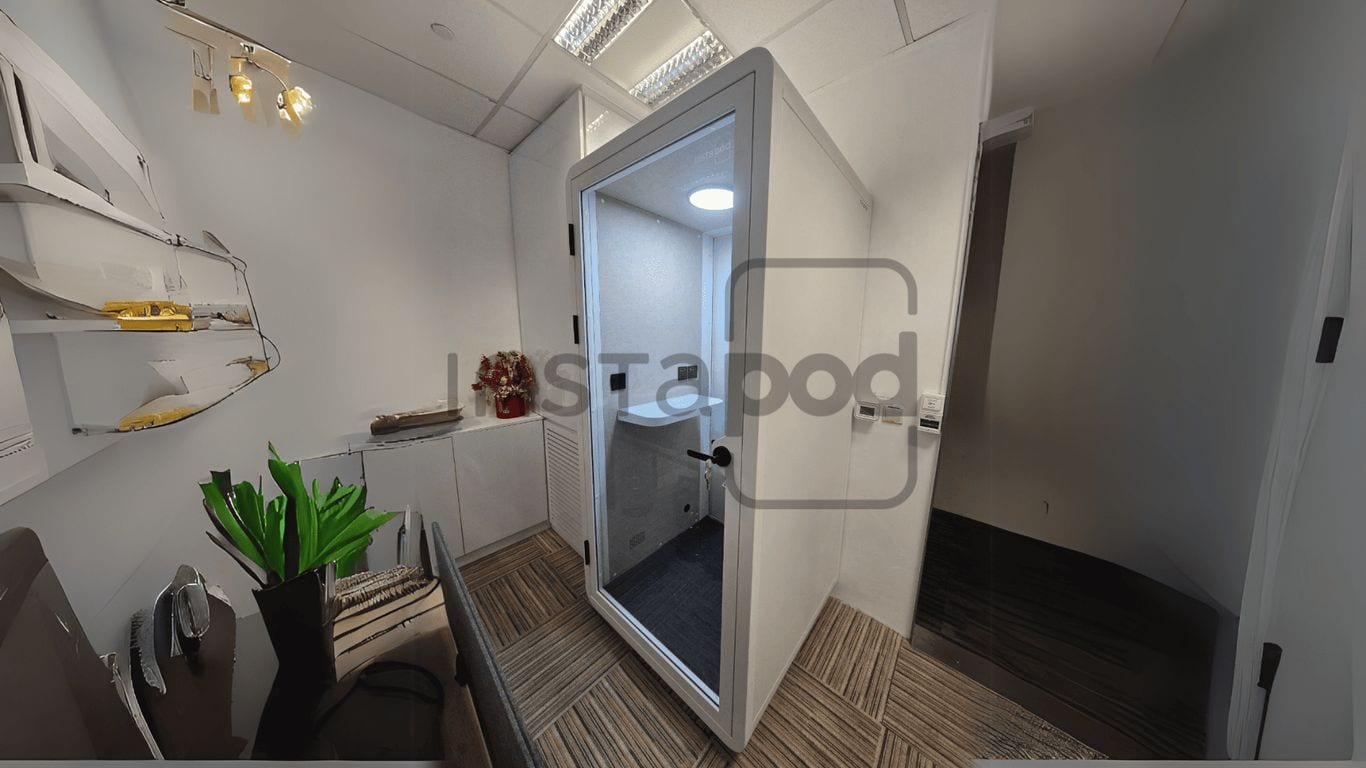
Thinking about how to set up your office space in Singapore? It’s a big decision, and honestly, it can get confusing fast. You’ve got options like those neat, modern meeting pods, or the classic, built-in boardroom style. We’re going to break down the costs for both, looking at what you pay upfront and what keeps coming up over time. It’s not just about the price tag, though; we’ll also touch on how each choice affects your business day-to-day and even the planet.
Key Takeaways
- Setting up modular meeting pods upfront is generally less expensive than building traditional boardrooms, saving money from the start.
- While meeting pods have lower initial costs, traditional construction can sometimes seem cheaper long-term if you don’t factor in relocation or adaptation needs.
- Modular meeting pods offer significant flexibility, allowing businesses to easily move or reconfigure their space as needs change, unlike fixed constructions.
- Choosing meeting pods can lead to environmental savings due to sustainable materials and less construction waste compared to building new rooms.
- Meeting pods can improve how efficiently space is used and potentially boost employee focus and happiness, indirectly saving money.
Understanding The Initial Investment: Meeting Pods Versus Traditional Construction
When you’re setting up new spaces for your team to connect, the first thing that usually pops into your head is the price tag. It’s a pretty big deal, right? You’ve got a couple of main routes to go down: opting for those slick, modern meeting pods or sticking with the tried-and-true method of building out traditional rooms. Let’s get into what you’re looking at right off the bat.
Cost Breakdown Of Modular Meeting Pods
Modular meeting pods, including those portable meeting pod options you’re seeing more of, are built for speed and ease. They often arrive as a complete package, meaning you’re not juggling different contractors or services. Think of them as a ready-to-go solution. Prices can really swing depending on the size and what features you want, but you can find smaller units starting around S$17,000, climbing up to S$30,000 or more for larger ones that can fit more people. The best part? Installation is usually super quick, often just a few hours, and they typically don’t need extensive permits because they’re often treated more like furniture or modular structures.
The Price Of Building Traditional Office Spaces
Building traditional meeting rooms from scratch is a whole different story. This involves hiring contractors, buying materials, getting permits, and a lot of coordination. You’re looking at costs that can easily go over S$40,000, even for a pretty basic space. This figure usually includes:
- Framing and drywall
- Electrical work for lights and power outlets
- Flooring and ceiling installation
- Painting and finishing touches
- Potential fees for architects or engineers
Comparing Upfront Costs: Pods vs. Built Rooms
When you line them up side-by-side, the initial cost for a portable meeting pod is generally much lower than constructing a traditional meeting room. With modular options, you’re paying for a finished product. Traditional construction, on the other hand, is a project with many moving parts and associated expenses. The speed of deployment is also a big factor; you can have a meeting office pod ready to go in a day, while a built-in room takes weeks or months. This immediate availability can mean faster productivity and less disruption, which is a financial plus in itself.
Building a traditional meeting room is a significant undertaking. It’s not like setting up a meeting pod; it’s a full construction project that can take weeks or even months, leading to noise and disruption for everyone in the office. You also have to account for potential delays from things like bad weather or contractors running behind schedule. It’s a big commitment of both time and money.
Here’s a quick look at estimated upfront costs:
| Feature | Modular Meeting Pod (Est. SGD) | Traditional Meeting Room (Est. SGD) |
|---|---|---|
| Initial Investment | 15,000 – 30,000 | 40,000+ |
| Installation Time | Hours | Weeks to Months |
| Permit Hassle | Minimal | Significant |
Long-Term Financial Implications Of Office Space Choices
So, you’ve looked at the sticker price, but what about what happens down the road? The real cost of your office space isn’t just what you pay upfront. It’s the ongoing bills, the little things that break, and how well the space actually works for your team over time. This is where the picture between meeting pods and traditional conference rooms can get pretty different.
Predictable Operational Expenses With Meeting Pods
One of the big wins with meeting office pods is how predictable their running costs tend to be. You know what you paid for the pod, and the ongoing expenses are usually pretty low. Think about it: they often use less energy than a full-sized room, and maintenance is typically limited to basic cleaning and maybe a check on the fan or light. This makes budgeting a lot easier, which is always a good thing for any business, big or small.
Ongoing Costs Of Traditional Meeting Rooms
Traditional conference rooms, on the other hand, can sneak up on you with costs. Beyond the rent for the space they take up, there are utilities that can fluctuate, regular cleaning, and the inevitable repairs. A leaky faucet, an aging air conditioner, or even just worn-out carpet can add up. These aren’t usually huge expenses on their own, but they become a steady drain on your finances year after year.
Here’s a quick look at what can add up:
| Cost Component | Meeting Pods (Annual Est. SGD) | Traditional Room (Annual Est. SGD) |
|---|---|---|
| Utilities | 1,000 | 4,000 |
| Maintenance & Repairs | 500 | 3,000 |
| Cleaning | 200 | 1,000 |
| Total Annual Extras | 1,700 | 8,000 |
Note: These figures are just examples and can change based on usage and specific room features.
The True Cost Of Ownership Over Five Years
When you look at the total picture over several years, the differences become even clearer. Let’s imagine a scenario over five years. The initial cost of a meeting pod is lower, and the yearly operational costs are significantly less than what you’d expect for a traditional conference room. This means that while the upfront price might be a factor, the long-term savings can be substantial.
The real financial advantage of modular solutions like meeting pods often lies in their predictable operational expenses. Unlike a traditional office space where unforeseen repairs or utility spikes can hit your budget hard, pods offer a more stable cost structure. This predictability is gold for businesses trying to manage their finances effectively over the long haul.
Consider this simplified five-year projection:
| Cost Component | Meeting Pods (5-Year Est. SGD) | Traditional Room (5-Year Est. SGD) |
|---|---|---|
| Initial Investment | 15,000 | 50,000 |
| Rent/Lease (5 Years) | 60,000 | 150,000 |
| Utilities (5 Years) | 5,000 | 20,000 |
| Maintenance (5 Years) | 2,500 | 15,000 |
| 5-Year Total | 82,500 | 235,000 |
Again, these numbers are just to give you an idea. Your actual costs could be different.
Strategic Considerations For Singapore Businesses
When you’re figuring out office space in Singapore, it’s more than just the monthly rent. You really need to think about the kind of business you’re running and where you see it going. It’s a bit like choosing the right tool for a job – you wouldn’t use a hammer for a delicate screw, right?
Evaluating Meeting Pods for Startups and SMEs
For startups and small to medium-sized enterprises (SMEs) here in Singapore, meeting pods and flexible office setups are pretty appealing. Think about it: you’re often trying to keep costs down while staying nimble. Meeting pods give you a way to get dedicated, quiet spots for calls or small meetings without needing a huge chunk of office real estate. They’re quick to put in place, and you can often shift them around if your office layout needs a little change. This flexibility means you’re not stuck with long leases or expensive build-outs. Plus, for a new business, the initial cost is way lower compared to building out a traditional meeting room.
- Speed to deployment: Get a functional meeting space almost immediately.
- Cost-effectiveness: Lower upfront costs and predictable monthly expenses.
- Adaptability: Easily reconfigure your workspace as your team grows or needs change.
- Focus: Provides a quiet zone away from the main office bustle.
For many new businesses, cash flow is king. Meeting pods let you get the functionality you need without a massive capital outlay, freeing up funds for core business activities.
Assessing Traditional Offices for Established Corporations
Established corporations in Singapore, especially those with a steady workforce and clear long-term plans, might still find traditional office setups a better fit. If your company has been around for a while, you likely have a specific brand identity and workflow that needs a custom-designed space. Building out traditional boardrooms and meeting rooms lets you have full control over design, branding, and how technology fits in. While the initial investment is higher, for a large, stable organization, the cost per square foot over a long lease can sometimes be more economical. It also gives a sense of permanence and a strong physical headquarters.
- Customization: Full control over design, layout, and branding to match corporate identity.
- Long-term stability: Predictable costs over extended lease periods.
- Infrastructure integration: Easier to build in specific IT, security, and AV systems.
Building out traditional spaces allows for complete control over design, branding, and technology integration, which can be important for established companies wanting to reflect their corporate identity and operational needs.
The Role of Location in Cost Calculations
No matter if you’re leaning towards meeting pods or a traditional office, location in Singapore is a massive factor in the overall cost. A prime Central Business District (CBD) address will always cost more, whether you’re renting a serviced office with pods or leasing a traditional space. However, the type of space can influence how much that location premium affects you. For instance, a startup might choose a serviced office in a good location to gain prestige without the long-term commitment of a traditional lease. Conversely, an established firm might accept the higher cost of a CBD location for a traditional office because they plan to stay put for years and value the direct control and branding opportunities. Consider the trade-offs: a slightly less central location might offer significant savings on rent, which could be reinvested elsewhere, especially if you’re using meeting pods that can be more easily relocated if needed.
Ultimately, the choice between meeting pods and traditional boardrooms in Singapore hinges on your business’s immediate needs and future trajectory. If agility and lower upfront costs are priorities, meeting pods offer a compelling solution. For established entities prioritizing customization and a permanent presence, traditional construction remains a strong contender. Location, however, remains a significant cost driver for both options, requiring careful consideration of its impact on your budget and business image.
Hidden Costs And Value Beyond The Price Tag
So, we’ve talked a lot about the sticker price and the monthly bills, but what about the stuff that doesn’t show up on the initial invoice? Both meeting pods and traditional rooms have their own set of sneaky expenses and benefits that go beyond just dollars and cents.
Hidden Costs of Meeting Spaces
It’s easy to get fixated on the upfront purchase or construction cost, but there are other things to consider. For traditional rooms, think about the disruption during construction – the noise, the dust, the time your team loses focus. Then there’s the cost of integrating technology, like setting up AV equipment or ensuring reliable Wi-Fi, which can add up. And what about wasted space? Sometimes, a big, fancy conference room sits half-empty, costing you money for space that isn’t really being used effectively.
Meeting pods, while simpler, can also have their own hidden costs. You might need to run a new power outlet or network cable to the pod’s location, which isn’t always straightforward depending on your office layout. If your company moves or reconfigures its space, moving a pod can incur additional costs, unlike a built-in room which is just part of the building.
Environmental Savings With Modular Solutions
This is where meeting pods can really shine. Because they’re often built off-site in a controlled environment, there’s less waste generated during manufacturing. Many manufacturers also focus on using sustainable materials that are easier to recycle or replace. Plus, their integrated systems, like ventilation and lighting, are often designed for energy efficiency, meaning lower utility bills and a smaller carbon footprint for your business. It’s a win-win for your budget and the planet.
Impact On Employee Morale And Productivity
Beyond the financial aspect, think about how these spaces affect your team. A well-designed, quiet meeting pod can be a sanctuary for focused work or private calls, boosting individual productivity. It can also make employees feel valued, providing them with comfortable, modern spaces to collaborate. Traditional rooms, if they’re outdated or poorly maintained, can actually drag down morale. The right kind of space can make a real difference in how people feel about coming to work and how much they get done.
Here’s a quick look at potential impacts:
- Meeting Pods:
- Improved focus and reduced distractions.
- Enhanced privacy for sensitive calls or discussions.
- Modern aesthetic can boost employee satisfaction.
- Traditional Rooms:
- Can be disruptive if under renovation.
- May lack modern amenities, leading to frustration.
- Potential for feeling cramped or outdated.
Mobility And Adaptability: A Key Differentiator
The Advantage Of Relocating Meeting Pods
When your business is growing or changing direction, the last thing you want is to be stuck with office furniture that can’t move. Meeting pods are pretty neat because you can pick them up and put them somewhere else. If your team suddenly needs more space in a different part of the office, or if you move to a new building, these pods can come with you. It’s like having furniture that’s ready for anything. This means you’re not locked into a specific layout forever. Need to rearrange things for a new project? No problem. It’s a big plus for companies that don’t want to be tied down.
The Permanence Of Traditional Meeting Rooms
Building a traditional conference room is a whole different story. Once those walls are up, they’re pretty much there to stay. You can’t just decide to move it to another floor or shrink it down if you need less space. This permanence can be a real headache if your business needs change. You might end up with a conference room that’s too big and mostly empty, or one that’s too small for your current needs. It’s a fixed cost and a fixed space that doesn’t bend when you need it to.
Flexibility For Evolving Business Needs
Think about how often businesses shift gears. Maybe you bring on new staff, or a project requires a different team setup. Traditional offices, with their fixed walls, make these changes difficult and expensive. You might have to knock down walls or even look for a whole new office space. That’s a lot of hassle and money.
Meeting pods, on the other hand, offer a much simpler solution. They can be moved, reconfigured, or even added to as your needs change. This adaptability means you’re not paying for space you don’t use, and you can quickly get more space when you need it. It’s a smarter way to manage your office footprint.
Here’s a quick look at how they stack up:
| Feature | Meeting Pods | Traditional Meeting Rooms |
|---|---|---|
| Relocation | Easy to move or reconfigure | Permanent, difficult to move |
| Scalability | Add or remove pods as needed | Requires construction for changes |
| Adaptability | High; suits changing team sizes and needs | Low; fixed layout |
| Future-Proofing | Can adapt to future office layouts | Limited ability to adapt |
The ability to easily move and reconfigure meeting pods means your office space can grow and change with your business, avoiding the costly and disruptive process of altering permanent structures. This flexibility is a significant financial advantage in the long run.
Wrapping It Up: What’s the Best Fit for Your Singapore Business?
So, after looking at all the numbers and what makes sense for different companies, it really comes down to what your business needs right now. If you’re a startup or a smaller team that needs flexibility and doesn’t want to spend a ton of cash upfront, those meeting pods are looking pretty smart. They’re quick to get, you can move them if you need to, and they don’t break the bank. For bigger, more established companies that have a clear long-term plan and need a very specific setup, building traditional rooms might still be the way to go. But for many businesses today, especially those that value being able to change things up easily and keep an eye on costs, the meeting pod seems to be the winner. It’s all about picking the right tool for your specific job.
Frequently Asked Questions
What exactly are meeting pods and how do they compare to traditional meeting rooms?
Meeting pods are like small, private rooms you can place inside a larger office space. Think of them as mini-meeting rooms or quiet spots for focused work. They’re usually pre-made and can be set up quickly. Traditional meeting rooms, on the other hand, are typically built as permanent parts of the office structure, often larger and requiring construction.
Are meeting pods generally cheaper than building a regular meeting room?
Yes, usually! Building a traditional meeting room involves a lot of costs like construction materials, labor, and permits, which can add up quickly. Meeting pods are often less expensive because they’re pre-fabricated and can be installed much faster. Some pods might cost around S$17,000, while building a room from scratch could easily go over S$40,000.
What are the long-term costs of having meeting pods versus traditional rooms?
Meeting pods often have lower ongoing costs. They typically require less maintenance than a built-in room might need over time. Plus, they might use less energy. Traditional rooms can have recurring expenses for things like upkeep of the building’s systems (like air conditioning and lighting) and potential repairs.
Can I move meeting pods if my office location changes?
That’s a major benefit of meeting pods! They are designed to be movable. If your business relocates, you can simply take your meeting pods with you. Traditional meeting rooms are fixed parts of the building, so they stay behind when you move.
How do meeting pods help make an office space more efficient?
Meeting pods are great because they create dedicated spaces for small meetings or individual focus. This means you don’t need to book a large conference room for just one or two people. This smart use of space helps your whole office run more smoothly and can boost how much work gets done.
Are meeting pods a good choice for new businesses or small companies in Singapore?
Absolutely! For startups and small to medium-sized businesses (SMEs), meeting pods are often a fantastic option. They offer the functionality of a private meeting space without the huge initial cost or long-term commitment of building traditional rooms. This flexibility and lower upfront investment can free up money for other important parts of the business.
The post Meeting Pod vs Traditional Conference Room: Cost Analysis for SG Businesses appeared first on InstaPod Singapore.