Meeting Pod Solutions: How to Create a Private and Productive Collaboration Space in Your Singapore Office
Meeting pods are becoming a standard in Singapore offices for good reason. They offer practical solutions to common workplace challenges. Here’s what you should remember:
Key Takeaways
- Meeting pods solve noise issues in open offices by providing quiet spots for focus.
- They boost productivity by cutting down on distractions and offering private areas.
- Pods are flexible and can be moved, fitting well with changing office needs.
- They are a cost-effective alternative to building new rooms and suit various businesses.
- Choosing the right pod means considering size, soundproofing, and your team’s specific needs.
The Growing Need For Meeting Pods In Singapore
Singapore’s office spaces are changing, and fast. Gone are the days when a few big meeting rooms and a sea of desks were enough. Now, there’s a real push for more flexible and focused work areas, and that’s where meeting pods, or ‘work pods’ as some call them, really come into play. You’re starting to see them pop up everywhere, from the latest tech startups to more established companies. They’re not just a passing trend; they’re becoming a pretty standard part of how modern offices are set up.
Addressing Noise In Open-Concept Workspaces
Open-plan offices have their upsides, like making collaboration feel easier and giving a sense of team unity. But let’s be real, they can also be incredibly noisy. All that background chatter, phones ringing, and people walking by can seriously mess with your concentration. It’s tough to get any deep work done when you’re constantly being interrupted. Some studies even suggest that noise can really tank productivity, sometimes by more than half. It’s a genuine problem that companies are trying to figure out.
Understanding The Privacy Pod Concept
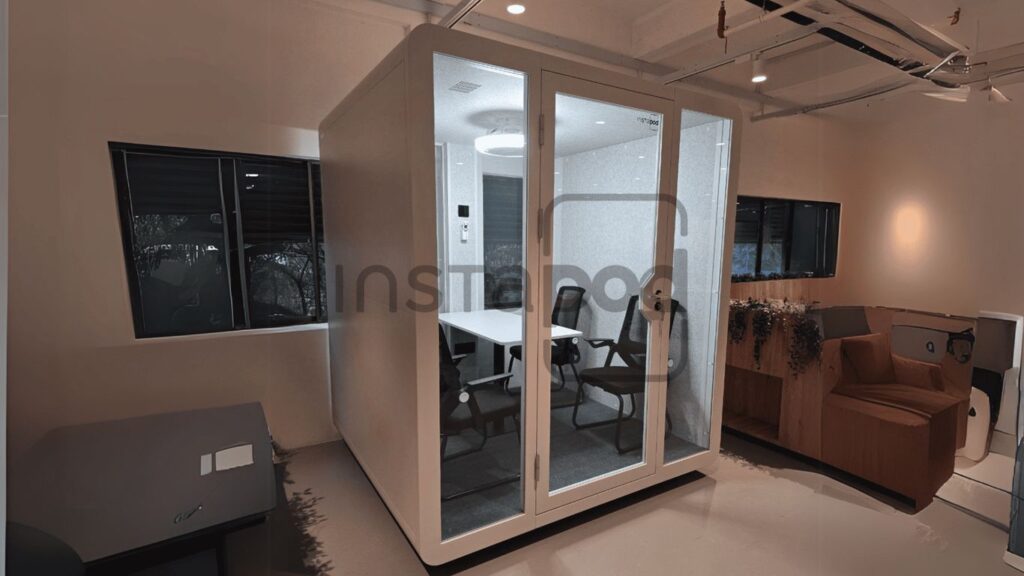
So, what exactly are these things? A privacy pod, or an acoustic pod, is basically a small, self-contained room you can place pretty much anywhere in your office. Think of it like a mini, soundproof booth. They usually come with decent lighting, ventilation, and power outlets. They’re designed to block out noise and give you a quiet space. You can find them in different sizes: small ones for taking calls, slightly bigger ones for one-on-one chats, and larger ones for small team meetings. These pods are a smart way to add private spaces without needing major construction.
Key Benefits Of Acoustic And Meeting Pods
Why are so many Singapore offices investing in these? There are a few good reasons:
- Improved Focus: They offer a quiet escape from the office buzz, allowing for concentrated work.
- Enhanced Privacy: Ideal for confidential calls, sensitive discussions, or focused individual tasks.
- Flexibility: Easily added, moved, or reconfigured as office needs change.
- Space Efficiency: Provide dedicated spaces without the cost and permanence of building new rooms.
The ability to step into a dedicated, quiet space on demand significantly boosts an individual’s capacity for focused work and reduces the mental fatigue associated with constant background noise. This is especially important in busy urban environments like Singapore where office space is at a premium.
Optimizing Your Office Layout With Meeting Pods
Maximizing Space Utilization In Premium Locations
Office space in Singapore doesn’t come cheap, so making every square foot count is a big deal. Traditional meeting rooms, with their fixed walls, can eat up a lot of valuable real estate and are a pain to change if your needs shift. Meeting pods offer a much smarter way to use your existing footprint. They’re like pre-fab private rooms you can slot into your office design without tearing down walls or dealing with lengthy construction projects. This means you can create more functional zones – think quiet focus areas, small meeting spots, or private call booths – without sacrificing a huge chunk of your open-plan space. It’s about getting more bang for your buck when it comes to your office layout.
Creating A Flexible And Adaptable Office Environment
Workplaces today aren’t static. Teams grow, projects change, and how people work can shift pretty quickly. Building permanent structures just doesn’t keep up. Meeting pods, on the other hand, are built for flexibility. Need an extra spot for a quick team huddle? Roll in a couple of pods. Your team is expanding and needs more private spaces? Add more pods. Many are designed to be moved around easily, letting you reconfigure your office layout without a major headache. This agility means your workspace can actually support your business as it evolves, rather than holding it back.
Here’s a quick look at how pods stack up against traditional setups:
| Feature | Traditional Office Space | Meeting Pods |
|---|---|---|
| Flexibility | Low (Permanent walls) | High (Movable) |
| Setup Time | Weeks/Months | Hours/Days |
| Cost per Space | High (Construction) | Moderate (Purchase) |
| Space Efficiency | Moderate | High (Modular) |
Comparing Pods To Traditional Construction
When you look at the numbers, building out permanent meeting rooms or private offices is a significant investment. You’re talking about construction crews, materials, permits, and then you’re locked into that layout. Acoustic meeting pods offer a different path. While there’s an upfront cost, it’s often considerably less than building. Plus, the ability to move them if you relocate or reconfigure your office means they aren’t a sunk cost in the same way. They provide that much-needed privacy and quiet without the long-term commitment and expense of traditional construction, making them a really practical choice for businesses watching their budgets.
Pods are not just standalone pieces of furniture; they’re becoming integrated parts of a larger office ecosystem. They work alongside other furniture and zones to create a more functional and responsive workspace that supports various work styles.
Choosing The Right Meeting Pod For Your Team
So, you’ve decided meeting pods are the way to go for your Singapore office. That’s a smart move! But now comes the tricky part: picking the right ones. It’s not just about grabbing the first shiny pod you see. You need to think about what your team actually needs and how these pods will fit into your existing space. Let’s break it down.
Understanding Different Meeting Pod Types
Pods aren’t one-size-fits-all, thankfully. You’ve got a few main categories to consider, and knowing the difference helps a lot. The key is matching the pod type to its intended use.
Here’s a quick look at how pod types can serve different needs:
| Pod Type | Best For | Typical Capacity | Key Features |
|---|---|---|---|
| Single-Person Pod | Private calls, focused work, video chats | 1 | Soundproofing, ventilation, power |
| Small Meeting Pod | 1-on-1s, team huddles, quick discussions | 2-4 | Soundproofing, ventilation, power, small table |
| Larger Meeting Pod | Team meetings, client chats, collaborative work | 4-6+ | Soundproofing, ventilation, power, larger table |
| Smart Pod | Any of the above, with added tech benefits | Varies | Automation, sensors, connectivity, software updates |
Evaluating Soundproofing Quality
This is a big one. You want pods that actually block out noise. Check the soundproofing ratings if they’re available. Nobody wants their private chat to be overheard or to be distracted by hallway chatter. A good pod should offer a significant reduction in ambient noise, allowing for clear conversations and deep concentration. Look for pods that use dense materials and have well-sealed doors and windows.
Good airflow is a must. You don’t want to feel stuffy after just a few minutes. Look for pods with active ventilation systems, especially those that adjust based on occupancy.
Assessing Ventilation And Airflow
Beyond just sound, comfort is key. Good ventilation is a must. You don’t want to feel stuffy after just a few minutes in a pod, whether it’s a solo study pod or a larger meeting space. Look for pods with active ventilation systems, especially those that adjust based on occupancy. This keeps the air fresh and the environment pleasant, no matter how long someone is inside. Features like quiet fans and adjustable vents make a big difference in the overall user experience.
Integrating Meeting Pods Into Your Workspace
So, you’ve decided that a work pod or two is the way to go for your Singapore office. That’s a smart move! But now comes the tricky part: picking the right ones and figuring out where they fit. It’s not just about grabbing the first shiny pod you see. You need to think about what your team actually needs and how these pods will fit into your existing space. Let’s break it down.
Considering Size and Actual Use Cases
This is where you really need to think about your team. How many people do you have? What kind of work do they do most often? A good starting point is to aim for one single-person pod and one small-to-medium meeting pod for every 6 to 12 employees. This gives people options without leaving pods empty most of the time. If your team does a lot of individual focused work, you might need more single pods. If collaboration is key, lean towards more small and medium meeting pods. Don’t forget to think about future growth, too. It’s better to have a little extra capacity than to be caught short later on.
Here’s a quick look at how pod types can serve different needs:
| Pod Type | Best For | Typical Capacity | Key Features |
|---|---|---|---|
| Single-Person Pod | Private calls, focused work, video chats | 1 | Soundproofing, ventilation, power |
| Small Meeting Pod | 1-on-1s, team huddles, quick discussions | 2-4 | Soundproofing, ventilation, power, small table |
| Larger Meeting Pod | Team meetings, client chats, collaborative work | 4-6+ | Soundproofing, ventilation, power, larger table |
Getting the mix right means your team can actually use these spaces effectively, boosting productivity and making your office a more pleasant place to be.
The Role Of Pods In The Modern Office Ecosystem
Meeting pods aren’t just standalone items anymore; they’re becoming part of a bigger picture in office design. They work alongside other furniture to create different zones within an office. You might have open collaborative areas, quiet focus zones with individual pods, and then these meeting pods for small group discussions. They fit into the overall flow, making the office more functional. Think about how they connect with power outlets, network points, and even smart building systems. It’s about creating a cohesive environment where everything works together to support how people actually work.
Pods are a strategic move to create a more efficient, adaptable, and employee-focused workplace. They address the noise issue head-on and provide much-needed private spaces in otherwise open environments.
Who Is Utilizing Meeting Pods In Singapore?
It’s not just large corporations. We’re seeing a real uptake from:
- Tech Startups: These companies often have dynamic teams and need flexible spaces that can adapt quickly to changing project needs and team sizes.
- Creative Firms: Agencies and design studios benefit from quiet zones for focused creative work and private areas for client consultations.
- Companies Embracing Hybrid Work: As more businesses adopt flexible work models, meeting pods provide essential quiet spaces for employees who are in the office, regardless of their team’s current setup.
- Businesses in High-Density Areas: In prime locations like Singapore, where office space is at a premium, pods offer a cost-effective way to add private meeting rooms without extensive construction.
The Future Of Office Design With Meeting Pods
Modularity and Scalability for Evolving Businesses
Offices today really need to be able to shift gears quickly. That’s where meeting pods truly shine. Instead of putting up permanent walls, which is a big hassle and costs a lot, you can just add or move these pods around. This means your office setup can grow with your company or change for new projects without a major renovation. Think of it like building with LEGOs instead of pouring concrete. You can easily add more pods if your team gets bigger or swap out a small pod for a larger one if your meeting needs change. This flexibility is a big deal for keeping your workspace useful.
Long-Term Cost Savings Versus New Construction
Building new meeting rooms or private offices is expensive. You’ve got construction costs, permits, and then you’re stuck with that layout. Acoustic meeting pods, on the other hand, are a much smarter investment over time. The initial cost might seem like a lot, but when you compare it to building, it’s often way less. Plus, you can move them if you ever relocate your office. It’s a way to get those private, quiet spaces without the commitment and cost of traditional construction. This makes them a really practical choice for businesses looking to manage their budget while still improving their workspace.
Transforming Workspaces With Smart Pod Solutions
Meeting pods aren’t just standalone items anymore; they’re becoming part of a bigger picture in office design. They work alongside other furniture to create different zones within an office. You might have open collaborative areas, quiet focus zones with individual pods, and then these meeting pods for small group discussions. They fit into the overall flow, making the office more functional. Think about how they connect with power outlets, network points, and even smart building systems. It’s about creating a cohesive environment where everything works together to support how people actually work.
The ability to step into a dedicated, quiet space on demand significantly boosts an individual’s capacity for focused work and reduces the mental fatigue associated with constant background noise.
Here’s a quick look at how pods stack up:
| Feature | Traditional Office Space | Meeting Pods |
|---|---|---|
| Flexibility | Low (Permanent walls) | High (Movable, adaptable) |
| Setup Time | Weeks/Months | Hours/Days |
| Cost per Space | High (Construction) | Moderate (Purchase) |
| Space Efficiency | Moderate | High (Modular design) |
Conclusion
So, when you think about it, these meeting pods really do change the game for how we work together. They’re not just some fancy office furniture; they actually help people get stuff done without all the usual distractions. It’s pretty cool how a simple idea like a quiet space can make such a big difference in how productive and happy everyone is. If you’re looking to make your office a better place for teamwork and focus, giving these pods a shot might be exactly what you need. They just make sense.
Frequently Asked Questions
What exactly is a privacy pod?
Think of a privacy pod as a small, private room you can put almost anywhere in your office. It’s built to be quiet inside, has lights, air, and places to plug in your devices. They come in different sizes, like tiny ones for phone calls or bigger ones for small groups.
Why are pods meeting solutions good for open offices?
Open offices can be really noisy, making it hard to concentrate. Pods give people a quiet escape. They use special materials to block out sound, so you can have a private call or focus on your work without being bothered by all the office buzz.
Can I move these pods if I rearrange my office?
Yes, you usually can! Many pods are designed to be moved. Some come with kits that make it easy to pick them up and put them somewhere else. This is great because you don’t need big renovations if your office layout needs to change.
Are meeting pods expensive?
The cost depends on the size and what features it has. A small phone booth pod is cheaper than a larger meeting pod for a group. While there’s an upfront cost, they can save money in the long run compared to building permanent rooms, and they help make people more productive.
Who uses these pods in Singapore?
Lots of different companies use them! Tech startups and creative firms love them for their flexible style. But really, any business in Singapore that has an open office and wants to give its employees quiet spots for calls or focused work can benefit from using them.
How do I choose the best pod for my office?
You should think about what your team will use the pod for most. Is it for quick phone calls, or longer meetings? Also, check how well it blocks sound and if it has good airflow. Making sure it fits your space and budget is important too.