No pods added to your quote request yet. Add some now for a free quote!
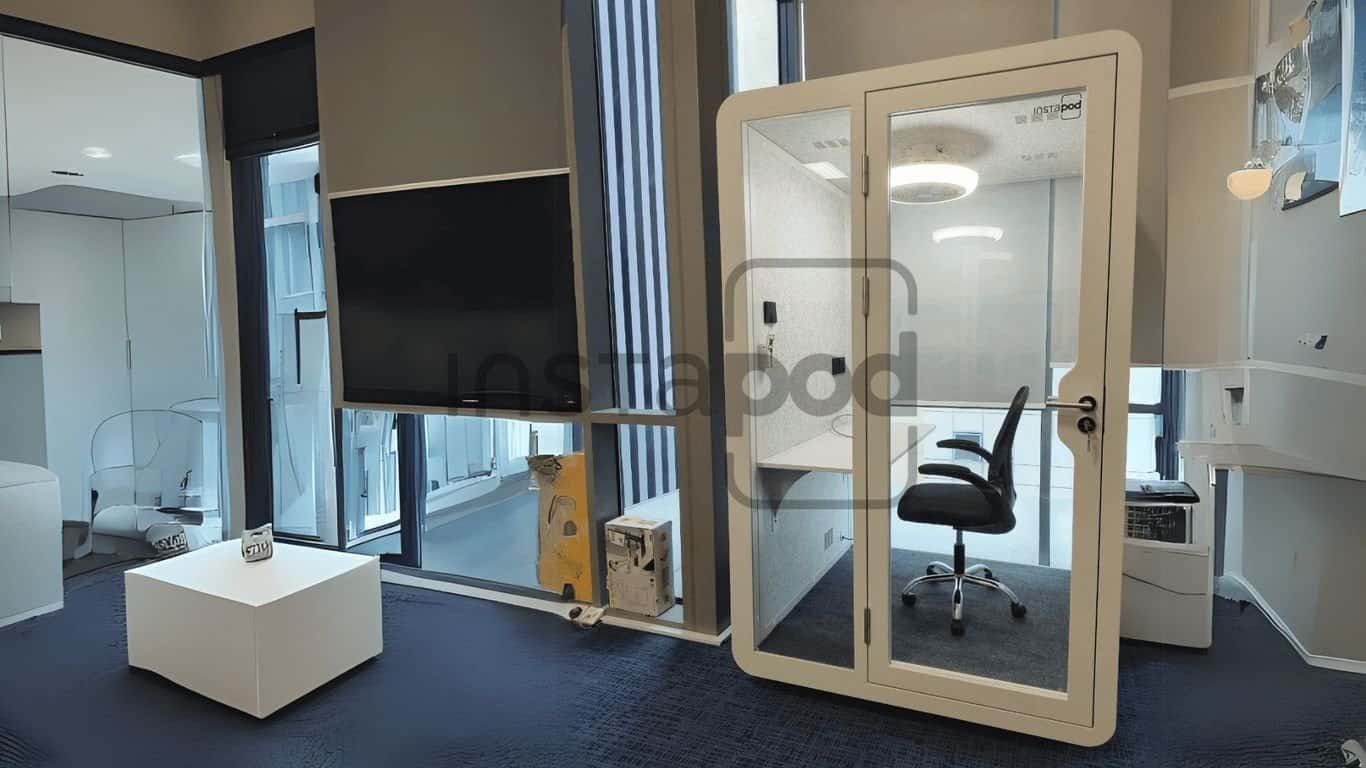
Open offices are everywhere these days, and while they’re great for some things, they can be super noisy and distracting. It’s hard to get anything done when people are talking all around you or phones are ringing constantly. That’s where a work booth comes in. Think of it as your personal quiet zone, a little escape pod right in the middle of the office buzz. It’s a simple idea, but it makes a big difference for focus and just feeling less stressed out during the workday.
Key Takeaways
- A work booth offers structured privacy, letting people step away for quiet focus without feeling totally cut off from the office.
- These booths help manage sensory needs and promote neurodiversity by providing a predictable, low-stimulation space.
- Office booths are a practical way to add private areas without needing major, costly renovations.
- They encourage more movement by allowing workers to shift between different zones, like open spaces and quiet pods.
- Using a work booth is a smart way to tackle distractions, reduce stress, and boost concentration for specific tasks.
Enhancing Employee Well-Being With Work Booths
In today’s busy offices, finding a moment of peace can feel like a real challenge. That’s where work pods, or acoustic booths, really shine. They’re not just fancy furniture; they’re tools that help people feel better while they’re working.
Promoting Neurodiversity and Sensory Needs
Everyone’s brain works a little differently, and that includes how we handle noise and stimulation. Some folks thrive in a lively environment, while others get overwhelmed quickly. Work pods offer a predictable, calm space where individuals can manage their sensory input. This means people who need less noise can find it easily, without feeling like they’re completely cut off. It’s about giving everyone a chance to work in a way that suits them best.
Reducing Workplace Fatigue and Stress
Constant noise and interruptions are exhausting. Studies show that even short periods in a loud office can increase stress markers. Having a quiet spot to retreat to, even for a few minutes, can make a big difference. It’s like a mini-recharge station for your brain. This ability to step away helps prevent burnout and keeps energy levels more stable throughout the day.
Knowing there’s a quiet space available can significantly lower stress. It gives employees a sense of control over their workday, which is a big deal when things get hectic.
Fostering Mental Focus and Clarity
When you need to concentrate on a task, distractions are the enemy. Work pods create a dedicated zone for deep work. Whether you’re writing a report, coding, or just need to think through a problem, these booths block out the office chatter. This allows for better focus, clearer thinking, and ultimately, more productive work sessions. It’s about creating the right environment for the job at hand.
The Practical Advantages of Office Booths
So, you’re looking at these office pods, maybe an office pod in Singapore or just a general sound proof pod, and wondering what’s the big deal? Beyond just being a quiet spot, these things actually make a lot of sense for how we work now. They’re not just fancy boxes; they solve real problems.
Creating Structured Privacy Without Isolation
Think of an office pod as your personal, temporary sanctuary. It gives you that much-needed privacy for focused work or a sensitive call, but without making you feel completely cut off from the rest of the office. You can pop in, get your head down, and then easily rejoin the buzz when you’re done. It’s about having control over your environment when you need it.
- Provides a dedicated space for concentration.
- Allows for private conversations without disturbing others.
- Offers a quick escape from sensory overload.
These pods strike a balance, giving you a personal zone that doesn’t disconnect you entirely from your team or the office’s energy.
Optimizing Space Without Major Renovations
Forget tearing down walls or rearranging the entire office layout. Installing an office pod is surprisingly simple. Many are designed to fit into existing spaces, requiring minimal disruption. You can essentially create a private workspace almost anywhere, from a corner of an open-plan area to a section of a larger room. It’s a smart way to add functionality without the headache and cost of traditional construction.
| Feature | Benefit |
|---|---|
| Modular Design | Easy to assemble and relocate |
| Small Footprint | Fits into various office layouts |
| Minimal Disruption | No major construction needed |
| Portability | Can be moved to different locations |
Facilitating More Movement-Rich Workdays
While it might seem counterintuitive, these sound proof pods can actually encourage more movement. Instead of being stuck at one desk all day, employees can move between their main workstation, a collaborative area, and a quiet pod for focused tasks. This variety in environment can help break up sedentary periods and make the workday feel less monotonous. It’s about having options and not being tied to a single spot.
- Encourages switching between different work settings.
- Helps break up long periods of sitting.
- Supports a more dynamic approach to the workday.
Ultimately, these practical advantages make office pods a sensible addition to almost any modern workspace.
Addressing the Open Office Dilemma
Combating Constant Distractions and Noise
So, the open office. It was supposed to be this amazing thing, right? Everyone collaborating, ideas flowing, no more stuffy cubicles. But let’s be real, for a lot of us, it’s just turned into a constant battle against noise. You’ve got phones ringing, people chatting, keyboards clacking away – it’s like trying to concentrate in the middle of a busy cafe, all day long. It’s not just annoying; it actually makes it harder to get your brain to focus on the task at hand. Studies show that even low-level noise can mess with your concentration and ramp up stress levels. It can take ages to get back into the zone after just one little interruption.
Restoring Privacy in Collaborative Environments
While open offices aim for collaboration, they often completely erase any sense of privacy. Need to take a confidential call? Have a sensitive discussion with a colleague? Or just want to work on something without an audience? Good luck finding a spot. This lack of private space can be a real problem, especially for certain roles or tasks. It forces people to either step outside, book a meeting room for a quick chat, or just hope for the best. It’s not ideal, and frankly, it can feel pretty awkward.
The Necessity of Quiet Zones for Productivity
Look, not every task is suited for a noisy, bustling environment. Sometimes, you just need quiet. That’s where dedicated quiet zones, like work booths, become super important. They’re not a luxury; they’re a practical tool for getting serious work done. Having a place where you can escape the general office buzz means you can actually focus, think deeply, and be more productive. It’s about giving people the option to choose the environment that best suits their work at any given moment. It’s a simple concept, but it makes a huge difference.
Here’s a quick look at how noise levels can impact your ability to focus:
| Noise Level (dB) | Impact on Productivity |
|---|---|
| 40-50 | Minimal Impact |
| 50-60 | Noticeable Distraction |
| 60+ | Significant Impairment |
The constant hum of activity in an open office, while sometimes intended to foster connection, often leads to a fragmented work experience. Employees find themselves constantly pulled away from their tasks, leading to a dip in both output and overall job satisfaction. Providing dedicated quiet spaces acknowledges that different types of work require different settings.
Designing Effective Work Booths
So, you’re thinking about adding some work booths to your office. That’s a smart move. But just plopping any old box in a corner won’t cut it. To really make these things work for your team, you’ve got to put some thought into how they’re designed. It’s not just about blocking out noise; it’s about creating a space that people actually want to use and that supports their work.
The Importance of Ventilation and Lighting
Think about it: nobody wants to feel like they’re stuck in a stuffy closet. Good ventilation is a big deal. It keeps the air fresh, which helps people stay alert and comfortable. If the air gets stale, people start feeling sluggish, and that defeats the whole purpose of a focus space. The same goes for lighting. Too dim, and it’s hard to see and can make you feel sleepy. Too harsh, and it’s just plain annoying. You want lighting that’s bright enough to work by but also easy on the eyes, maybe something that mimics natural light.
- Fresh Air Flow: Look for booths with active ventilation systems, not just passive vents. This ensures a constant supply of clean air.
- Adjustable Lighting: Ideally, the lighting should be dimmable or have different settings so users can adjust it to their preference.
- Natural Light Simulation: Some booths incorporate lighting that mimics daylight cycles, which can positively impact mood and energy levels.
Good ventilation and lighting aren’t just nice-to-haves; they’re fundamental to making a work booth a truly functional and pleasant space. Ignoring these aspects can turn a potential productivity booster into a place people avoid.
Balancing Quietude With a Sense of Connection
While the main draw of a work booth is its quiet, it shouldn’t feel like a complete disconnect from the rest of the office. The goal is to offer a retreat, not isolation. People still need to feel like they’re part of the team and the office environment. Too much silence can feel oppressive, and nobody wants to feel completely cut off. It’s a tricky balance, but good design can achieve it. Think about how the booth looks from the outside – does it feel inviting? Can people still see movement or light from within, giving a subtle sense of connection?
Ergonomic Considerations for Booth Design
These booths aren’t meant for all-day use, but people might spend a good chunk of time in them for focused tasks or calls. That means comfort is key. You don’t want people squirming after 20 minutes. Consider:
- Seating: Is there a comfortable chair or stool? Is it the right height for working at a small desk or counter within the booth?
- Desk Space: Is there enough room to actually put a laptop, notebook, and maybe a drink down without feeling cramped?
- Height Adjustability: For some tasks, being able to stand or adjust the height of a work surface can make a big difference in comfort and energy levels over a short period.
Remember, a work booth is an addition to the office, not a replacement for a traditional desk. It’s about offering a different kind of space for specific needs, and that space needs to be comfortable and functional for the time people spend there.
Work Booths: A Sustainable Investment
A Smarter Alternative to Traditional Construction
Think about how often offices get redone. If an office interior lasts, say, two and a half years, that’s a lot of construction over the building’s life. Building permanent rooms takes a lot of energy and creates waste every time something changes. Work booths are a much cleaner way to go. They’re often made with recycled stuff, like steel and wood. Plus, because they’re built in sections, you can swap out just one part if it gets damaged instead of tossing the whole thing. It’s a big win for the planet.
Mobility and Adaptability for Evolving Needs
Offices change, and your workspace needs to keep up. Booths aren’t stuck in one place. You can move them around as your team grows or your layout needs shift. This means you don’t have to tear down walls or start from scratch every time. It’s like having a flexible workspace that can adapt without a huge hassle or expense. This adaptability is key for companies that like to stay agile.
Reducing Environmental Impact With Modular Solutions
Traditional office builds are pretty rough on the environment. They use a lot of resources and create a ton of waste. Modular booths, on the other hand, are designed with the future in mind. They’re built to last and can be easily reconfigured or moved. This reduces the need for new materials and cuts down on landfill waste significantly. It’s a practical choice that also helps companies meet their green goals.
The real benefit here is that you get the privacy and focus you need without the long-term commitment and environmental cost of permanent structures. It’s a win-win for both employees and the company’s sustainability efforts.
Here’s a quick look at why booths are a greener choice:
- Reduced Material Waste: Modular design means parts are replaced, not entire units.
- Lower Energy Consumption: Manufacturing modular units is generally less energy-intensive than traditional construction.
- Reusability and Relocation: Booths can be moved and reassembled, extending their lifespan and reducing the need for new builds.
- Eco-Friendly Materials: Many booths are made from recycled or sustainable materials.
Maximizing Productivity With a Work Booth
So, you’ve got this work booth, and you’re wondering how to really get the most out of it. It’s not just about having a quiet spot; it’s about using that quiet strategically. Think of it less as a permanent office and more like a special tool you pull out when you need it.
When Is a Work Booth the Right Choice for a Task?
Not every task is created equal, and some just scream "work booth." If you’ve got something that needs serious brainpower, like writing a detailed report or digging into complex data, a booth is your best friend. It’s also the go-to for any calls or video meetings where you can’t have your colleagues overhearing your conversation. Even just needing a quick mental reset from the office buzz is a perfect reason to duck inside for a bit.
Here are a few scenarios where a booth really shines:
- Deep Concentration Tasks: Drafting important documents, coding, reviewing lengthy materials.
- Confidential Communications: Private phone calls, sensitive client meetings, HR discussions.
- Focused Learning: Watching training videos or online courses without interruption.
- Creative Brainstorming: When you need to think without external noise influencing your ideas.
- Sensory Regulation: For individuals who need a predictable, low-stimulation environment to perform at their best.
The Value of Retreat for Deeper Work
We often think productivity means being constantly busy, but sometimes, the most productive thing you can do is step away. Taking a short break in a quiet booth can actually lead to more integrated thinking and better ideas. It’s like giving your brain a chance to catch up and connect the dots without the constant chatter of the open office. This kind of focused, uninterrupted time is hard to come by otherwise, and it’s where a lot of the really important, high-quality work gets done.
The ability to step into a quiet, controlled space, even for just 30 minutes, can significantly improve focus and reduce the mental load of constant distractions. It’s about having control over your immediate environment to perform at your peak.
Integrating Booth Use Into the Workday Rhythm
Using a work booth effectively isn’t about hiding away all day. It’s about weaving it into your daily routine. Think of it as a flexible resource. You might start your day with a focused task in the booth, then head out to collaborate with your team, and perhaps use it again later for a private call. The key is balance – using the booth for what it’s best at, and then rejoining the office energy. This back-and-forth keeps you engaged and prevents that feeling of being isolated. It’s about having the option to retreat when needed, and then confidently return to your team.
Here’s a simple way to think about integrating booth time:
- Identify the Task: Does this require deep focus or privacy?
- Allocate Time: Block out 30-60 minutes for the task in the booth.
- Use the Booth: Minimize distractions and concentrate.
- Return and Reconnect: Transition back to collaborative work or other tasks.
- Repeat as Needed: Use the booth strategically throughout the day for different needs.
The Takeaway: Quiet Spaces for Better Work
So, we’ve talked a lot about how noisy offices can really mess with our focus and make us feel stressed. It turns out, those little work booths aren’t just a fancy trend. They actually give us a way to get some peace and quiet when we need it, without feeling totally cut off from everyone else. They help with all sorts of things, from letting people with different sensory needs feel more comfortable to just giving us a spot to take a private call. Plus, they’re way easier and cheaper than building new rooms. In the end, having these quiet spots means we can do better work, feel less drained, and honestly, just be happier at our desks. It’s a simple idea, but it makes a big difference in how we get things done.
Frequently Asked Questions
What exactly is a work booth?
A work booth, also called a soundproof office pod or focus room, is like a small, private room you can put almost anywhere in your office. It’s designed to block out noise and distractions, giving you a quiet space to concentrate or take a private call, kind of like having your own mini-office within the larger space.
Why are work booths good for employee well-being?
Work booths help by giving people a place to escape the constant noise and busyness of an open office. This can lower stress, prevent feeling tired from too much noise, and help people focus better. They are especially helpful for people who are sensitive to noise or need a calmer environment sometimes.
Can work booths actually help with productivity?
Yes! When you can step away from distractions and noise into a quiet booth, it’s much easier to get into deep work. Studies show that interruptions can really break your focus, and it takes time to get back on track. Booths provide that uninterrupted time, leading to better and faster work.
Do I need to do major office renovations to use work booths?
Not at all! That’s one of the best things about work booths. They are usually pre-made and can be set up quickly without needing to tear down walls or do big construction projects. You can just place them where you need them, making it easy to add private spaces without a lot of hassle or cost.
Are work booths good for people who need different kinds of work environments?
Definitely. Work booths are great because they offer ‘structured privacy.’ This means you can get quiet time when you need it, but you’re not completely cut off from your colleagues or the office vibe. It allows people to switch between focused work and social interaction easily, fitting different work styles and needs.
Can I work in a booth all day?
While booths are fantastic for focused tasks, calls, or short breaks, they aren’t really meant for working the entire day. It’s best to use them as needed for specific tasks and then return to your regular workspace. Moving between different areas, like the booth and your desk, actually helps keep you energized and comfortable.